🧀 String Cheese Protein Calculator
Estimate protein, calories, fat, and calcium from string cheese sticks, lunchbox portions, or label weights without turning the snack into a full meal plan.
Choose count mode when you know the number of sticks, or weight mode when your label lists a combined ounce or gram amount.
| String Cheese Style | Typical Stick | Protein | Calories | Fat | Calcium |
|---|---|---|---|---|---|
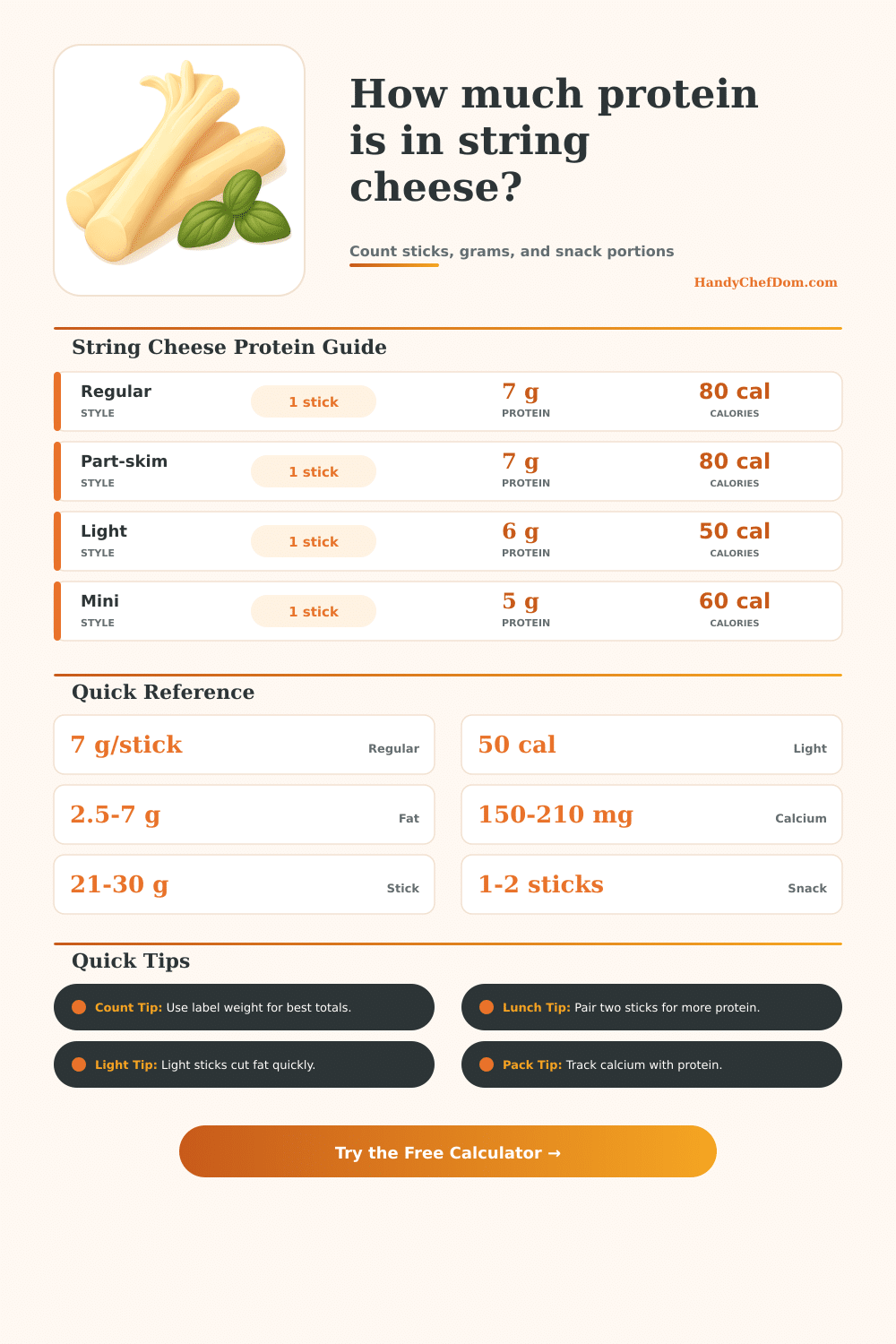
| Regular whole milk string cheese | 28 g | 6.5 g | 85 cal | 6.5 g | 200 mg |
| Part-skim string cheese stick | 28 g | 7 g | 80 cal | 6 g | 200 mg |
| Light string cheese stick | 28 g | 6 g | 50 cal | 2.5 g | 180 mg |
| Reduced-fat string cheese stick | 28 g | 7 g | 60 cal | 3.5 g | 200 mg |
| Organic whole milk string cheese | 28 g | 7 g | 90 cal | 7 g | 210 mg |
| Mini lunchbox string cheese | 21 g | 5 g | 60 cal | 4.5 g | 150 mg |
| Colby-Jack cheese stick | 28 g | 5 g | 80 cal | 6 g | 150 mg |
| Provolone style cheese stick | 28 g | 7 g | 80 cal | 6 g | 200 mg |
| Portion Use | Sticks Each | Best Fit | Protein Range |
|---|---|---|---|
| Quick snack | 1 | Regular or light | 5-7 g |
| Lunchbox add-in | 2 | Part-skim or mini | 10-14 g |
| Post-practice snack | 3 | Part-skim or reduced-fat | 18-21 g |
| Adult work snack | 2 | Light or regular | 12-14 g |
| Family snack tray | 6 | Mixed sticks | 30-42 g |
| Cooler pack | 8 | Mini or part-skim | 40-56 g |
| Stick Count | Typical Weight | Regular Protein | Light Protein |
|---|---|---|---|
| 1 stick | 28 g / 1 oz | 6.5 g | 6 g |
| 2 sticks | 56 g / 2 oz | 13 g | 12 g |
| 3 sticks | 84 g / 3 oz | 19.5 g | 18 g |
| 4 sticks | 112 g / 4 oz | 26 g | 24 g |
| 6 sticks | 168 g / 6 oz | 39 g | 36 g |
| 8 sticks | 224 g / 8 oz | 52 g | 48 g |
| Label Detail | What To Enter | Calculator Use | Helpful Note |
|---|---|---|---|
| Sticks per pack | Count mode | Total sticks | Fastest for snacks |
| Net weight only | Weight mode | Total grams or ounces | Good for trays |
| Mini sticks | 21 g average | Smaller stick size | Use label grams |
| Light sticks | Light style | Lower fat data | Calories drop |
| Mixed cheese sticks | Closest style | Best estimate | Average the labels |
| Lunch prep | People count | Suggested sticks | Scales portions |
When packing your kid’s lunch box with string cheese, you’re left with a simple question: Which one to buy? It meets all criteria. It won’t melt, it wont get smashed in a hot backpack, and it’s a generally safe choice. But what if one brand show seven grams of protein/ stick while the other shows five grams? That doesn’t seem like much, right? Well, if you’re monitoring sodium for an athlete or tracking macros for a family, that does make a difference. After doing the math over and over again, staying consistent matters, so a special calculator comes in handy. On this page, tool takes care of multiplying for you; you just have to worry about if it fits the plan.
String cheese shouldn’t be lumped together: there are several variations out there. Part-skim versus whole milk mozzarella isn’t just a matter of taste… It’s also nutritionally distinct. Removing varying amounts of milkfat during production makes an enormous differnce to the fat content. This also affect the caloric content and protein density. A stick of regular could have anywhere from 80 calories and six to seven grams of protein; by comparison, a light one may be much less. And though we’re all guilty of treating them interchangeably, the sacrifice is real. Lowering the fat tend to lower some of the fullness offered by higher-fat choices. Use the calculator to pick the style listed on your label, ensuring that the results reflect what’s inside the packaging, not a generalized average.
Why String Cheese Numbers Matter for Your Health
There are also differences in the input method. While some will tell you how many sticks, others just say what the total weight is. This leads to different numbers when you switch between imperial and metric units or between stick counts and total grams. Knowing exactly how much each stick weighs, particularly for those mini sticks which differ across brands, eliminates guesswork. Usually, I find a standard stick is about twenty-eight grams. Minis will be lesser. Putting the exact weight into the equation gives you a better sense of how much protein is going into the mix. It is a small thing, but it makes a difference because over time, you start to drift if you have been guesstimating portions as you prep meals week after week.
Consider what this food fits into. Is it a fast pick-me-up during the day, or part of a recovery meal after practicing all day? Depending on your situation, those numbers mean something different than before. If you’re looking for a light snack, then maybe one stick is enough. If you’re an athlete or an active kid, two or three sticks might gives you a more meaningful protein boost. The handy reference tables in the tool help sort through these situations by showing how various amounts of protein add up with different portion sizes. You’ll notice at a glance that, say, three sticks could put you right around twenty grams of protein, a solid number when you want some muscle repair without heavy digestion. It’s just one way to determine whether you want to add something else to the meal, like fruit. You might also want to add crackers.
Other considerations that frequently go unnoticed include sodium and calcium. Overall, calcium is decently present in string cheese (you’re getting some calcium by chowing down), but sodium content rise rapidly when eating several packs per day. Protein and calcium are put into the calculator to give you an overall picture of what’s going on nutrition-wise. While this doesn’t eliminate label reading, it will tell you at a glance what you’re feeding your family. For example, those low-fat options may be calorie- and fat-saving but don’t necessarily have lower sodium than their regular counterparts. This is one of those small details that makes all the difference when reaching for something healthy in the fridge.
So, all in all, I suppose that’s why string cheese stays a lunchbox favorite: It fits easily, doesn’t need any prep work and can be eaten on-the-go. But convenience shouldn’t of mean not paying attention. When you have full disclosure about exactly what you’re munching on, you’ll make better choices, over time. If you’re packing snacks for office meetings or prepping lunches for the kiddos, knowing the exact numbers takes away the guesswork and the stress. Once you know your portion size and your style, the calculator above will do the rest for you… You’ll go from a vague snack to a clear slice of your overall nutrition plan. Instead of confusion, you get clarity, and that’s always a good thing when it comes to meal planning.