🍬 Sweetener Conversion Calculator
Convert any sweetener to & from sugar equivalents — stevia, monk fruit, erythritol, xylitol & more
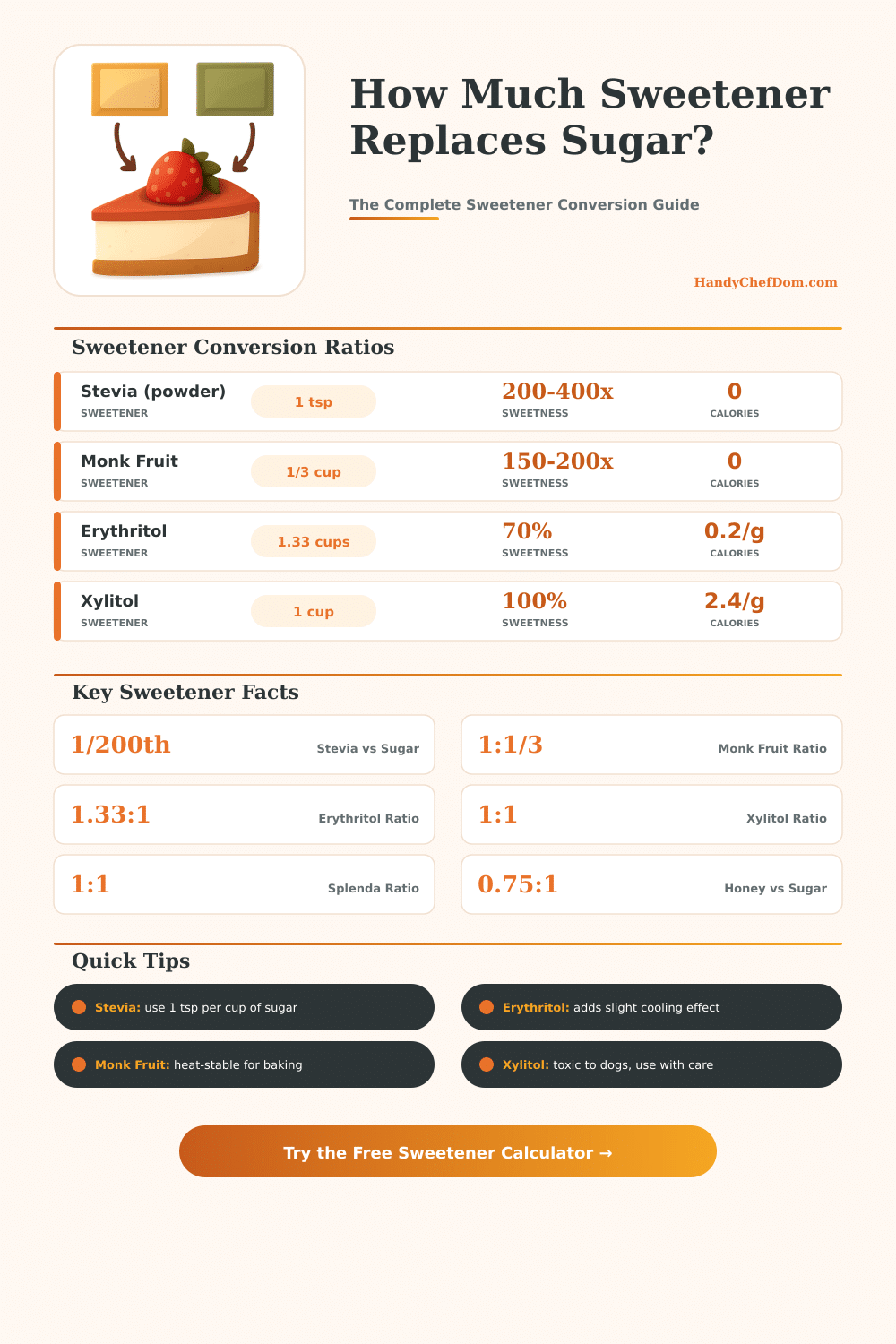
| Sweetener | Replaces 1 cup sugar | Sweetness vs Sugar | Cal per tsp | Bake-Safe |
|---|---|---|---|---|
| Stevia (pure powder) | ½ to 1 tsp | 200–400x | 0 | Yes |
| Stevia (liquid drops) | 1 tsp liquid | 200–300x | 0 | Yes |
| Monk Fruit (pure) | ⅛ to ¼ cup | 150–200x | 0 | Yes |
| Monk Fruit Blend (1:1) | 1 cup | Equal | 0–2 | Yes |
| Erythritol | 1⅛ cups (1.33) | 70% | 0.2 | Yes |
| Xylitol | 1 cup | 100% | 9.6 | Yes |
| Splenda (sucralose) | 1 cup | 600x (blended 1:1) | 2 | Yes |
| Allulose | 1⅛ cups | 70% | 0.4 | Yes |
| Aspartame (Equal) | ¼ tsp per tsp sugar | 200x | 0.04 | No |
| Honey | ¾ cup | 1.25x | 21 | Yes |
| Maple Syrup | ¾ cup | Slightly sweeter | 17 | Yes |
| Coconut Sugar | 1 cup | Equal | 15 | Yes |
| Agave Nectar | ⅔ cup | 1.5x | 20 | Yes |
| Measurement | Teaspoons | Tablespoons | Cups | Grams (sugar) |
|---|---|---|---|---|
| 1 teaspoon | 1 | ⅓ | 1/48 | 4.2g |
| 1 tablespoon | 3 | 1 | 1/16 | 12.5g |
| ¼ cup | 12 | 4 | 0.25 | 50g |
| ⅓ cup | 16 | 5.3 | 0.33 | 67g |
| ½ cup | 24 | 8 | 0.5 | 100g |
| ⅔ cup | 32 | 10.7 | 0.67 | 133g |
| ¾ cup | 36 | 12 | 0.75 | 150g |
| 1 cup | 48 | 16 | 1 | 200g |
Sweetener simply said is any thing you mix in food or drink to give it a sweet taste. It can be either real sugar or something that only copies the sweetness of sugar, but is not the original. Here truly exist two main groups: nutritive sweeteners like glucose and sucrose that carry many calories, and non-nutritive that give almost no energy…
That is the one you like when you want to reduce the sugar use.
Types of Sweeteners and How to Use Them
You certainly heard about aspartame, monk fruit extract, saccharin, sucralose, stevia, acesulfame potassium and cyclamate. Those sweet replacements are present everywhere especially in diet drinks, because they give sweetness without calorie load. Interesting about them is, that many of them greatly surpass the sweetness of usual table sugar, so you need only a bit to reach the wanted taste.
For example acesulfame potassium is 200 times sweeter than sugar. Saccharin goes even more extreme, between 200 and 700 times sweeter, depending on the use, but if you add too much, you will feel an unpleasant aftertaste.
The FDA gave its approval to five artificial sweeteners: saccharin, acesulfame, aspartame, neotame and sucralose. They also allowed stevia, which is the only natural low-calorie sweetener on the official list. It comes from leaves of a tropical plant and does not raise your blood sugar.
Another example is erythritol… Technically a sugar alcohol, whose name seems weird, because it is knot sugar or that alcohol, that you find in beer or wine.
For the natural kinds, stevia, erythritol and monk fruit are widely the best options. All three have zero calories and will not bother the levels of your blood sugar. Monk fruit works well in smoothies and yogurt, even though it is more tricky in baking, the heat can create a taste, that you probably will not like.
Artificial sweeteners are based on chemicals or sometimes plants, that copy or even surpass the sweetness of sugar. You find them in products with aspartame, sucralose and stevia products, everywhere in foods and drinks marked as sugar-free or diet. Most of them are available for home use; to bake, cook or simply sweeten the morning coffee.
In recipes, that need only little sweetness, you can swap in something thick like honey or agave syrup to add sugar without messing up the whole thing.
Honey and maple syrup are the usual natural picks for many folks. Maple syrup works well in iced and warm coffee. Raw honey gives natural sugars, which makes it good for cooking goals.
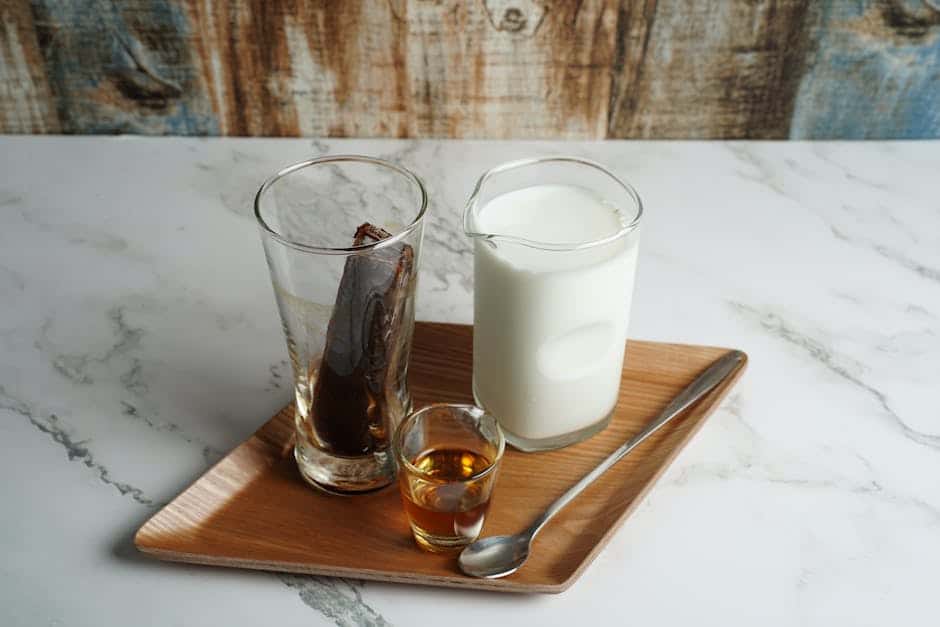
Do not forget agave, palm sugar, dates and cane sugar, all deserve a try.
Here is the key point about added sugars: your body handles them all the same. It does not tell apart brown sugar, molasses, honey or any other calorie sweetener, that you give to it. What truly matters, is controlling the amounts.
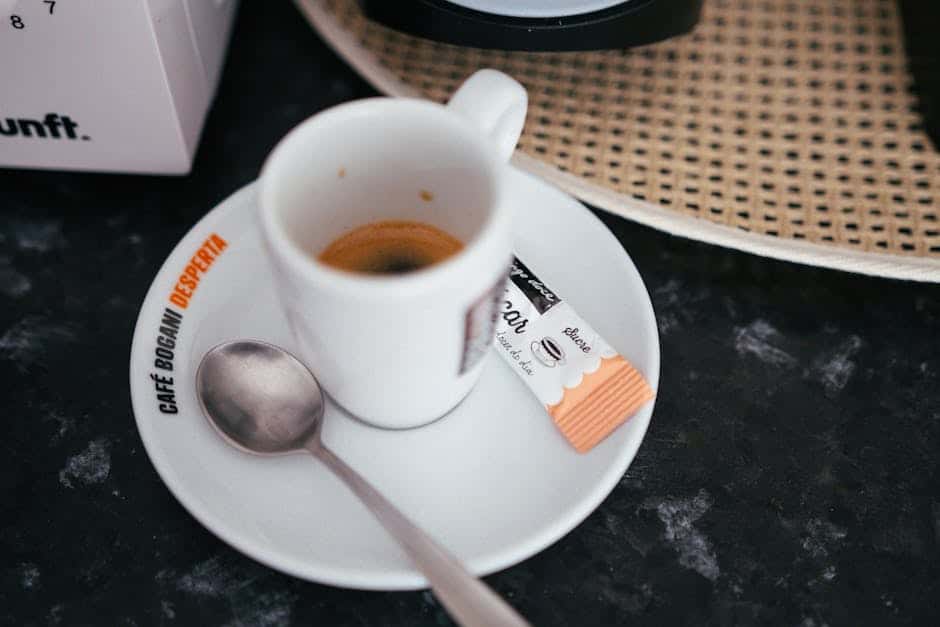
A normal sugarpack holds around two to four grams, more or less depending on thebrand and place.