🍵 Tea Ratio Calculator
Calculate the perfect tea-to-water ratio for loose leaf or tea bags — any cup size, any quantity
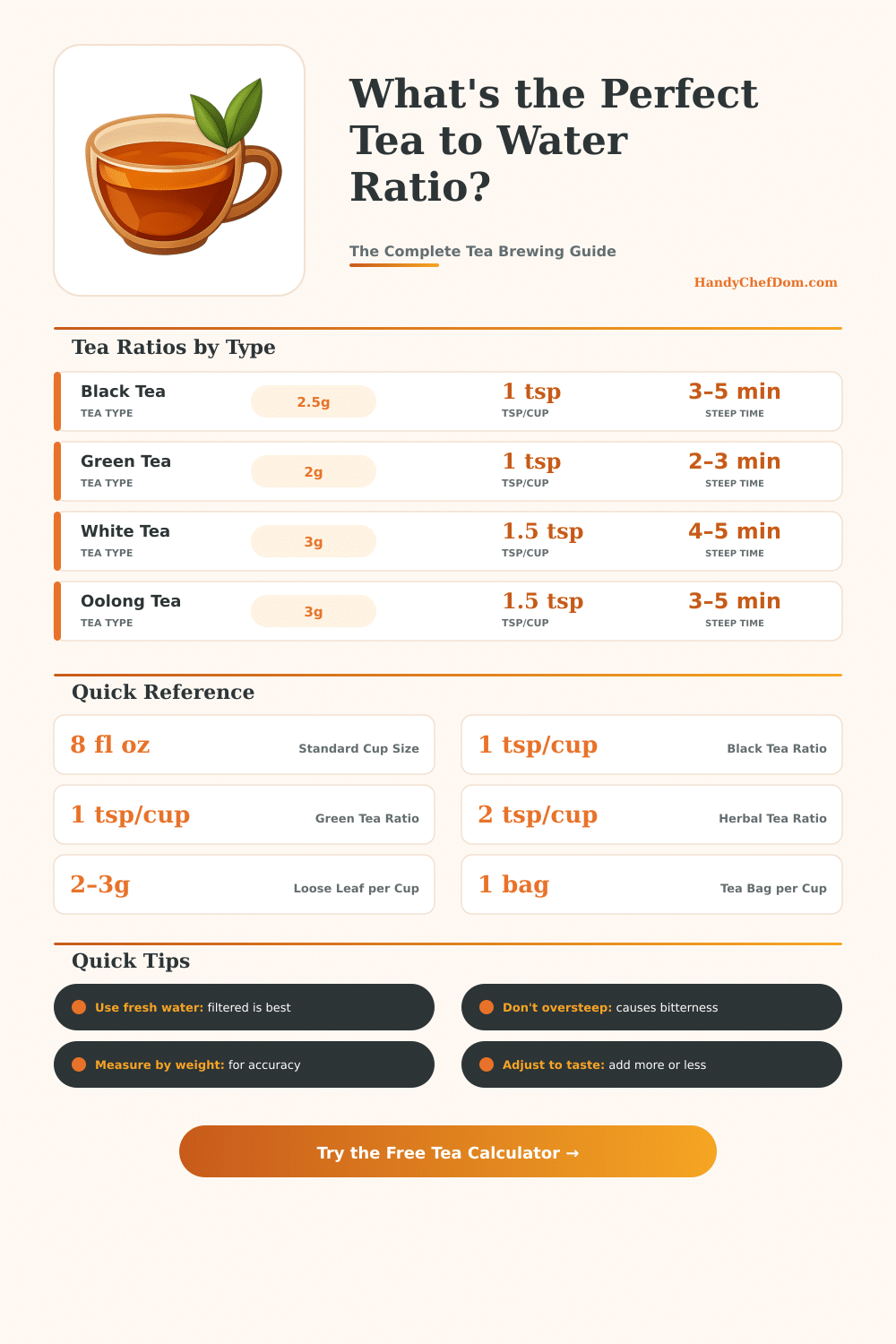
| Tea Type | Grams per Cup | Tsp per Cup | ml Water per Cup | Steep Time |
|---|---|---|---|---|
| Black Tea | 2.5g | 1 tsp | 240 ml | 3–5 min |
| Green Tea | 2g | 1 tsp | 240 ml | 2–3 min |
| White Tea | 3g | 1.5 tsp | 240 ml | 4–5 min |
| Oolong Tea | 3g | 1.5 tsp | 240 ml | 3–5 min |
| Herbal / Tisane | 4g | 2 tsp | 240 ml | 5–7 min |
| Chai | 3g | 1.5 tsp | 240 ml | 4–6 min |
| Pu-erh Tea | 3.5g | 1.5 tsp | 240 ml | 2–4 min |
| Rooibos | 4g | 2 tsp | 240 ml | 5–7 min |
| Strength | Multiplier | Example (Black Tea) | Description |
|---|---|---|---|
| Light | 0.75x | ~1.9g / cup | Delicate, subtle flavor |
| Standard | 1.0x | 2.5g / cup | Balanced, recommended |
| Strong | 1.5x | ~3.75g / cup | Bold, robust flavor |
| Vessel | fl oz | ml | Loose Leaf (Black) | Tea Bags |
|---|---|---|---|---|
| Small Cup | 6 fl oz | 180 ml | ~1.9g | 1 bag |
| Standard Cup | 8 fl oz | 240 ml | 2.5g | 1 bag |
| Large Cup | 10 fl oz | 300 ml | ~3.1g | 1–2 bags |
| Standard Mug | 12 fl oz | 355 ml | ~3.7g | 1–2 bags |
| Large Mug | 16 fl oz | 473 ml | ~4.9g | 2 bags |
| Small Teapot | 24 fl oz | 710 ml | ~7.4g | 3 bags |
| Standard Teapot | 32 fl oz | 945 ml | ~9.9g | 4 bags |
| Pitcher / Carafe | 64 fl oz | 1900 ml | ~19.8g | 8 bags |
| Measurement | Grams | Ounces | Approx. Cups of Tea |
|---|---|---|---|
| 1 teaspoon | ~2–3g | ~0.09 oz | 1 cup |
| 1 tablespoon | ~6–9g | ~0.25 oz | 3 cups |
| 1 oz loose leaf | 28g | 1 oz | 11–14 cups |
| 50g tin | 50g | 1.76 oz | 20–25 cups |
| 100g pouch | 100g | 3.5 oz | 40–50 cups |
| 250g pouch | 250g | 8.8 oz | 100–125 cups |
Tea is a scented drink that you prepare pouring warm or hot water on dried or fresh leaves of the Camellia sinensis, green shrub native in East Asia, originally from the borders of southwest China, northeast India and north of Myanmar It is the second most used drink globally after water. In the 3rd century you mentioned the first written proof of tea in China, where it was described as medical drink. Two main types use you: Chinese and the Assam plant.
All real tea originates from one same plant, the Camellia sinensis. The kind decides according to the way you process and handle the leaves. White tea you make from buds of tea plant, for instance Silver Needle or White Peony.
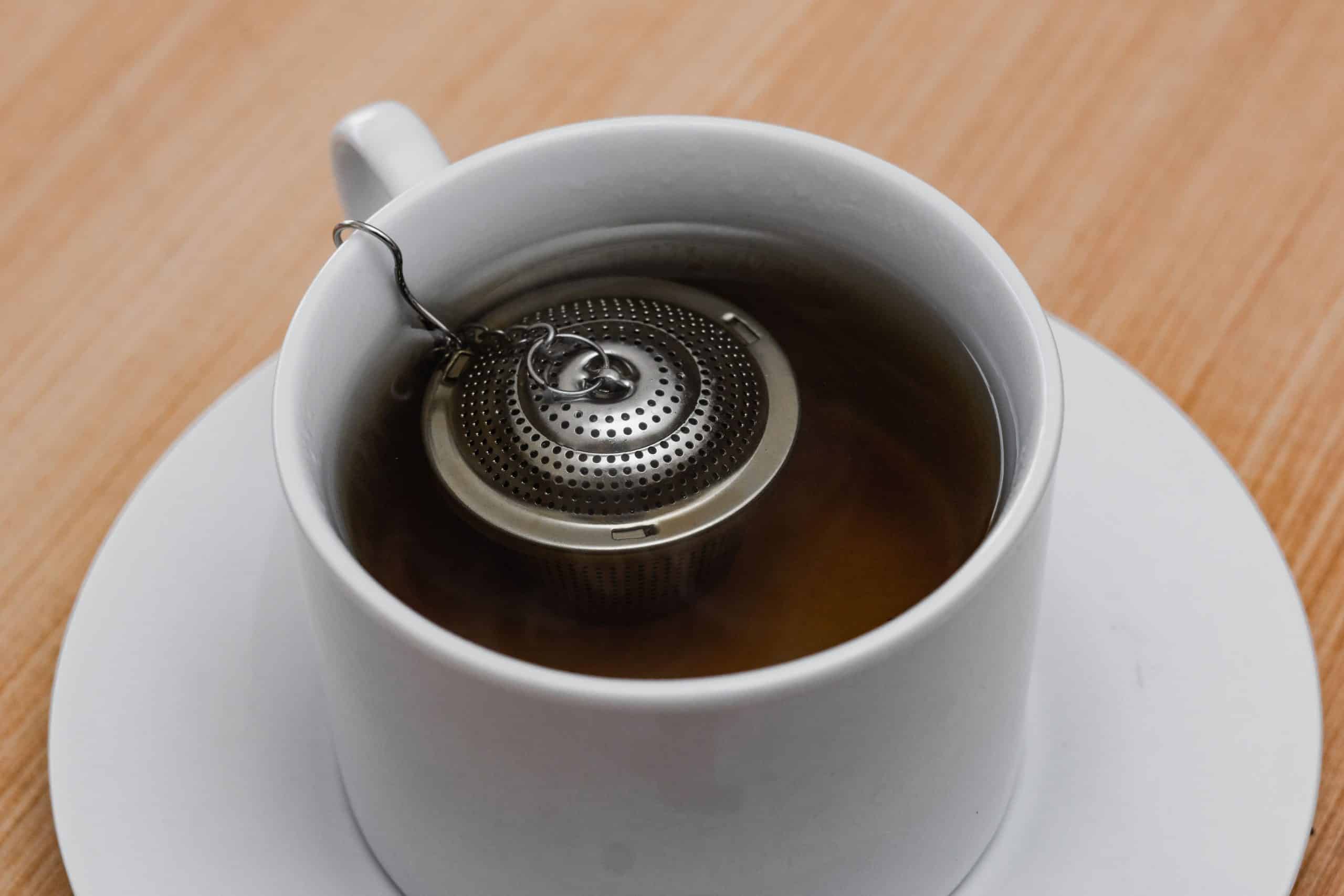
Tea: Types, How to Make It and How to Use It
It stays the most natural variety from all, hence it has tender taste that easily escapes. Green tea you can infuse one until four times from one measure, but usually two suffice before the main character disappears.
For six ounces of water use one spoon of tea leaves. This is good practical rule. One serving of loose leaves is around 2 grams for 8 ounces of warm water.
Black tea in 12-ounce cup requires around one and half spoons. For herbal and green teas use one until two spoons, according to the desire of flavor. For thick, wet tea take one full tablespoon.
One ounce of tea gives 10 until 15 cups of six ounces, depending on the strength. So 3-ounce packet suffices for around 27 servings.
Tea does not limit to a drink. In the kitchen you use it for meat, fish, pasta, soups, desserts and salads, also while baking. You can infuse it in water or other liquids, add dry whole leaves or powder, or use for smoking and brining.
From herbal tea until oolong, in cakes, broths and marinades it adds taste and aroma. Green, black, oolong and herbal teas well underline savory foods by means of subtle notes. Matcha works as a kitchen ingredient in green smoothies and iced sweets.
Cinnamon, honey, mint, peppermint, ginger, maple syrup and lemon are popular additions to tea. Bengal spice tea is naturally sweet and well matches with a bit of maple syrup. Hibiscus Sangria Herbal Iced Tea does not have caffeine and reminds of berries, especially raspberries.
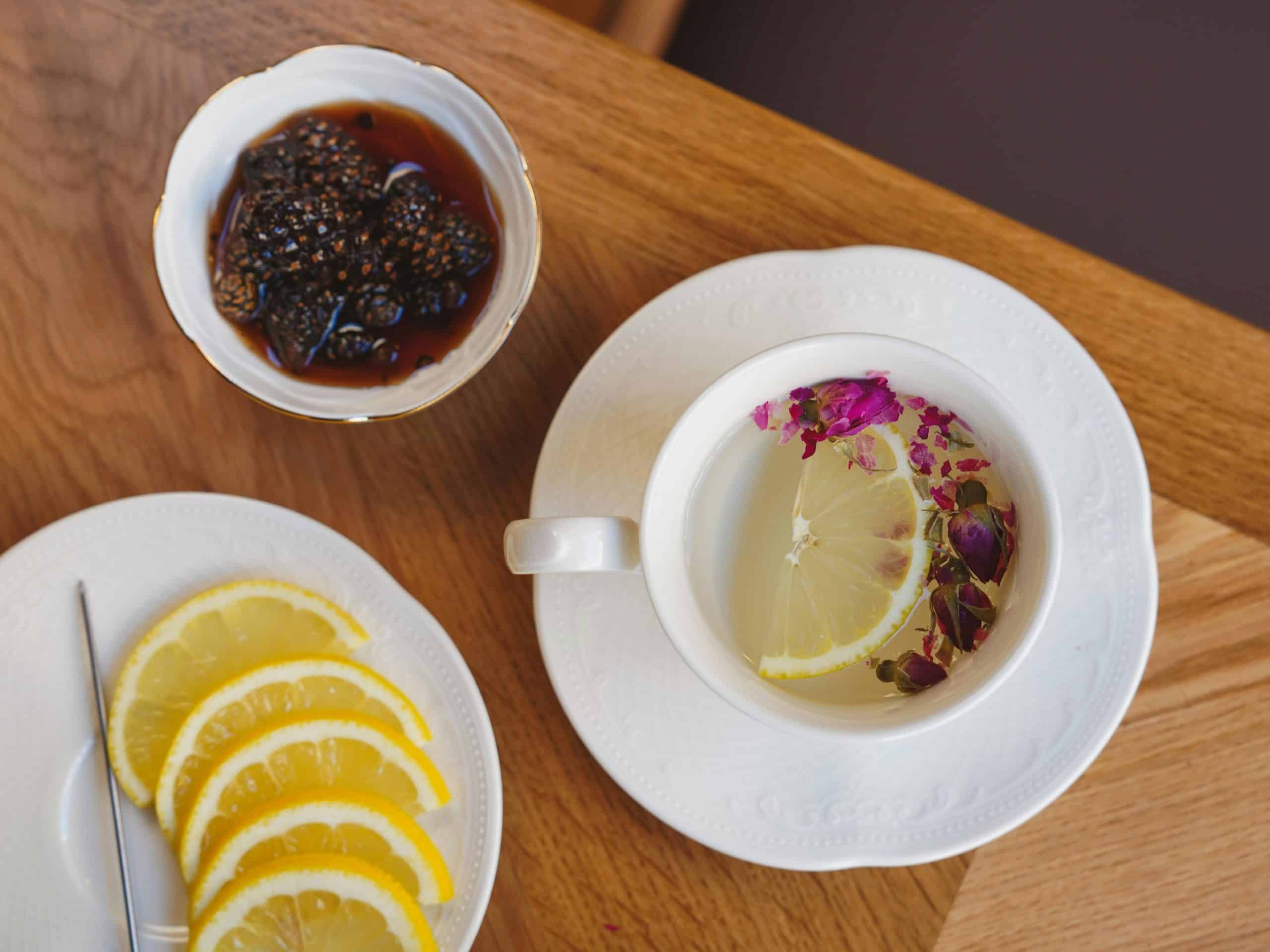
Cold infusion with fresh berries and citrus slices becomes nice summer drink. Simple syrup from equal parts of sugar and water well mixes with warm tea, so that the sugar entirely dissolves.
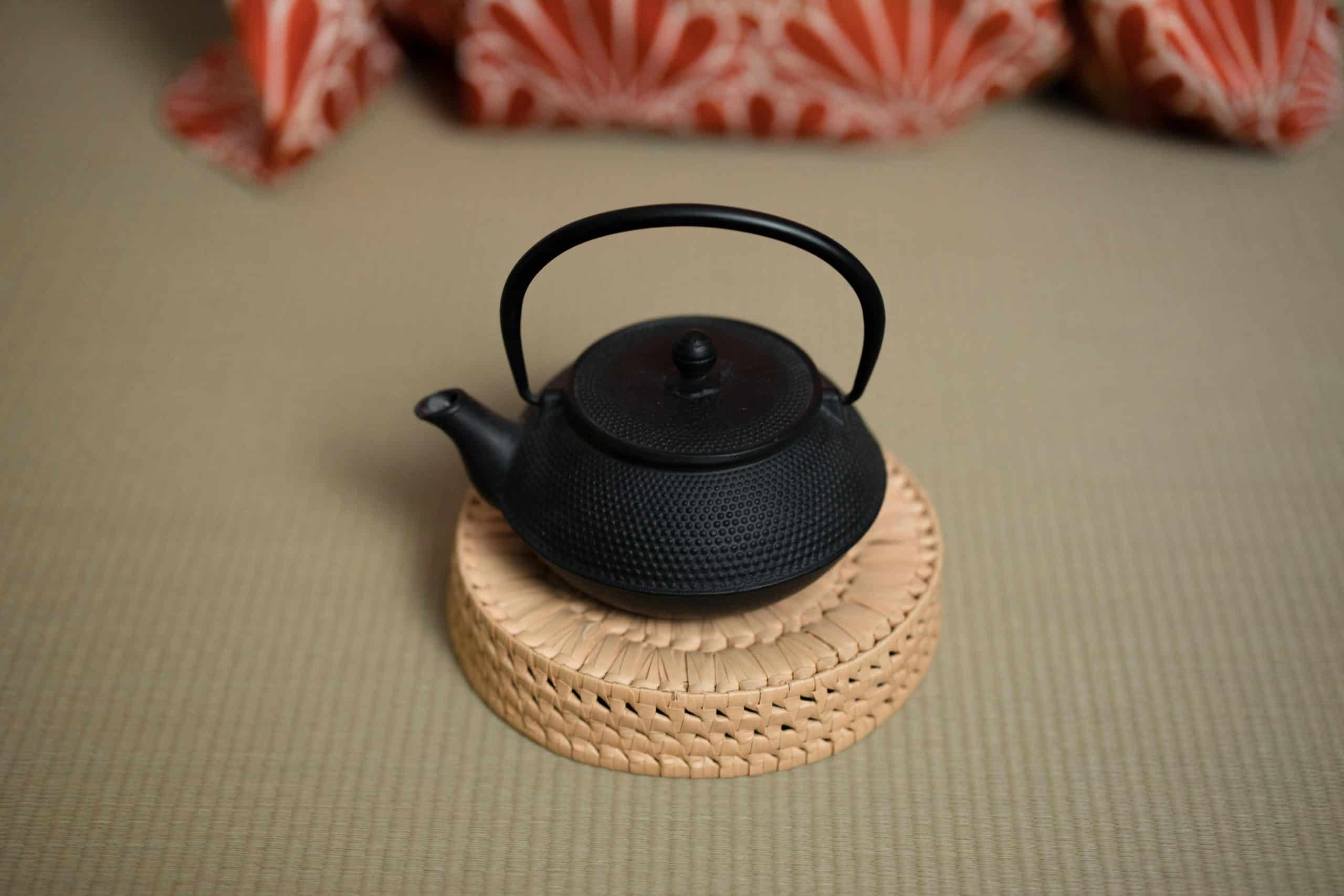
Glass teapots are practical, but Yixing clay give better tea. Iron jars, as Japanese tetsubin, well keep the heat. Favor whole loose leaves instead of bags for better infusion.