🍗 Turkey Frying Calculator
Balance bird weight, oil volume, fry time, and pot capacity in one clean kitchen worksheet.
| Bird | Oil | Time | Guests |
|---|---|---|---|
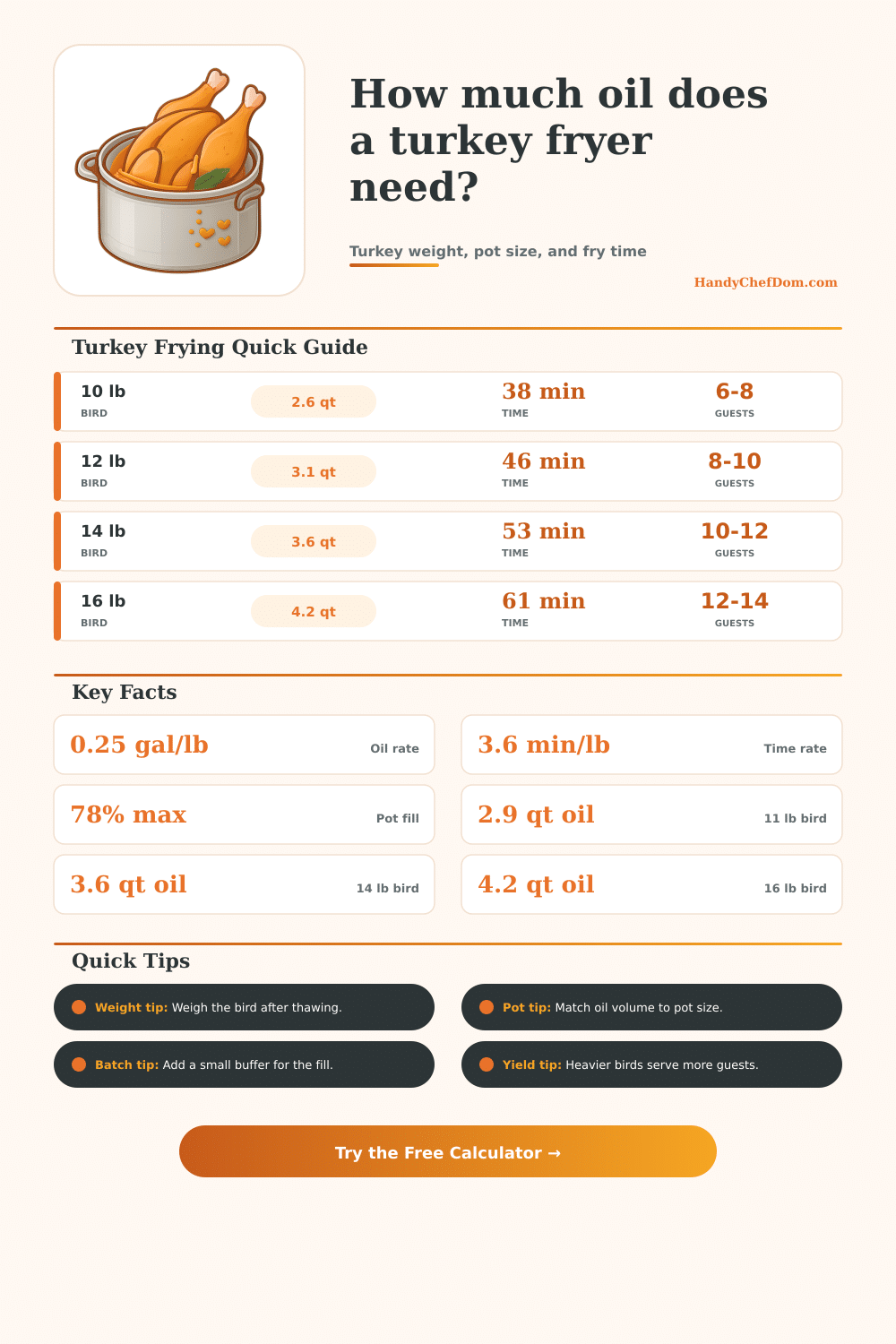
| 10 lb | 2.6 qt | 38 min | 6-8 |
| 12 lb | 3.1 qt | 46 min | 8-10 |
| 14 lb | 3.6 qt | 53 min | 10-12 |
| 16 lb | 4.2 qt | 61 min | 12-14 |
| Weight | Base | Style | Note |
|---|---|---|---|
| 10-11 | 38 min | fast | small bird |
| 12-13 | 46 min | steady | mid range |
| 14-15 | 53 min | full | holiday bird |
| 16-18 | 61 min | slow | larger batch |
| Pot | Capacity | Oil Range | Use |
|---|---|---|---|
| Compact | 24 qt | 2-3 qt | small birds |
| Standard | 30 qt | 3-4 qt | home fryer |
| Wide | 36 qt | 4-5 qt | steady fill |
| Pro | 40 qt | 5 qt+ | big batches |
| Bird | Cooked | People | Leftovers |
|---|---|---|---|
| 10 lb | 5.8 lb | 6-8 | light |
| 12 lb | 6.9 lb | 8-10 | balanced |
| 14 lb | 8.1 lb | 10-12 | good |
| 16 lb | 9.3 lb | 12-14 | strong |
| Bird | Oil | Time | Guests |
|---|---|---|---|
| 10 lb | 2.6 qt | 38 min | 6-8 |
| 12 lb | 3.1 qt | 46 min | 8-10 |
| 14 lb | 3.6 qt | 53 min | 10-12 |
| 16 lb | 4.2 qt | 61 min | 12-14 |
| Weight | Base | Style | Note |
|---|---|---|---|
| 10-11 | 38 min | fast | small bird |
| 12-13 | 46 min | steady | mid range |
| 14-15 | 53 min | full | holiday bird |
| 16-18 | 61 min | slow | larger batch |
| Pot | Capacity | Oil Range | Use |
|---|---|---|---|
| Compact | 24 qt | 2-3 qt | small birds |
| Standard | 30 qt | 3-4 qt | home fryer |
| Wide | 36 qt | 4-5 qt | steady fill |
| Pro | 40 qt | 5 qt+ | big batches |
| Bird | Cooked | People | Leftovers |
|---|---|---|---|
| 10 lb | 5.8 lb | 6-8 | light |
| 12 lb | 6.9 lb | 8-10 | balanced |
| 14 lb | 8.1 lb | 10-12 | good |
| 16 lb | 9.3 lb | 12-14 | strong |
| Bird | Oil | Time | Guests |
|---|---|---|---|
| 10 lb | 2.6 qt | 38 min | 6-8 |
| 12 lb | 3.1 qt | 46 min | 8-10 |
| 14 lb | 3.6 qt | 53 min | 10-12 |
| 16 lb | 4.2 qt | 61 min | 12-14 |
| Weight | Base | Style | Note |
|---|---|---|---|
| 10-11 | 38 min | fast | small bird |
| 12-13 | 46 min | steady | mid range |
| 14-15 | 53 min | full | holiday bird |
| 16-18 | 61 min | slow | larger batch |
| Pot | Capacity | Oil Range | Use |
|---|---|---|---|
| Compact | 24 qt | 2-3 qt | small birds |
| Standard | 30 qt | 3-4 qt | home fryer |
| Wide | 36 qt | 4-5 qt | steady fill |
| Pro | 40 qt | 5 qt+ | big batches |
| Bird | Cooked | People | Leftovers |
|---|---|---|---|
| 10 lb | 5.8 lb | 6-8 | light |
| 12 lb | 6.9 lb | 8-10 | balanced |
| 14 lb | 8.1 lb | 10-12 | good |
| 16 lb | 9.3 lb | 12-14 | strong |
To fry a turkey, you must calculate the amount of oil that is required to fry the turkey and the amount of time that the turkey need to cook. If you dont calculate these variables proper, you can end up with undercooked turkey due to incorrect cooking times or boil-overs due to incorrect oil levels. The weight of the turkey is the most important factor in determining the oil and time needed to fry the turkey.
You must weigh the turkey after it has been fully thawed. If the turkey is weighed while it is still frozen, the weight of the ice will make the turkey appear to weigh more then when it is fully defrosted. Additionally, the heavier the turkey, the more oil that is required to fully submerge the turkey into the oil.
How to Fry a Turkey Safely
A 10 lb. Turkey will require less oil than a 16 lb. Turkey because the 16 lb.
Turkey will take up more space in the pot. Additionally, if the turkey is to be cooked in a compact pot, there will be less oil required than if the turkey is to be cooked in a wide pot. It is recommended that the oil level is filled to less than 78% of the total capacity of the deep fryer.
The type of oil that you will use to fry the turkey will impact the flavor of the turkey and the cost of the oil. Peanut oil is one of the best oils to use in that it has a high smoke point and neutral flavor. Canola oil and soy oil can also be used instead of peanut oil; they are more less expensive than peanut oil.
If the turkey is going to be brine prior to frying, then avocado oil is a good choice because it has a high smoke point and will allow the turkey to be fried over a longer period of time. Additionally, if the turkey is brined, there will be more moisture in the turkey which may impact the cooking time for the turkey. The turkey should be fried for approximately three and a half minutes per pound of turkey.
This time will change based on the type of turkey that will be fried and the fryer setup. If the turkey is lean, it will cook faster than a fatty turkey. If the turkey is brined, it may require more time to cook than a non-brined turkey due to the water content of the turkey.
Cooking in a wide pot may cook the turkey more evenly due to the even circulation of heat. Additionally, cooking the turkey for the proper length of time will ensure that the outside of the turkey is not too charred while the inside of the turkey is still pink. A raw turkey will lose weight once it is cook.
When cooked, the turkey will weigh 58% of its original raw weight. A 14 lb. Raw turkey will provide enough servings for 10 to 12 people.
If the fryer would of liked to have leftovers, a larger turkey should be purchased. Additionally, if the fryer does not wish to have any leftovers, the fryer should purchase a smaller turkey. A buffer of oil should be included in the fryer to prevent the oil from splashing or boiling over when the turkey is lowered into the oil.
Safety is essential when frying a turkey. The fryer should be used outdoors on level ground. The fryer should be three feet away from anything that is flammable.
The fryer should never be left unattended. Additionally, the turkey must be fully thawed before it is cooked; the fryer should always ensure that the turkey has been fully defrosted in the refrigerator. Before lowering the turkey into the fryer, the turkey should be patted dry.
Finally, the turkey should be slowly lowered into the oil with a hook. A thermometer should be used to ensure the turkey reaches 165 degrees. Additionally, the fryer can reuse the oil twice; after the second use the oil should be discarded.
There are several mistakes that should be avoided when frying a turkey. One of the mistakes is to overfill the deep fryer with turkey; deep fryers can create fire if they are too filled with turkey. Another mistake is to forget the oil buffer; the oil will rise when the turkey is placed in the oil.
Additionally, another mistake is to rush the thawing process for the turkey; this can create grease fires. Finally, using only timers is another mistake; timers may not be accurate due to changes in the oil temperature. External factor will affect the cooking of the turkey.
For instance, if it is windy outside, the propane burner may slow down, thus five minutes should be added to the cooking time of the turkey on windy days. Additionally, high altitudes will change the time required to cook the turkey; water boils at a lower temperature at high altitudes. Finally, experimenting with a small turkey prior to cooking a large one is another external factor; the fryer should become accustomed to the equipment prior to cooking a large turkey.