Yeast Converter Calculator
Convert yeast forms, scale dough batches, and estimate rise time for bread, pizza, brioche, bagels, and more
Scale a recipe from flour weight, or convert an existing yeast amount between active dry, instant, fresh, and rapid-rise forms.
Source amount is used in convert mode. Flour amount drives the recipe scale mode, and the selected dough style sets a realistic yeast rate.
| Form | Packet | Teaspoon | Common Swap |
|---|---|---|---|
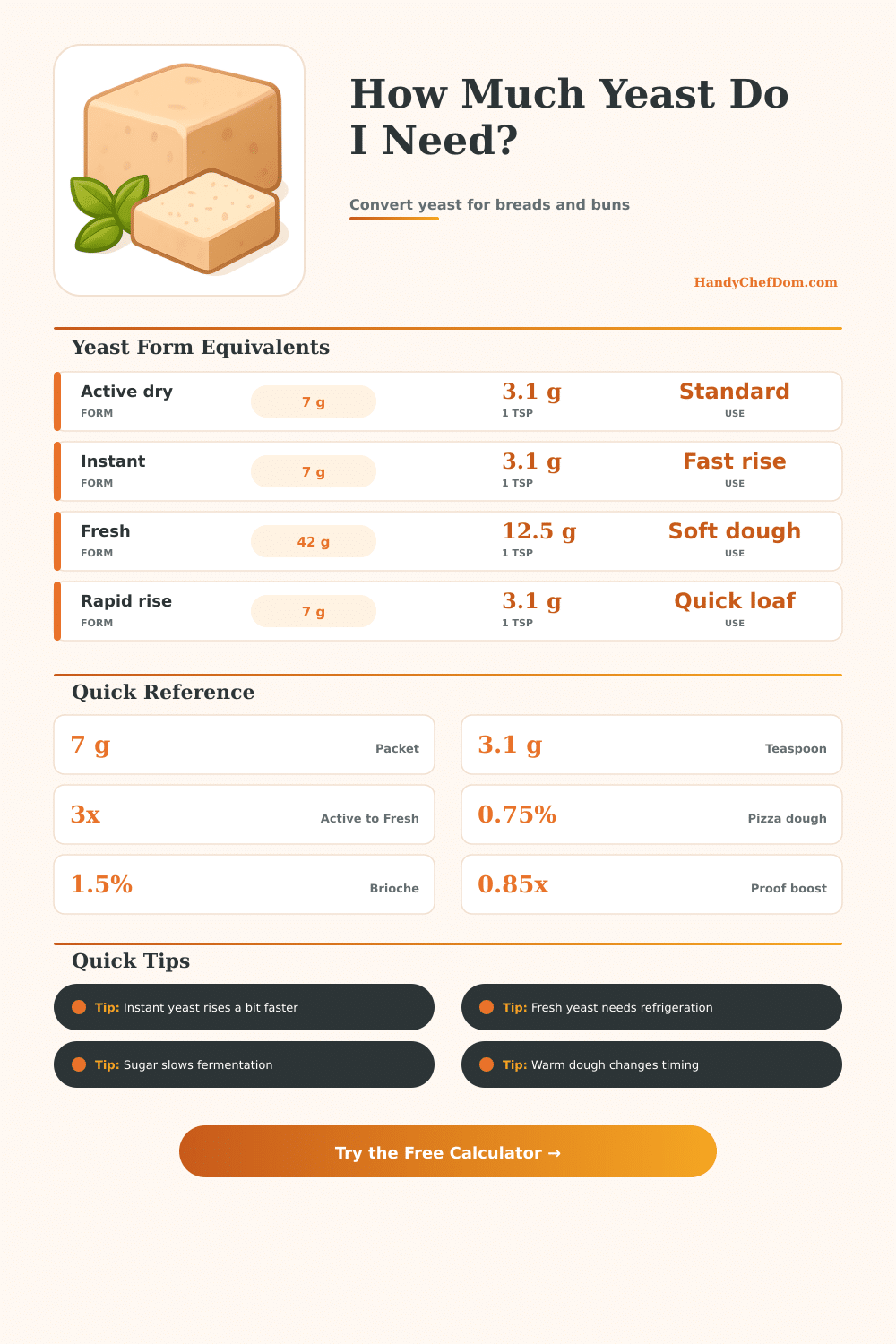
| Active dry | 7 g | 3.1 g | Baseline |
| Instant | 7 g | 3.1 g | 1:1 by weight |
| Rapid rise | 7 g | 3.1 g | Same grams |
| Fresh | 42 g | 12.5 g | 3x active dry |
| Style | Yeast % | Hydration | Base Rise |
|---|---|---|---|
| Lean artisan | 1.10% | 68% | 2.5 hr |
| Sandwich loaf | 1.20% | 63% | 2.25 hr |
| Pizza dough | 0.75% | 60% | 1.5 hr |
| Brioche | 1.50% | 68% | 3.0 hr |
| Condition | Impact | Direction | Note |
|---|---|---|---|
| Sugar above 5% | Slower rise | More yeast | Sweet dough |
| Room under 70°F | Slower fermentation | More time | Warm it gently |
| High hydration | More activity | Less yeast | Watch overproof |
| High altitude | Faster rise | Less yeast | Reduce slightly |
| Source | Target | Formula | Use Case |
|---|---|---|---|
| Active dry | Instant | 1:1 by grams | Fast bake |
| Active dry | Fresh | Multiply by 3 | Soft crumb |
| Fresh | Active dry | Divide by 3 | Daily bread |
| Instant | Rapid rise | 1:1 by grams | Same day |
Yeast are a living fungus that is used in the process of making dough rise. There is several different type of yeast that can be used in the baking process, and each type of yeast behave differently when baking bread. Active dry yeast require warm water to activate the yeast cell, while instant yeast can be directly added to the flour as the instant yeast is designed to work faster.
Fresh yeast is a moist form of yeast that must be stored in a refrigerator, and contains less concentration of an active ingredient than dry yeast. As a result, three times the weight of fresh yeast must be used to achieve the same effect than a specific weight of dry yeast. The amount of yeast that you should use in a batch of dough can depend upon the type of dough being made.
Types of Yeast and How to Use Them
Lean doughs, which contain little sugar or fat, require less yeast than enriched doughs, which contain a higher amount of sugar and fat. The sugar and fat content in enriched doughs can slow the fermentation process performed by the yeast, requiring more yeast to be added to the enriched dough to ensure that it still rises appropriately. Finally, the temperature in the kitchen can impact the way that the yeast work within the dough; warmer temperatures will make the yeast work faster, while cooler temperatures will make the yeast work more slow.
The various forms of yeast can be converted into another form by using mathematical multipliers to calculate how much of each type of yeast is needed. For example, if using fresh yeast, the weight of the fresh yeast will need to be divide by three to determine the amount of active dry yeast to be used. Finally, if using instant yeast, the amount of instant yeast will be the same as the weight of the dry yeast to be replaced, as the instant yeast is very potent.
You must also adjust the amount of yeast that you use according to the ingredient that you use in your dough recipe. For instance, if you use more sugar in your recipe, you will also have to use more yeast to compensate for the added sugar ingredient. Adding more water to your dough will allow the yeast to move through the dough more easy, so you will have to adjust the amount of yeast that you use for the recipe.
There is several common mistake that you can make when using yeast. Using cold water to activate active dry yeast will kill the yeast bacteria and will cause your dough to not rise with the yeast. If you do not store your fresh yeast in the refrigerator, your yeast will lose its potency and will not work to make your dough rise.
When using whole grain flour in your recipe, you will have to use more yeast because the flour is denser than white flour. If you live at a high altitude, you will have to use ten percent less yeast for your recipe because the air pressure in your area will cause your dough to rise more quickly. To test your yeast to see if it is working correctly, mix the amount of dough that you will use in your recipe with the amount of yeast that you will use.
Place the mixed ingredients into a greased bowl. If the mixture will double in size within the time that you expect the yeast to take to make the dough rise, the yeast is working correct. If the dough does not double in size, add ten percent more yeast to the recipe.
If the dough rises too quickly, you have used too much yeast for your recipe; reduce the amount of yeast that you use in your next batch of dough. Testing your yeast before baking your dough will ensure that the yeast is active and will help your dough rise.