🥚 Duck Egg Protein Calculator
Calculate the exact protein content in duck eggs — by count, weight, or egg size.
Includes full nutrition breakdown and comparison data.
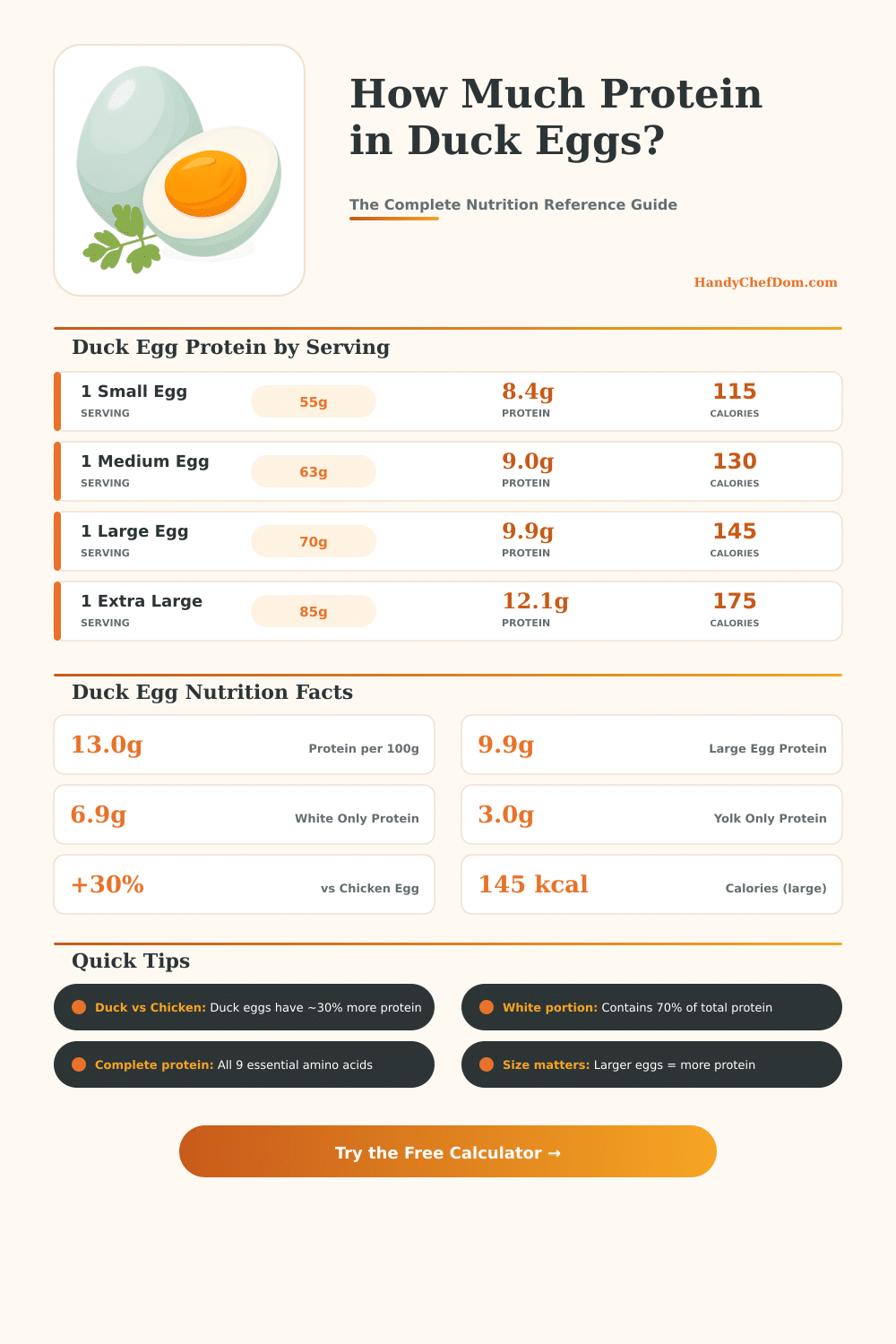
| Size | Avg Weight | Protein (Whole) | Calories | Fat |
|---|---|---|---|---|
| Small | 55g / 1.94oz | 7.2g | 102 kcal | 7.6g |
| Medium | 63g / 2.22oz | 8.2g | 117 kcal | 8.7g |
| Large | 70g / 2.47oz | 9.1g | 130 kcal | 9.7g |
| Extra Large | 85g / 3.00oz | 11.1g | 157 kcal | 11.7g |
| Jumbo | 100g / 3.53oz | 13.0g | 185 kcal | 13.8g |
| Egg Part | Approx Weight (Large) | Protein | Calories | Fat |
|---|---|---|---|---|
| Whole Egg (Large) | 70g | 9.1g | 130 kcal | 9.7g |
| White Only (Large) | 41g | 6.4g | 22 kcal | 0.0g |
| Yolk Only (Large) | 29g | 2.7g | 108 kcal | 9.7g |
| Metric | Duck Egg (Large) | Chicken Egg (Large) | Difference |
|---|---|---|---|
| Average Weight | 70g | 50g | +40% heavier |
| Total Protein | 9.1g | 6.3g | +44% more |
| Protein per 100g | 13.0g | 12.6g | +3% more |
| Total Calories | 130 kcal | 72 kcal | +81% more |
| Total Fat | 9.7g | 5.0g | +94% more |
| Omega-3 (per egg) | ~130mg | ~37mg | +250% more |
Duck Eggs are bigger than chicken eggs. Probably every person first notices that about them. Compared to average chicken eggs, they reach around 50% bigger size.
Each of them weighs almost 2.5 units while a standard chicken egg has about 1.7 units. The weight of a Duck Eggs ranges according to the species of the bird and its own body size.
All About Duck Eggs
Shells of Duck Eggs are even more sturdy. That tough cover helps them stay fresh for more time than chicken eggs. Even so, it takes a bit more force to break them easily.
A strong blow against the side normally solves the problem.
Yolks of Duck Eggs taste more rich than those of chicken. The yolks are big, golden and creamy. White parts store more Protein when one compares the yolk-white share with chicken eggs.
They also have less water and seem thicker. Therefore, one finds them more filling and rich in flavor.
In baking Duck Eggs truly shine. They help cakes and breads rise much more highly. Cakes become more fluffy, peaks reach bigger height and cookies get brighter look.
They also improve sauces, creamy desserts and puddings in texture. One can use them well for fresh pasta, rice pudding, carbonara sauce or flan.
One can prepare Duck Eggs the same as chicken. Fry them, scramble them, poach them or boil them. No special method is needed.
A simple fried Duck Eggs with a tiny amount of olive oil or red Chilean oil makes tasty and easy food. A soft boiled Duck Eggs together with toast strips makes a good breakfast. They also work well in frittatas, quiches or crepes.
Trouble happens when one swaps them in recipes. Because they are much more large, if one takes the same amount as the recipe says, it can ruin the result. For two eggs in a recipe, two Duck Eggs commonly end up too big.
When a recipe wants three eggs, two Duck Eggs commonly work more well.
In Chinese cooking, salted Duck Eggs are popular. One prepares them boiling just like hard boiled eggs. Another fun method is made up of keeping raw yolks in salt, laying them in salt holes inside a tin and covering entirely.
Ducks lay fewer eggs than chickens, which explains why Duck Eggs rarely appear. Chickens are bred to lay eggs almost daily during the hole year. Ducks prefer to lay their eggs beside water and spread everywhere, which causes trouble on big farms.
Duck Eggs from pasture-raised ducks, that one feeds with no-GMO, soy-free pasture, one finds at farmer markets or online althoughthe price is higher.
Duck Eggs store almost all vitamins except C and include traces of minerals like iron, copper and manganese. They are rich in calcium. Thanks to the bigger yolk share, they have more cholesterol than chicken eggs.