Gas Cooking Temperature Conversion Calculator
Convert gas mark, Fahrenheit, and Celsius settings, then tune the dial for fan ovens, altitude, and recipe calibration.
Start with the setting you have, then var the calculator convert the scale, apply oven adjustments, and show the nearest gas mark.
| Gas | F | C | Use |
|---|---|---|---|
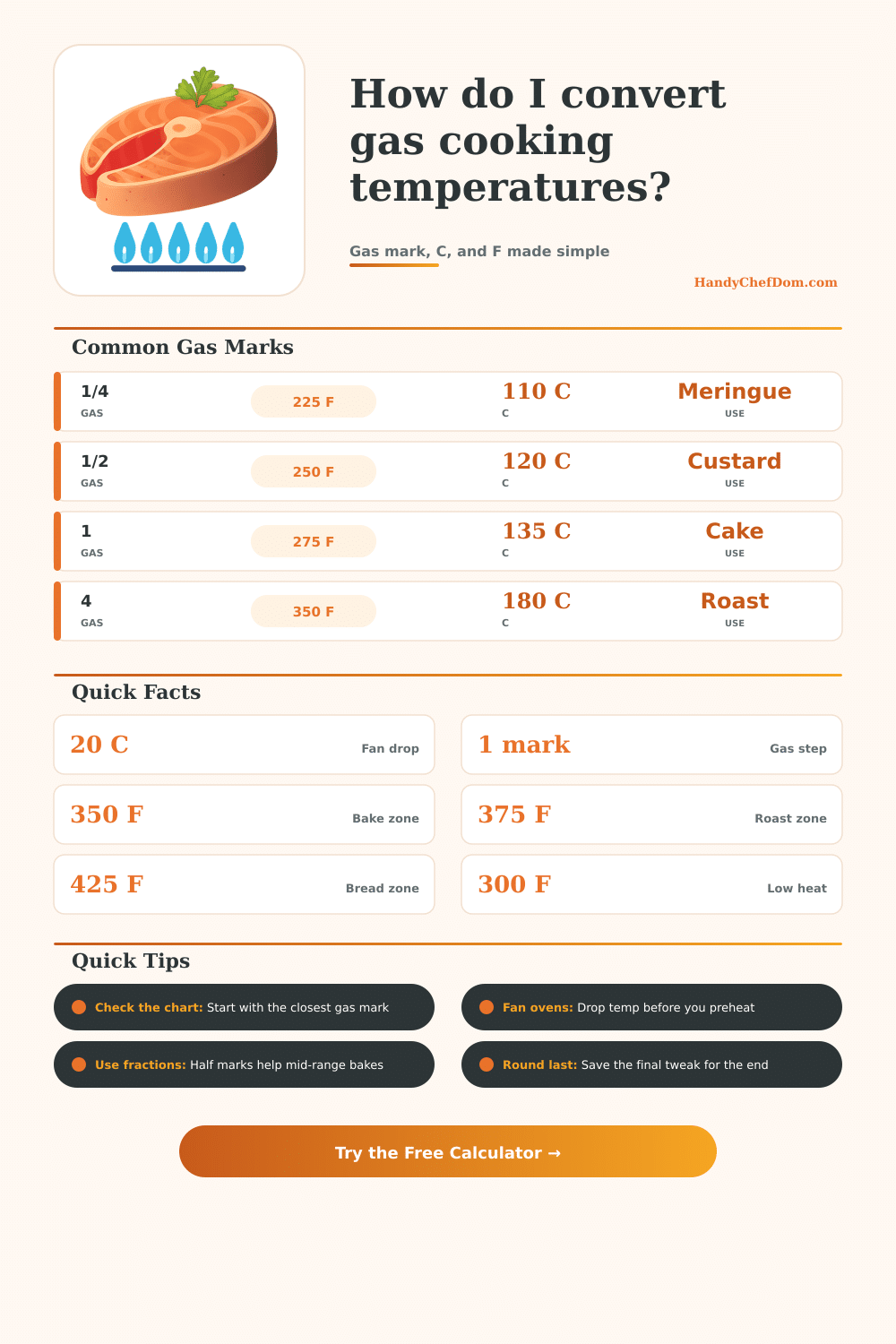
| 1/4 | 225 F | 110 C | Meringue |
| 1/2 | 250 F | 120 C | Custard |
| 1 | 275 F | 135 C | Cake |
| 2 | 300 F | 150 C | Slow bake |
| Gas | F | C | Use |
|---|---|---|---|
| 3 | 325 F | 165 C | Sponge |
| 4 | 350 F | 180 C | Roast |
| 5 | 375 F | 190 C | Bread |
| 6 | 400 F | 200 C | Pizza |
| Oven style | Shift | Best for | Note |
|---|---|---|---|
| Conventional | 0 C | Even bake | Baseline dial |
| Fan oven | -20 C | Tray bakes | Air moves fast |
| Fan-assisted | -15 C | Cakes | Slight drop |
| Pizza stone | +10 C | Crust | Hot floor help |
| Recipe | F | C | Gas |
|---|---|---|---|
| Cake | 350 F | 180 C | 4 |
| Bread | 375 F | 190 C | 5 |
| Roast | 400 F | 200 C | 6 |
| Meringue | 225 F | 110 C | 1/4 |
Gas cooking temperatures are easiest to trust when you compare the source scale, the oven style, and the final dial setting together. This calculator keeps all three in sync for steadier baking.
Oven temperature are essential to cooking because the temperature of the oven will determine the way that your food will cook and react to the heat in the oven. When cooking, many individual may encounter difficulties using the gas marks for cookware and the Celsius measurement for ovens, or the Fahrenheit measurements for cookware and the Celsius measurements for ovens. In either case, the two set of measurements will need to be converted to ensure that the oven is set to an appropriate temperature for the food that is to be cooked.
If the oven isnt set to the correct temperature, the food may not cook proper, and it may burn or be undercooked. Gas marks originate from the United Kingdom, and each mark indicate the heat level for cooking. Gas mark 1 is approximately 135 C, gas mark 4 is approximately 180 C, and gas mark 6 is approximately 200 C. Each type of oven have different heat distributions throughout the oven ranges, and each type of oven may require different cooking temperature to allow for even cooking of the food.
How to Set the Right Oven Temperature
Fan ovens use a fan to circulate the air within the oven, and cook the food more efficient than conventional ovens. Because of the efficiency of fan ranges, you should lower the temperature 20 C from the requested temperature for the recipe. Convection ovens also circulate the air within the oven.
Convection ovens may also require adjustment to the cooking temperature. To ensure that the correct cooking temperatures are set for the food to be cooked, an oven thermometer may be used to calibrate the oven. By calibrating the oven, the manufacturer can adjust the oven to account for the difference in temperature that is indicated on the oven range versus the actual temperature within the oven.
In addition to the type of oven that is used, the altitude at which the oven is used can impact the oven temperatures. At high altitude, the air is thinner and the moisture within the foods will evaporate at a faster rate. To compensate for this evaporation of moisture at high altitudes, adjustments must be made to the oven temperatures.
Additionally, different type of food may require different cooking temperatures. For instance, cakes require heat level of around 180 C, but bread loaves may require cooking temperatures of 190 C. Additionally, foods like meringues require low cooking temperature, around 110 C, so that they dont dry out and begin to crack. To ensure that cooking temperatures are correctly set up for the food that will be cooked, individuals may perform a few step before adding the food to the oven to preheat.
First, individuals will need to determine the type of cooking temperature that is required for the food, whether gas marks, Fahrenheit, or Celsius. Second, the cook must convert the cooking temperature to baseline Celsius measurement. Third, individuals must adjust the Celsius temperature according to the type of oven that will be used, the altitude at which the oven will be used, and the calibration of the oven.
For instance, if the food will be cooked in a fan oven, the temperature should of been adjusted to decrease the temperature by 20 C due to the efficiency of fan ovens in cooking food. Finally, an allowance of plus or minus 5 C in the target cooking temperature may be made to account for potential hot spot within the oven. Many cooks may make mistakes when using ovens and cooking temperatures.
For instance, cooks may ignore the oven style in which the oven will be cooking the food. For instance, cooks may use a fan oven but set the temperature to 180 C, which is too hot for the food to cook properly in that oven; it should be 160 C. Another mistake that cooks may make is the skipping of the calibration process of the oven. For instance, cooks may set the oven to 180 C, but the oven may actualy be 190 C. Thus, the food may be undercooked.
Finally, cooks may not consider the position of the food within the oven. For instance, the shelf located at the top of a conventional oven may reach higher temperatures than the shelves in the middle of the oven. Thus, the position of the food within the oven may impact the way in which the food cooks.
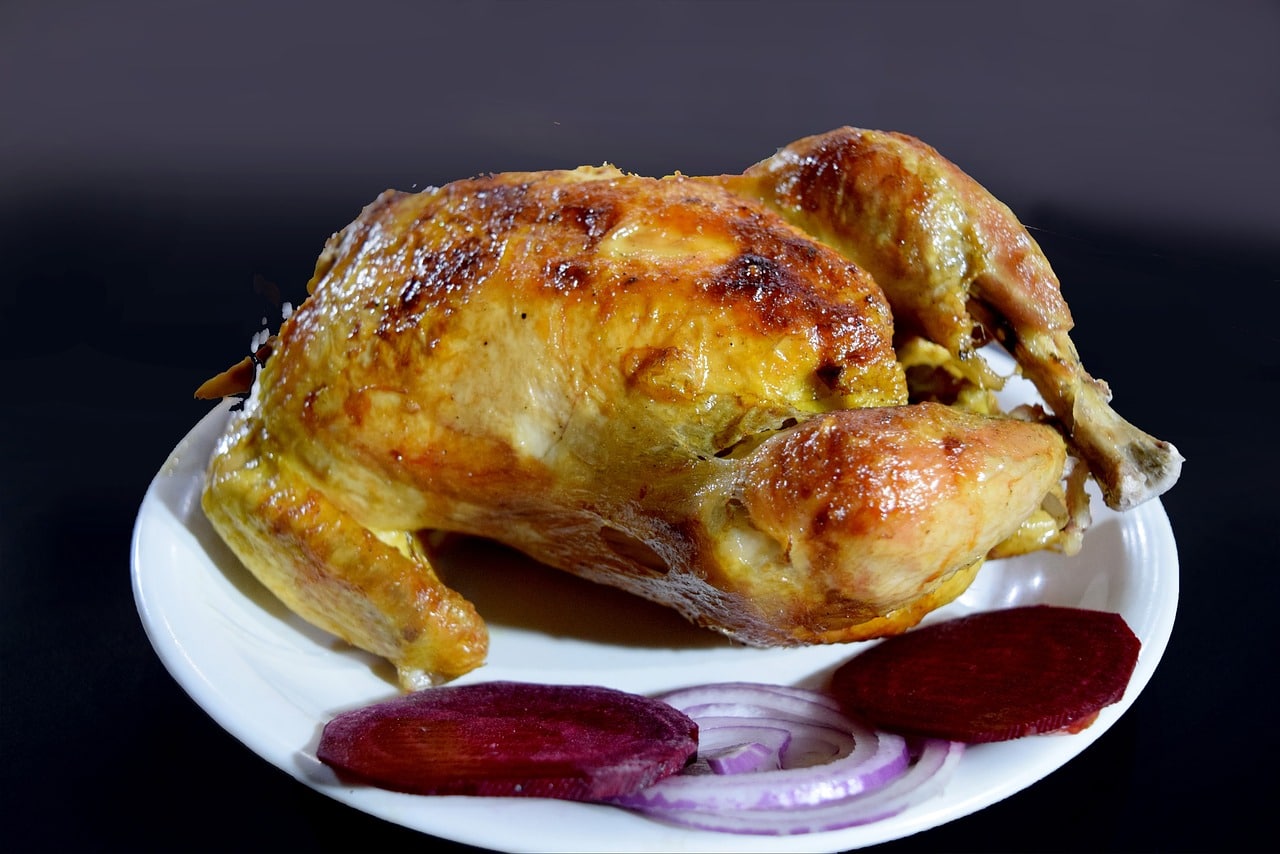
Using these cooking temperature adjustment will ensure that the food is cooked correctly. For instance, foods like chicken should be roasted in the fan oven at a setting of 185 C, instead of 200 C. Foods like bread should be baked at a lower temperature at high altitudes to ensure that the bread does not dry out. Foods like custard should be cooked at a steady temperature of 120 C, as temperatures that are too high will curdle the custard.
Thus, by calculating the correct cooking temperature for the food, cooks will ensure that the food reaches the desired texture and consistency.