Turkey Breast Cooking Time Calculator
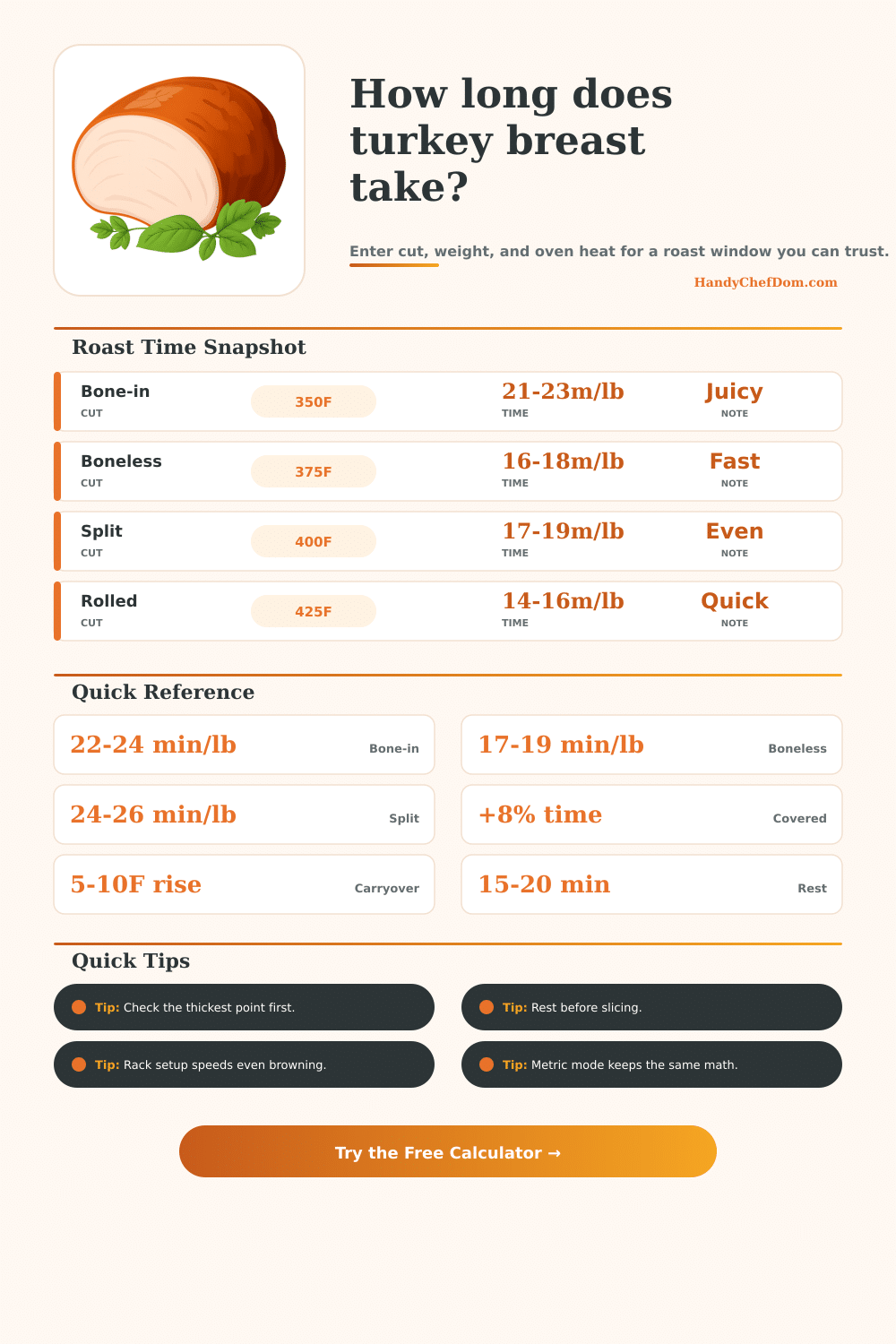
Turn turkey breast weight, cut style, oven heat, and finish setup into a roast window that is easier to trust on busy dinner days.
Choose the cut, the bird weight, the oven temperature, and the pan style. The calculator turns those inputs into roast time, rest time, and a practical serving estimate.
| Weight | Temp | Time | Use |
|---|---|---|---|
| 2-3 lb | 375F | 36-48m | Small roast |
| 3-4 lb | 350F | 60-84m | Meal pair |
| 4-5 lb | 350F | 78-105m | Family tray |
| 6-8 lb | 325F | 120-180m | Holiday bird |
| Temp | Bone-in | Boneless | Result |
|---|---|---|---|
| 325F | 23.5 | 20.0 | Slow roast |
| 350F | 21.0 | 18.0 | Classic pace |
| 375F | 18.5 | 16.0 | Steady color |
| 425F | 15.5 | 13.0 | Fast finish |
| Setup | Factor | Effect | Note |
|---|---|---|---|
| Rack | 1.00 | Even airflow | Best all-around |
| Shallow | 1.02 | Gentle boost | Good color |
| Tented | 1.05 | Slower browning | Moister finish |
| Covered | 1.08 | Longest bake | Softest skin |
| Cut | Yield | Servings | Notes |
|---|---|---|---|
| Bone-in | 72% | 3.5-4.0 | More bone loss |
| Boneless | 84% | 4.0-4.5 | Easy slicing |
| Split | 70% | 3.0-3.5 | Deep roast |
| Rolled | 88% | 4.5-5.0 | Tight shape |
Use this turkey breast cooking time calculator to estimate roast time, rest time, and serving count from cut, weight, oven heat, and pan setup for a steadier dinner schedule.
Turkey breast is a lean cut of meat that require specific attention to timing and temperature to prevent the turkey breast from becoming dry and tough. Turkey breast cooks differently than the whole turkey because it dont contain the dark meat that balance the cooking of the turkey breast. Because turkey breast does not contain the leg and thighs of the turkey, the white meat cooks faster and dries out faster.
The cut of turkey breast you use will affect teh cooking time of the turkey breast. If you use a bone-in turkey breast, the bone will protect the turkey breast from drying out. A boneless turkey breast will expose the turkey breast to the heat more even; however, a boneless turkey breast will dry out more easier.
How to Cook a Juicy Turkey Breast
A rolled turkey breast will cook faster because the rolled turkey breast allow heat to circulate to the turkey breast evenly. The temperature at which you cook the turkey breast will also affect the outcome of the turkey breast. If you cook the turkey breast at 425 degrees, the turkey will cook faster but will reach a higher internal temperature.
This happens because the carryover cooking will heat the turkey breast 5 to 10 degrees beyond the turkey breasts internal temperature when removed from the oven. If you set the turkey breast to 325 degrees, cooking will take longer but produce a juicier turkey breast. This temperature is useful for cooking large piece of turkey breast.
The equipment used to roast the turkey breast will also change the results of the roasting process. Using a roasting rack will allow the turkey breast to brown more evenly. If you place the turkey breast on a roasting rack, it will allow the fat to drain from the turkey breast.
Placing the turkey breast in a covered pan will preserve the moisture in the turkey breast. However, this will increase the cooking time by 8 percent. Placing the turkey breast in a covered pan is useful for those looking to preserve the turkey breast from drying out.
Additionally, the shape of the turkey breast and the temperature of the turkey breast will affect the cooking process. A thick turkey breast will cook slower because it will retain more heat than a flat turkey breast. If you cook a turkey breast that is taken out of the refrigerator, it will require longer cooking time because the turkey will have to heat to the cooking temperature of the oven.
All turkey breast recipes require the turkey breast to rest after it is roasted. Allowing the turkey breast to rest for 15 to 20 minutes will allow the juices to redistribute within the turkey breast. This redistributing of the turkey breast juices will allow the turkey to retain its moisture when sliced.
The yield of turkey breast will vary depending on the cut of turkey breast you use. If you use a 4-pound bone-in turkey breast, you can expect the turkey breast to shrink to 72 percent edible meat. The same 4-pound boneless turkey breast will shrink to 84 percent edible meat.
However, the boneless turkey breast will dry out more. The weight and cut of turkey breast will determine the cooking time. A 2 to 3-pound turkey breast will take under an hour to cook at high heat.
A 6 to 8-pound turkey breast will take up to 3 hours to cook at low heat. Using the single measurement of minutes per pound for turkey breast will result in under or over cooking the turkey breast. The minutes per pound of turkey breast will change according to the cut of the turkey breast and the oven temperature in which you will cook the turkey breast.
Always use a food thermometer to test the internal temperature of the turkey breast. The edges of the turkey breast will cook to doneness before the center of the turkey breast. Therefore, you must focus on the thickest part of the turkey breast.
Turkey breast contains a nutritious profile of protein. Four ounces of turkey breast contains 135 calories, 29 grams of protein, and only 2 grams of fat if you remove the skin from the turkey breast. There are no carbohydrates in turkey breast.
Because turkey breast contains lean protein, turkey breast is beneficial for individuals who are counting the number of calories and protein in there diet. To increase the moisture content of the turkey breast, brine the turkey breast. Brining the turkey breast will increase the moisture content by 10 to 15 percent of the turkey’s total weight.
If you use a dry brine, place the turkey breast in an uncovered container and leave for 12 hours a day for 2 days. Do not overcrowd the roasting pan when cooking the turkey breast; this will cause the turkey breast to steam instead of roast. Use a roasting rack for the turkey breast to allow the turkey to brown more effective when roasted.
You should of used a roasting rack to make sure it browns well. It’s important to make sure you dont overcook it. Adding alot of salt might help too.
The turkey breast tastes actualy better when it is juicy.