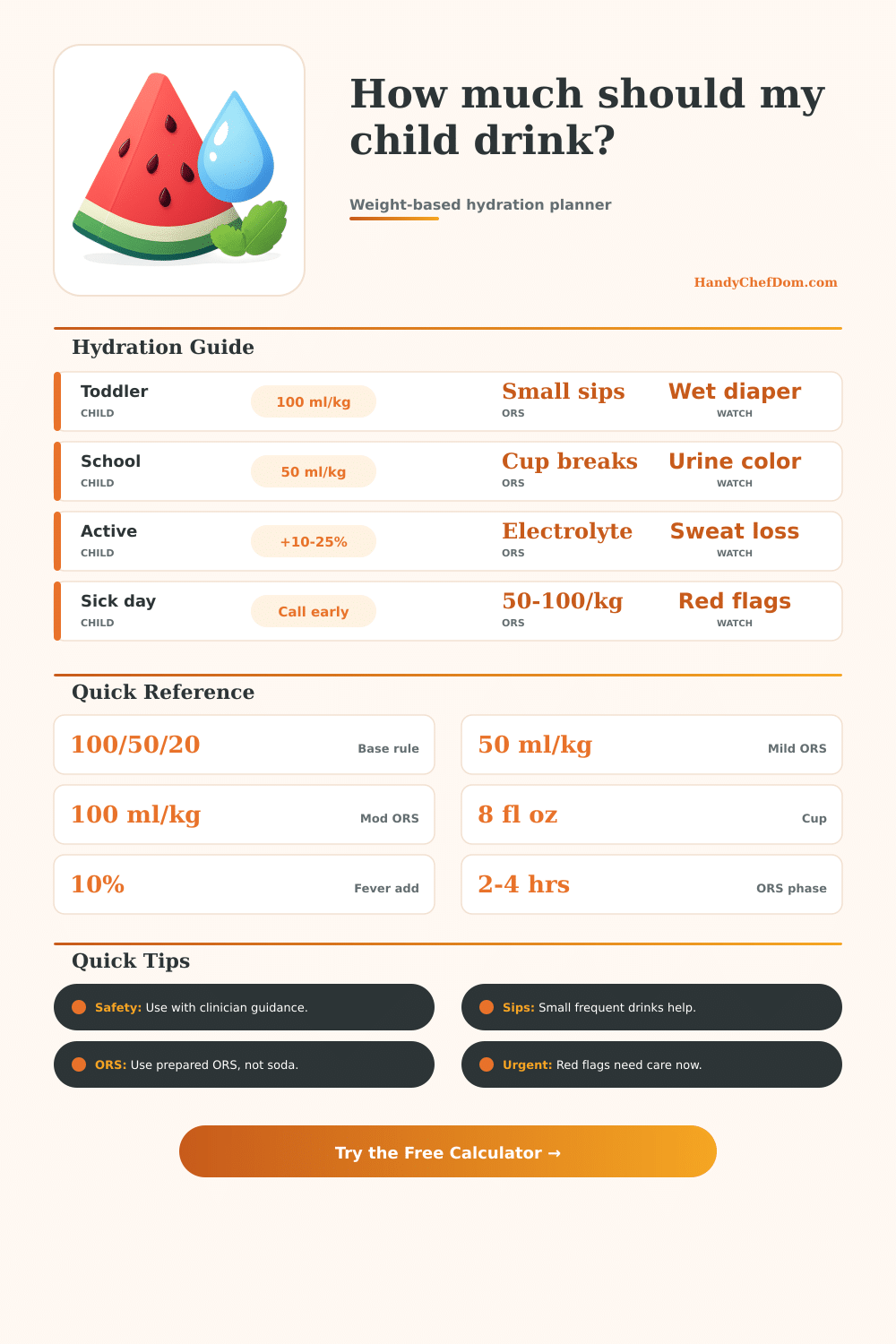
💧 Pediatric Hydration Calculator
Plan child hydration notes by weight, age band, activity, heat, fever, sick-day losses, and optional ORS guidance while keeping urgent warning signs visible.
| Weight band | Planning formula | Example | Caregiver note |
|---|---|---|---|
| 3-10 kg | 100 ml/kg/day | 8 kg = 800 ml | Infants need clinician caution |
| 11-20 kg | 1000 + 50 ml/kg above 10 | 16 kg = 1300 ml | Use small frequent offers |
| Over 20 kg | 1500 + 20 ml/kg above 20 | 35 kg = 1800 ml | Activity may raise needs |
| Teen size | Weight formula still estimates | 55 kg = 2200 ml | Discuss sports plans if needed |
| Situation | Common reference amount | Timing | When to escalate |
|---|---|---|---|
| Mild dehydration discussion | 50 ml/kg ORS | Over about 4 hr | If symptoms worsen or child refuses |
| Moderate dehydration discussion | 100 ml/kg ORS | Over about 4 hr | Call clinician or urgent care |
| Ongoing stool or vomit, under 10 kg | 60-120 ml ORS each | After each loss | If losses are frequent |
| Ongoing stool or vomit, over 10 kg | 120-240 ml ORS each | After each loss | If child cannot keep it down |
| Day factor | Calculator add | Why it matters | Practical check |
|---|---|---|---|
| Quiet rest | 0% | Baseline planning day | Offer with meals and snacks |
| Active play | 12% | Extra sweat and movement | Schedule drink breaks |
| Sports sweat | 20% | Longer exertion can raise needs | Use pre and post practice sips |
| Hot or humid | 15-25% | Heat raises fluid loss | Watch energy and urination |
| Age band | Helpful tracking | Drink style | Safety note |
|---|---|---|---|
| Under 6 months | Wet diapers, feeding | Clinician directed | Call early for illness |
| 6-12 months | Diapers and alertness | Tiny frequent sips | Avoid self-treating dehydration |
| 1-5 years | Urination, tears, mouth | Small cups or spoon sips | Vomiting can change plans quickly |
| 6-18 years | Urine color, dizziness, energy | Cup breaks and bottles | Heat illness needs urgent care |
Planning references summarized from pediatric maintenance fluid formulas and oral rehydration guidance. Use local pediatric clinician instructions whenever they differ.
A pediatric hydration calculator is a tool that will help you determine how much fluid a child need to consume. The calculator use specific data points about the child to create a fluid plan. This calculator can be used in the case of a child that is experiencing a fever or that has been physically active.
The first data point the calculator will use is the weight of the child. The weight determine how much fluid the child will need to maintain there bodily functions. The first ten kilograms of a child’s weight require more fluid per kilogram than the following ten kilograms of weight.
How the Child Hydration Calculator Works
Additionally, fluid requirement per kilogram of weight will decrease again for children who weigh more than twenty kilogram. This is due to the fact that small bodied children lose more fluid through breathing and sweating than those with a larger frame. The clinician can make any adjustments by sharing a percentage, and this measurement will be calculated using the Holliday-Segar equation.
The next data point will be the age of the child. Age can play a major factor in how much fluid a child consume. Toddlers require smaller amounts of fluid compared to children of other age groups.
The pediatric hydration calculator will adjust for this by offering an amount of fluid that is appropriate for the age of the child. Infants under six months of age require extra cautious when it comes to fluid consumption. Any plan to provide fluid to infants under the age of six months should of been discussed with the child’s clinician.
The activity level and the weather the child experienced will be the third data point that determines the child’s fluid consumption needs. For children that had a light day at school, there will be little extra fluid needed. However, for children that had physical activity or were exposed to hot weather, there may be a need for extra fluid consumption percentage.
The pediatric hydration calculator can add these percentages to the fluid requirement of the child to make sure that the child can consume enough fluid to offset fluid loss through physical activity and hot weather. The goal of the hydration calculator is not to determine the amount of fluid that a child should consume, but to allow an adult to recognize when the child need more fluids than normal and to provide drinks to the child. The fourth data point will be whether the child has a fever or is experiencing stomach symptoms that can lead to fluid loss.
A child with a fever will experience more fluid loss than those without a fever. Additionally, a child that is vomiting or experiencing loose stool will also lose fluid through these bodily function. The pediatric hydration calculator allow a user to add a flag to indicate the presence of a fever or symptoms that suggest fluid loss.
Additionally, the pediatric hydration calculator will allow the user to input the amount of vomiting or loose stools that a child experienced to calculate how much oral rehydration solution (ORS) the child should receive. You decide when to give ORS to your child, but the calculator will help you determine how much to give. Many people make mistake with fluid consumption plans for children.
For example, people may calculate the total amount of fluid a child should consume and then forget about the rhythm in which the fluids should be offered to the child. A child will not consume the calculated fluid amount in two sitting. The pediatric hydration calculator will suggest the amount of time that fluid should be offered to the child so that the total amount of fluid is consumed throughout the child’s waking hours.
The next mistake that people make is to treat every warm day the same. However, the pediatric hydration calculator allow for activity level and weather conditions to be entered separately. This is to allow clinicians to adjust fluid consumption percentages for activity without affecting fluid consumption percentages made for the weather should the weather remain the same during the observed period.
The pediatric hydration calculator will calculate for you the fluid a child should consume. However, the calculator cannot measure all aspect of a child’s fluid consumption needs. For example, a child may not drink fluids if they are not used to drinking fluids.
This behavior may be due to medications or fluids that the child dislike. The baseline that the pediatric hydration calculator calculates for the child is a starting point; however, it is essential to also observe the child to ensure they are consuming enough fluids. Should a child exhibit risk factor for dehydration, the pediatric hydration calculator will shift to suggest extra watch or contact with the child’s clinician.
The calculator will indicate to clinicians that a child should be observed for sign of dehydration or that they should be contacted earlier to address the condition. Using the pediatric hydration calculator for fluids during ordinary days will allow clinicians to become familiar with the amount of fluid that a child normally consume. The more that the clinician use the calculator, the more they will understand how much fluid is consumed due to physical activity or illness.
This knowledge allow the clinician to have an understanding of the fluids before any problem with fluid consumption emerge. Additionally, clinicians will be able to remove the guesswork of providing fluids to a child.