Biga Calculator
Set total flour, prefermented share, and hydrations to split flour and water between biga and final mix with a clean baker's percentage workflow.
Biga Presets
Input Setup
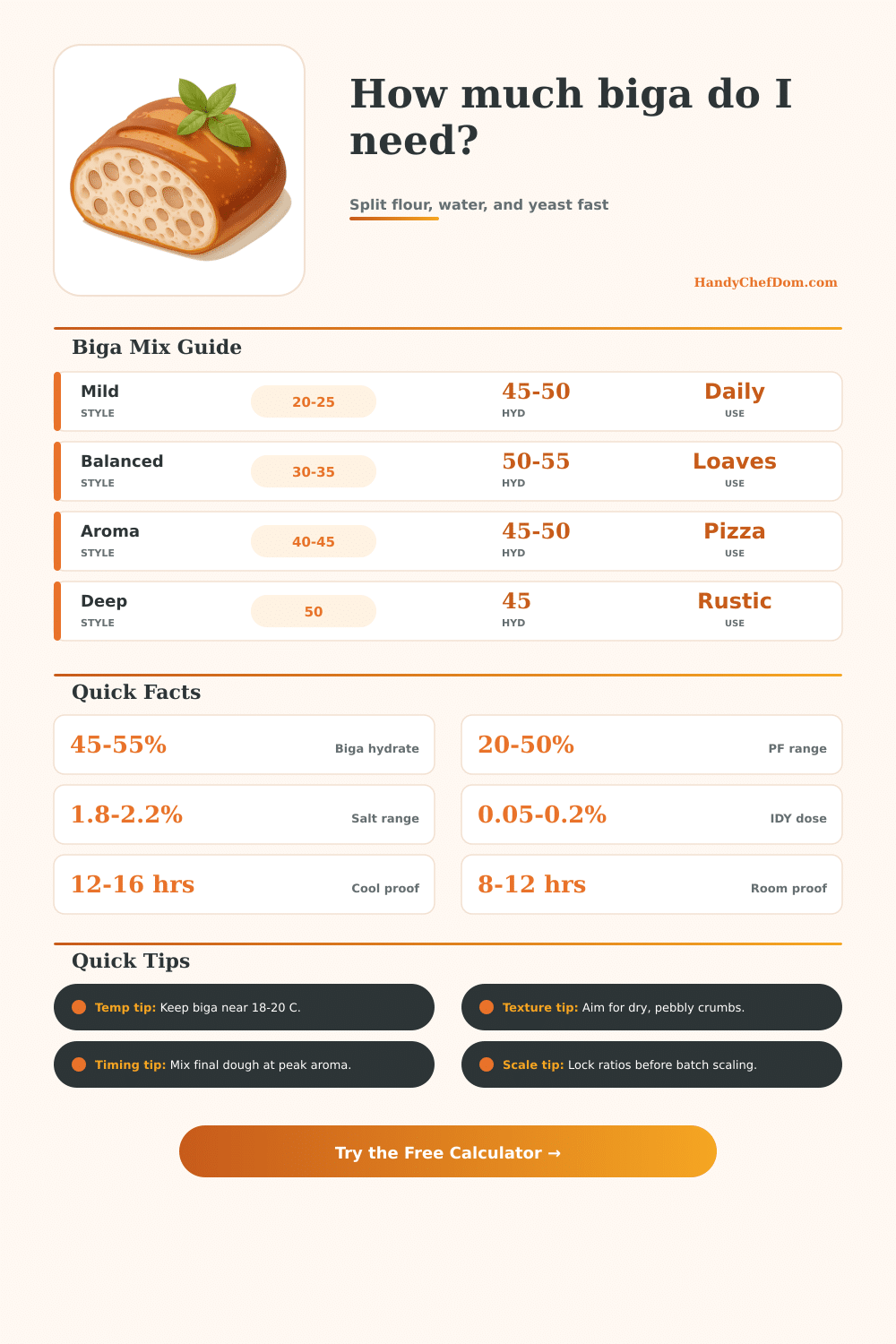
Prefermented flour (PF) controls flavor load. Biga hydration stays lower than final dough hydration, so this split keeps strength while opening aroma.
Biga Profile Grid
Reference Tables
| PF % | Biga Hyd | Aroma | Use |
|---|---|---|---|
| 20-25 | 50-55 | Low | Soft loaf |
| 30-35 | 48-52 | Medium | Daily bread |
| 40-45 | 45-50 | High | Pizza |
| 50 | 45 | Strong | Rustic loaf |
| Hydration | Crumb | Strength | Handling |
|---|---|---|---|
| 60-64 | Tight | High | Easy |
| 65-69 | Even | Good | Stable |
| 70-74 | Open | Mid | Sticky |
| 75-80 | Very open | Low | Wet |
| Salt % | Flavor | Ferment | Common Use |
|---|---|---|---|
| 1.6 | Light | Fast | Sweet rolls |
| 1.8 | Balanced | Normal | Pan loaves |
| 2.0 | Defined | Moderate | Country loaf |
| 2.2 | Bold | Slower | Rustic crust |
| Temp | Window | Aroma Cue | Action |
|---|---|---|---|
| 17 C | 14-16 h | Nutty | Warm final mix |
| 18 C | 12-14 h | Sweet wheat | Standard mix |
| 20 C | 10-12 h | Ripe dairy | Use promptly |
| 22 C | 8-10 h | Sharp rise | Cool dough |
This calculator estimates baker's percentages from your chosen biga and dough settings. Use dough temperature, fermentation cues, and bench handling as the final check before scaling production.
A biga is a type of preferment that many bakers chooses to use in order to add flavor to their bread. A biga is prepared by combining some of the total amount of flour that will be used for the batch with a relatively small amount of water and yeast. This mixture is allowed to rest for several hour or overnight, which allow the biga to develop some of the flavors that is present in bread that contains biga.
These flavors are often not present in bread made with a straight dough, which is mixed and bake on the same day. Furthermore, the amount of flour that the baker places into the biga will determine how strong the flavor and aroma of the baked bread will be. The amount of flour that is used in the biga relative to the total amount of flour for the batch is referred to as the prefermented flour percentage.
How to Make and Use a Biga
A low percentage of prefermented flour will create a bread that contains mild flavorings, whereas a higher percentage of prefermented flour will lead to bread with a more stronger aroma. The calculator that is provided helps to calculate the percentage of prefermented flour that should be used, as it ensures that the baker maintains some consistency in the ratio of ingredients in the biga to those in the final mix of dough. It is important for bakers to understand the effect that the prefermented flour percentage will have on the bread that is bake.
The hydration of the biga is the percentage of water to flour in the biga. The hydration of the biga is usually relatively low, ranging between forty-five and fifty-five percent. A biga with low hydration will be relatively stiff and crumble, and will take longer to ferment; a wetter biga will ferment more quick but may lead to over-fermentation of the biga; a slack final dough made with the fermented biga will be difficult to shape as it will tend to tear.
Using a relatively low hydration for the biga allows the final mix to contain more water than the biga itself. Furthermore, bakers can lock the hydration of the biga into the calculator to allow bakers to adjust the amount of water in the final mix stage of the process. Yeast is another ingredient that is distributed between the biga and the final mix.
Most of the total amount of yeast is placed into the biga, as it allows the biga to fully ripen according to its own schedule; the remainder of the yeast is placed into the final mix to provide the final lift to the bread while it is undergoing bulk fermentation or proofing. If too much yeast is placed into the biga, the biga may fully ferment before the dough is ready to mix; too little yeast in the biga will cause the biga to be too quiet once the dough is mixed. The calculator includes an adjustment for the share percentage of the yeast that is placed into the biga, allowing bakers to test how fast or slow the fermentation will occur.
Salt is an ingredient that is usually not added to the biga. Salt may be added to the final mix of flour and water, as the salt will season the entire batch of dough and help to control the fermentation process. Furthermore, keeping the salt separate from the biga in the calculator makes it more difficult for bakers to forget to add the salt to the mix or to include it twice in calculating the recipe.
In addition to the ingredients, the biga must be rested at the appropriate temperature for the desired amount of time. For instance, if the biga is rested at an average of eighteen degrees Celsius, it will take twelve to fourteen hours to fully ferment, and will have an aroma of sweet wheat; warmer temperatures will lead the biga fermenting in a shorter period of time, but with an aroma similar to dairy products; cooler temperatures will allow the biga to take longer to ferment and feature more mild acidity. The management of both time and temperature is essential to know when the final dough should be mixed.
While the calculator will provide the weights of ingredients that need to be used for the biga, the baker must use the bigas smell and texture to determine when the biga is ready. Many mistakes is made in the preparation of biga. For instance, increasing the percentage of prefermented flour but failing to adjust the hydration of the biga or the share of yeast that is placed into the biga will result in fast fermentation of the biga, leading to a weak bread structure.
Furthermore, using the same recipe for the biga regardless of the hydration level of the total dough will again result in structural issue with the bread; either the dough will be too tight when formed or too slack when knead. A better understanding of the structure of bread with different hydration levels can be gained through the reference tables included in the calculator. After the biga has fermented, it is combined with the remaining ingredients for the batch.
The calculator provides weights for each of the ingredients for the final mix, in addition to accounting for the portion of dough that will stick to the mixing bowl or evaporate during mixing. The baker can use these weights to determine how much of each ingredient to add; if the dough is difficult to mix, water may be added. The goal is to produce a dough that contains the aroma of the biga but also strong enough to experience an oven spring when bake.
Regardless of how many loaves of bread that are to be produced, the same process for calculating the ingredients for the biga can be utilized. Because the percentages of the ingredients are to be maintained, the total weight of the flour can be changed and the calculator will adjust the other ingredients accordingly. This flexibility allow bakers to adjust from baking a single loaf to baking many loaves at a time.
The consistency of the ratio of ingredients allows for the process to remain variable in only one aspect: the feel of the flour. The biga can be tested while it is on the bench. A finished biga will feel pebbly to the touch, and will hold its shape when squeeze.
If the biga feels smooth, it may contain too much water; in this case, reducing the amount of water to be used in the next batch will help the biga to set. Furthermore, when the final mix of dough containing the biga is mixed, it should tear rather than stretch; the tear indicates that the acidity of the biga has reached the proper level. These physical tests confirm that the weights of each ingredient were correctly entered into the calculator.
The biga calculator removes the need for the baker to perform any arithmetic calculations. Instead, the baker may rely on the calculator’s indicated weights for each ingredient, the smell of the biga, the texture of the biga, and the structure of the final mix to determine when the biga is ready for use in baking. When a bakers instincts match the weight calculations, the baker will have a repeatable process for baking bread with biga.