🌶 Black Pepper Per Pound of Meat Calculator
Estimate black pepper by teaspoon, gram weight, cut type, grind, cooking method, crust target, salt level, freshness, and serving plan.
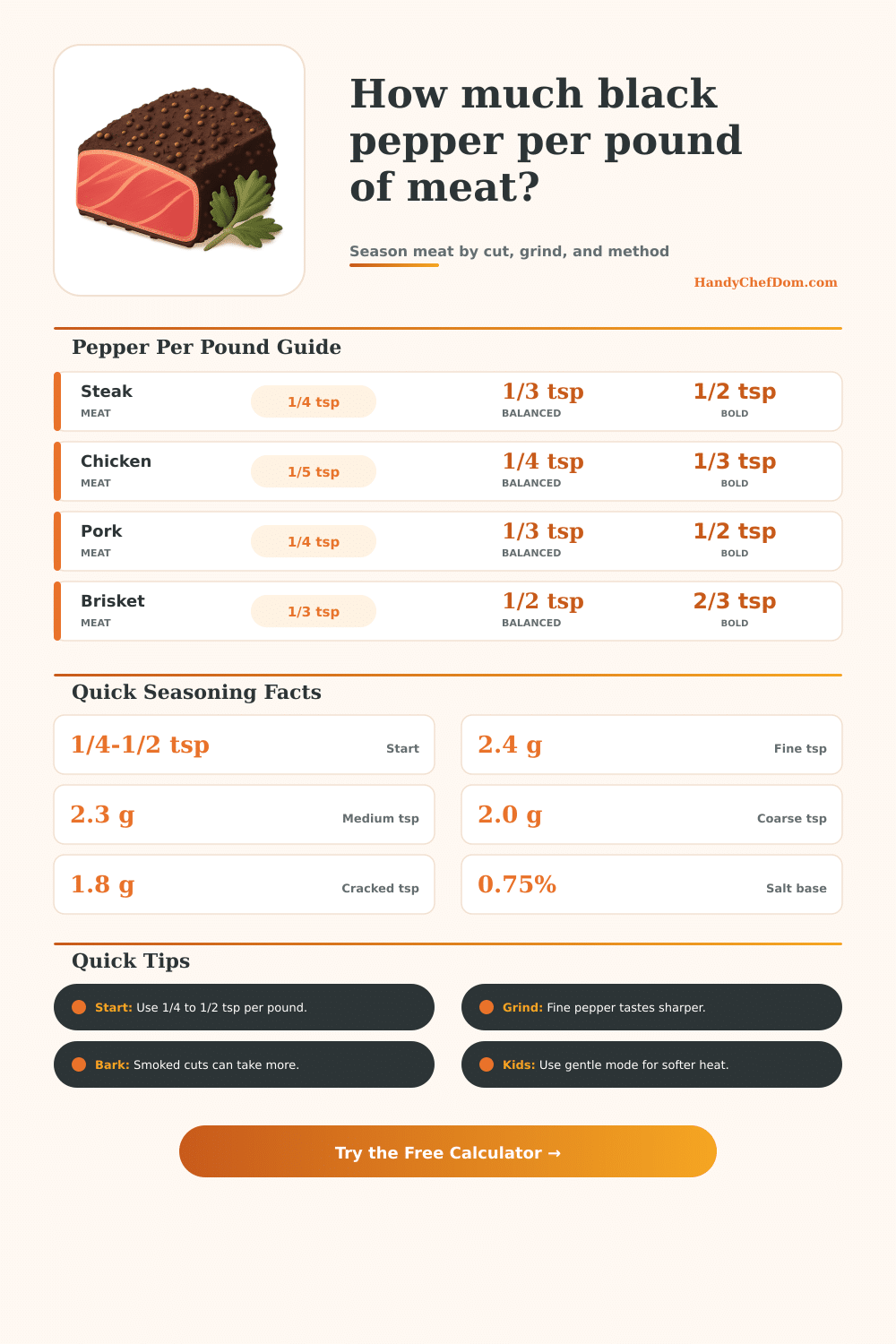
A practical starting point is about 1/4 to 1/2 teaspoon black pepper per pound of meat. This calculator adjusts that range for grind size, meat cut, cooking method, rub style, crust target, pepper freshness, and salt ratio.
| Grind | g per tsp | Flavor feel | Best use |
|---|---|---|---|
| Fine | 2.4 g | Sharp | Chicken |
| Medium | 2.3 g | Balanced | All-purpose |
| Coarse | 2.0 g | Textured | Steak |
| Cracked | 1.8 g | Bold bits | Brisket |
| Mixed | 2.15 g | Layered | Dry rubs |
| Method | Pepper pull | Crust result | Adjustment |
|---|---|---|---|
| Quick sear | Direct | Fast crust | 1.00x |
| Grill | Smoky | Char edge | 1.08x |
| Roast | Gentle | Even coat | 0.95x |
| Smoke | Deep | Bark | 1.25x |
| Braise | Diluted | Soft | 0.85x |
| Sous vide | Finished | Sear only | 0.90x |
| Salt plan | Salt pct | Pepper cue | Balance |
|---|---|---|---|
| Light | 0.45% | Go mild | Pepper-led |
| Standard | 0.75% | Use base | Balanced |
| Savory | 1.00% | Can bold | Salt-led |
| Dry brine | 1.25% | Bold cuts | Deep crust |
| No salt | 0.00% | Stay soft | Pepper only |
| Cut | Base tsp/lb | Why | Good grind |
|---|---|---|---|
| Steak | 0.38 | Surface | Coarse |
| Burgers | 0.33 | Mixed in | Medium |
| Brisket | 0.50 | Bark | Cracked |
| Pork | 0.35 | Sweet meat | Medium |
| Chicken | 0.28 | Lean bite | Fine |
| Lamb | 0.42 | Rich taste | Coarse |
| Style | Pepper | Salt | Support |
|---|---|---|---|
| Simple | 1 part | 2-3 parts | None |
| Dry rub | 1 part | 2 parts | Garlic |
| Wet rub | 1 part | 2 parts | Mustard |
| Marinade | 1 part | 3 parts | Acid |
| Bark rub | 2 parts | 3 parts | Paprika |
| Finish | 1 part | 1 part | Herbs |
Spicing up a cut of meat is tricky because it require taking into account heat level, the fat content, and the surface area. For example, many people season as much as they would a vegetable, which is why many cuts end up tasting milder then bolder. The correct amount vary according to certain factors, so it’s something that has to be adjusted based off case to case.
Does that mean the amount of black pepper I put in depends on whether or not it’s fresh? Yes. Pepper, like all spices, goes stale over time. Fresher pepper is stronger. You can use less because freshly cracked pepper contain more oil and has an even stronger kick. Because pre-ground pepper lack some of this oil, it’s going to taste milder, and will require more volume to make up for it. The calculator factor in how long the jar has been open.
How to Season Your Meat Correctly
The other factor is grind size. Finely ground pepper have more of its surface area in contact with your tongue at any moment, thus making it taste sharper (by volume) and coat evenly. A coarse grind is visible as individual bits of pepper sitting atop the food, which provides some bite to a steak or brisket bark. However, if meat is thin, it can leave some bites under-seasoned. Regardless of the number of teaspoons used, total weight will be the same, thanks to ability to choose the desired grind with the tool.
It also depends on how you cook it. If you’re going for a quick sear, lock down the pepper so that it doesn’t burn. But if you smoke or roast it slowly, let it mellow. With slow cooking, you can start with a higher dose and still has balance at the end. Stewing or braising sucks some of flavor out of the pepper and into the liquid, diluting the remaining flavor on the meat. These is built into the calculator; you don’t have to guess the coefficient adjustment.
Both salt and pepper coat the surface, which means they’re directly related in terms of amount. When you have a strong salt cure, you can reduce percentage of pepper but it will register as bold. Conversely, with a light salt, the pepper has to carry more of the seasoning load. You’ll be able to tell from the results whether your combination is pepper-forward or salt-led prior to cooking.
One other variation is if you have guests that aren’t into spicy food. To accommodate this, just use less black pepper in the batch and allow people to spice it up to their liking at the table. That way, everyone can eat one batch (rather than having 2 completely different meals). I added this as a variation on the calculator so you can scale back the amount of peppers based off your preferences.
It’s useful when it reflects what you’re cooking. You don’t want to aim for the same type of crust on a two pound lamb chop for four as you would with a dozen pounds of brisket for a roomful of diners. However, you won’t know the difference until you cook one or the other. The answer is: now you don’t. After typing in details of your cut, cooking style and number of diners, it isn’t a guess any more. Not even close. It’s something you could of played with again next time, but it gives you a place to start from.