Wine Substitute Calculator
Build a balanced cooking-wine replacement using pantry liquids, then tune acidity, sweetness, and body for sauces, braises, marinades, and deglazing without losing structure in the final dish.
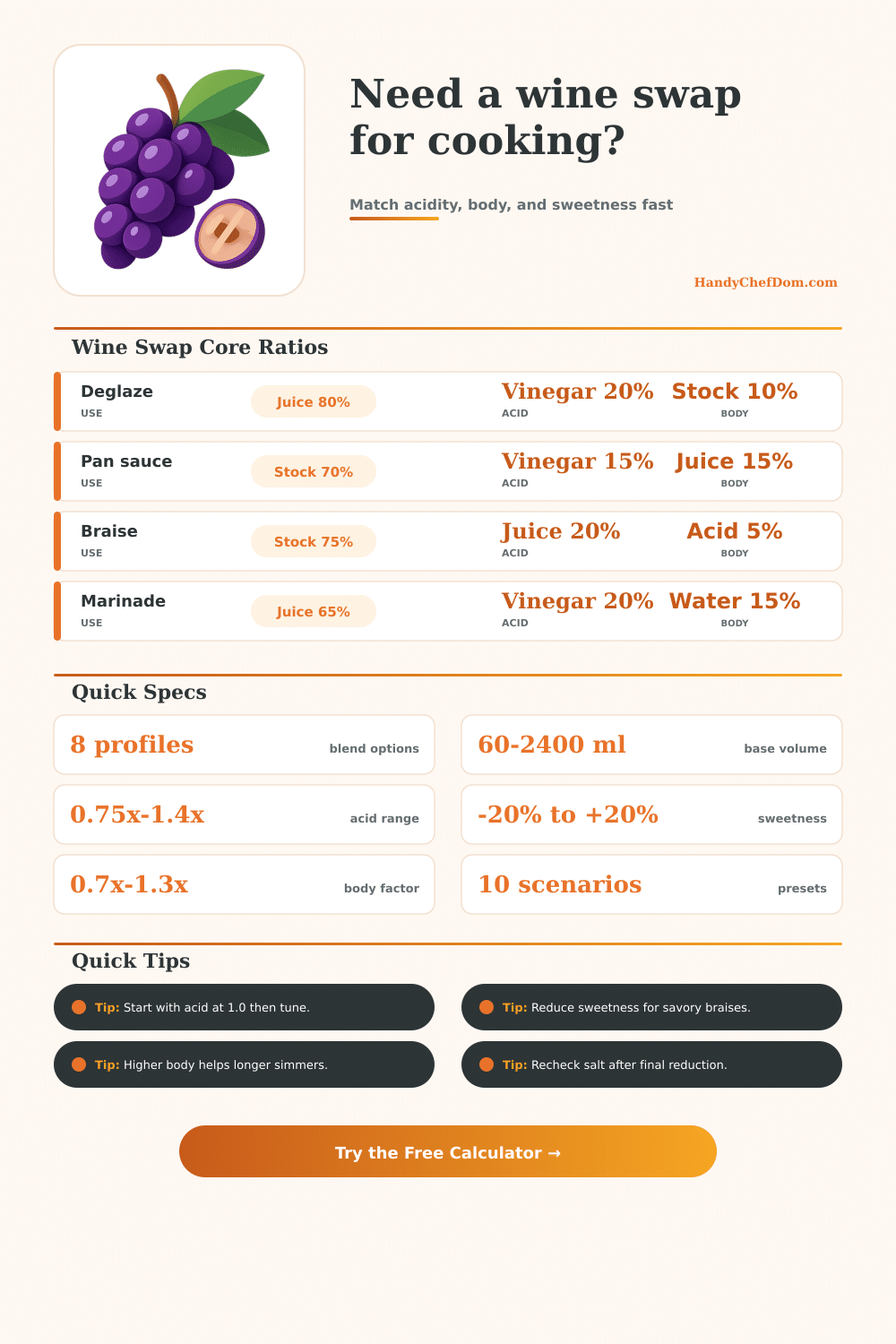
Choose your cooking use, then pick a substitute profile. The calculator scales total blend volume and computes acid booster, sweetness offset, and body support so the swap behaves closer to wine in reduction.
| Profile | Base liquid | Acid source | Body support |
|---|---|---|---|
| Red grape + vinegar | 80% red grape juice | 15% red wine vinegar | 5% stock |
| White grape + vinegar | 78% white grape juice | 17% white vinegar | 5% stock |
| Pomegranate + stock | 68% pomegranate juice | 12% cider vinegar | 20% stock |
| Cranberry + apple | 55% cranberry juice | 15% cider vinegar | 30% apple juice |
| Tomato + stock | 60% tomato juice | 10% vinegar | 30% stock |
| Apple cider + stock | 62% cider | 14% cider vinegar | 24% stock |
| Verjus style blend | 72% white grape juice | 22% verjus or vinegar | 6% water |
| Tea + balsamic | 66% black tea | 12% balsamic vinegar | 22% grape juice |
| Use Case | Acid Need | Body Need | Sweetness Drift |
|---|---|---|---|
| Deglazing pan | High | Medium | Low |
| Pan sauce | Medium-high | Medium-high | Low |
| Braising liquid | Medium | High | Low-medium |
| Stew base | Medium | High | Low |
| Marinade blend | High | Medium | Low-medium |
| Poaching liquid | Medium-low | Low | Medium |
| Risotto starter | Medium | Medium | Low-medium |
| Roast glaze | Medium | Medium-high | Medium |
| Wine Needed | Blend Total | Acid Share | Body Share |
|---|---|---|---|
| 1/4 cup (60 ml) | 60-66 ml | 7-11 ml | 3-18 ml |
| 1/2 cup (120 ml) | 120-132 ml | 14-22 ml | 6-36 ml |
| 1 cup (240 ml) | 240-264 ml | 28-44 ml | 12-72 ml |
| 2 cups (480 ml) | 480-528 ml | 56-88 ml | 24-144 ml |
Wine provides recipe with three qualities: acidity, body, and sweetness. Recipes needs acidity to prevent the sauce from tasting flat and to provide brightness to the sauce. Body is needed for the wine to coat a spoon and to hold the flavor of the sauce during the cooking process.
Sweetness balance the sauce and determines if the sauce is savory or soft in flavor. Changing any of these three qualities will change the flavor of the sauce. Many people attempt to find an acid to replace the wine in a recipe but fail to account for the body and sweetness of the sauce.
How to Replace Wine in Sauces
The three qualities required in a wine replacement are acidity, body, and sweetness. The ratio of these qualities change depending on the cooking method for the sauce. For instance, sauces that require long boiling times may require more body so that it does not evaporate during the cooking process.
A calculator can help cook determine the proper ratio of acidity, body, and sweetness for each cooking method. A good wine replacement includes a base with the character of fruit, enough acid to give the sauce brightness, and enough stock or juice to add the weight required to replace wine. Red grape juice and vinegar can replace red wine in beef recipes.
White grape juice and light vinegar can replace white wine in seafood recipe. Pomegranate juice and stock can also be used to replace wine in any recipe. Tomato juice and broth can also perform this function.
The amount of reduction in a sauce indicate how sweet the sauce should be. Marinades that sit for only an hour require more sweetness than sauces that boil for several minutes since the sauce will significantly reduce in amount. As the cook cooks the flavors of a sauce, the water will evaporate and the flavors will become more concentrated.
Therefore, it is important to account for this while using a wine replacement in a sauce. Body is one of the most important quality for long cooking processes. Stock provide body in sauces due to its gelatin and mineral content.
Without body, the sauce will be thin. Therefore, stock should be increased in the wine replacement when cooking long time sauces. The calculator will indicate the amount of stock to use in the recipe.
The acidity of the sauce must be balanced appropriately. If there is too much or too little acidity, the sauce can taste muddy or harsh when it is reduced. Because the acidity of the sauce increases as the sauce reduces, the amount of acidity should be slightly less than the recipe indicates.
The cook can then balance the acidity after the first reduction of the sauce. People often fail to account for the cooking method when using the same wine replacement. Different cooking methods require different amount of body for the sauce to perform the same function.
For instance, poaching liquids for fish require a different amount of body then a roast glaze. The calculator will allow a cook to account for these different cooking methods. People must season the dish at the end of the cooking process.
Most wine replacements contain less salt than wine. The flavor of the sauce needs to be tasted after the liquid has reduced. Only at this point can salt be added to the sauce without altering the acidity, body, and sweetness of the wine replacement.
Finally, people must adjust the size of the wine replacement in a recipe. If a recipe is doubled, the amount of wine replacement should change. The batch size multiplier in the calculator will help cooks find the more proper amount of wine replacement to use.
Using the calculator ensure that the wine replacement ingredient remains the same no matter how big the batch of the recipe is.