🥩 Meat Yield Calculator
Estimate raw weight, bone loss, trim, cooking shrink, edible yield, plate portions, and total purchase cost from one planning sheet.
Start with a cut preset, then adjust raw weight, bone percentage, trim, cooking shrink, serving size, guest count, and cost for your actual plan.
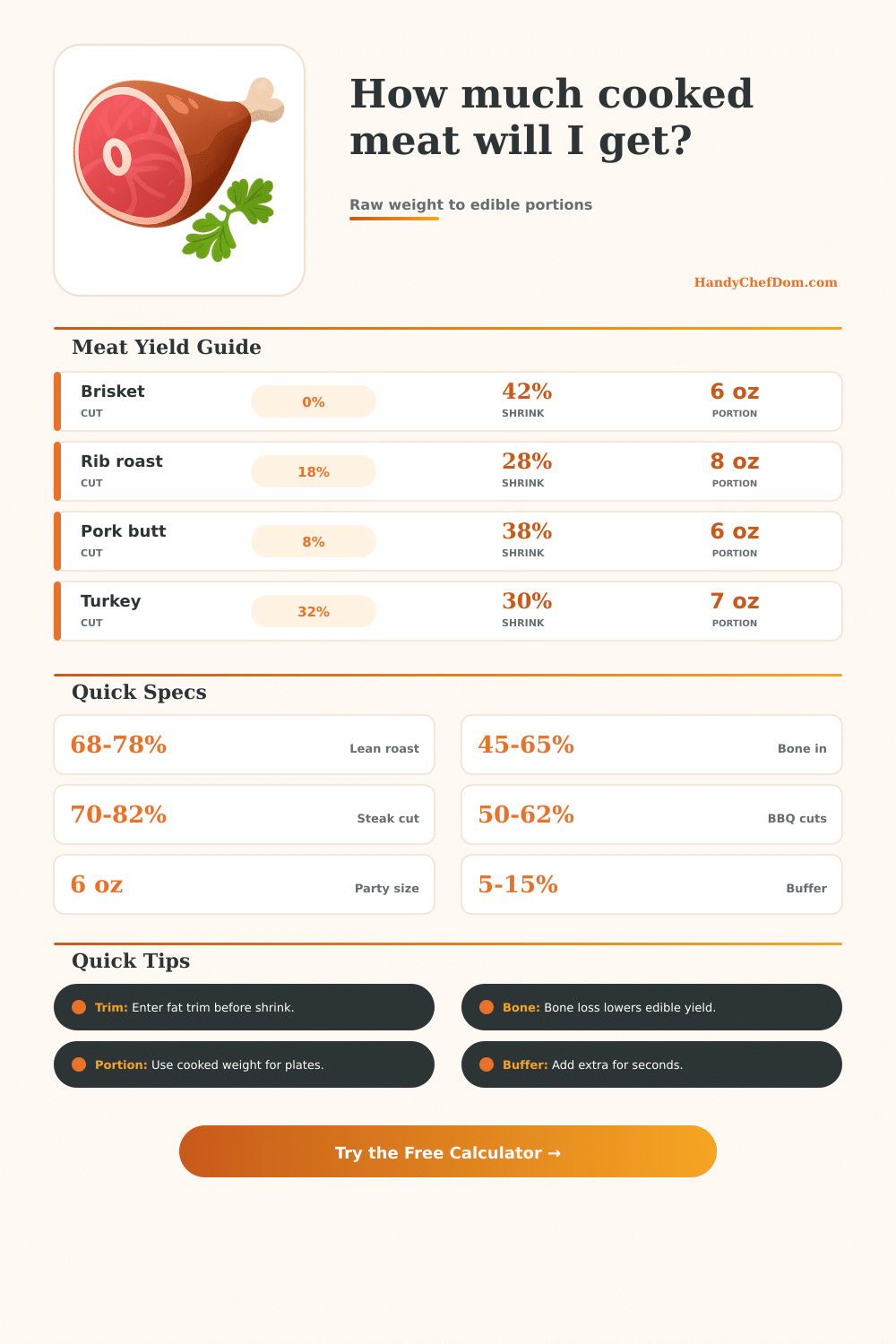
| Cut | Typical bone | Trim loss | Cook shrink | Final yield |
|---|---|---|---|---|
| Boneless chicken breast | 0% | 4-8% | 22-28% | 68-76% |
| Whole chicken | 30-34% | 4-7% | 22-28% | 45-52% |
| Boneless ribeye steak | 0% | 6-10% | 18-25% | 68-78% |
| Whole beef brisket | 0% | 12-22% | 36-46% | 42-56% |
| Bone in pork butt | 6-10% | 8-14% | 34-42% | 48-58% |
| Boneless pork loin | 0% | 4-8% | 20-26% | 70-78% |
| Bone in leg of lamb | 20-26% | 8-12% | 24-32% | 45-58% |
| Whole turkey | 30-36% | 4-8% | 25-34% | 42-54% |
| Beef short ribs | 28-38% | 6-12% | 28-38% | 36-50% |
| Salmon fillet | 0% | 4-8% | 12-18% | 76-86% |
| Method | Lean cuts | Fatty cuts | Bone in cuts | Best use |
|---|---|---|---|---|
| Roast | 20-30% | 25-35% | 25-34% | Holiday meals |
| Grill | 18-26% | 20-30% | 22-32% | Steaks and chops |
| Smoke or BBQ | 28-36% | 34-46% | 32-42% | Brisket and pork |
| Braise | 24-32% | 28-38% | 30-40% | Ribs and shanks |
| Pan sear | 16-24% | 18-28% | 20-30% | Quick portions |
| Poach or steam | 10-18% | 14-22% | 16-24% | Gentle cooking |
| Serving style | Cooked portion | Raw planning rule | Best cuts | Notes |
|---|---|---|---|---|
| Light lunch | 4 oz | 5-8 oz raw | Chicken, pork loin | Works with sides |
| Standard plate | 6 oz | 8-12 oz raw | Steak, salmon, pork | Most dinners |
| BBQ sandwich | 5 oz | 9-14 oz raw | Brisket, pork butt | Yield varies |
| Carving roast | 7 oz | 11-16 oz raw | Turkey, lamb, rib roast | Bone matters |
| Hearty dinner | 8 oz | 12-18 oz raw | Ribeye, short ribs | Add buffer |
| Meal prep | 5 oz | 7-10 oz raw | Chicken, salmon | Consistent trays |
| Group size | Lean boneless | Fatty BBQ cut | Bone in roast | Cooked target |
|---|---|---|---|---|
| 4 people | 2.0-2.5 lb raw | 3.0-4.0 lb raw | 3.5-5.0 lb raw | 1.5 lb |
| 8 people | 4.0-5.0 lb raw | 6.0-8.5 lb raw | 7.0-10 lb raw | 3.0 lb |
| 12 people | 6.0-7.5 lb raw | 9.0-13 lb raw | 10.5-15 lb raw | 4.5 lb |
| 25 people | 12.5-16 lb raw | 19-27 lb raw | 22-31 lb raw | 9.4 lb |
| 50 people | 25-32 lb raw | 38-54 lb raw | 44-63 lb raw | 18.8 lb |
| 75 people | 38-48 lb raw | 56-81 lb raw | 66-94 lb raw | 28.1 lb |
Reference ranges are planning estimates for common kitchen and catering use. Actual yield changes with butcher trim, doneness, rest time, and carving style.
When you plan a meal that includes meat, you must determine how much raw meat to purchase. Many people dont account for the weights of the meat that will be lost during the preparation and cooking of the meat. If you dont account for the weight of the meat that are lost during preparation and cooking, you may have a shortage of meat for your guests who will arrive for your meal.
Meat will lose weight due to the bone content of the meat, the fat content of the meat that is trimmed before cooking, and the weight of the water that evaporates during the cooking process. A calculator allow you to account for each of these types of weight loss to ensure that you purchase the correct amount of raw meat for your recipe. Not all cuts of meat lose the same amount of weight.
How to Calculate How Much Raw Meat to Buy
For example, chicken breast meat that does not include any bones will lose the most weight due to the water that evaporates from the meat. Whole turkeys, on the other hand, will lose the most weight due to the amount of bone in the turkey. Brisket will lose weight due to the fat that render during the cooking process, while pork loin will lose little weight due to the lean nature of that cut of meat.
Each cut of meat will behave differently, so the calculator will ask for the type of cut of meat you will be using to ensure that the calculated amount of raw meat is accuracy. The percent of the meat that contains bone is another factor to consider when purchasing meat. If the cut of meat you purchase contains bones, such as chicken or turkey that includes the bones of the chicken or turkey, the weight of those bones is not edible meat.
Thus, you must account for the loss of meat that contains bone. Separate from cooking loss; when you are purchasing the meat. If you combine the loss of meat that contains bone and the loss of meat that occur during the cooking process, you may purchase too little raw meat for your guests.
Trim loss is another factor to consider. Trim loss is the weight of fat that is removed from the meat prior to cooking. Additionally, if a butcher removed some of the fat from the meat prior to purchasing the meat from the butcher, you must also account for that weight of fat.
The percentage of trim loss should be entered into the calculator prior to calculating the weight of the meat that will be lost during cooking. The trim loss percentage will be highest for cuts of meat that contain the most fat, such as barbecued cuts of meat. The cooking method will impact the loss of weight of the raw meat.
For example, raw meat that is cooked using high heat and low moisture will lose more weight than meat that is braised or poached. You should select the cooking method prior to calculating the amount of raw meat necessary to achieve the sized of finished portions of meat. Two different people who purchase the same amount of raw meat may have different amounts of cooked meat if the recipes for the two individuals differ in the cooking method required to prepare the raw meat.
The size of the finished portions of meat is another factor to consider. Six ounce of cooked meat may seem like a large portion if it is to be served with the remainder of a meal. Six ounces of cooked meat, however, may seem like a small portion if the cooked meat is to be used in a sandwich.
The calculator will ask for the size of the finished portion of meat, as that will determine the number of guests that will be fed. In calculating for the raw meat necessary to prepare the amount of cooked meat that will be served to the guests, work backwards from the size of the finished portion. Additionally, purchase enough raw meat to allow for the possibility of some of your guests eating second helping of the meat.
The cost of the meat in relation to the amount of edible meat that is prepared is another factor to consider when planning the recipe. For example, cuts of meat that contain bones may be inexpensive per pound. However, if you remove the bones and cook the meat, the cost of that meat per ounce may be higher than lean cuts of meat.
Cost per edible portion allows you to determine if the price of the raw meat is a real saving to your kitchen. The reference tables located on this page will help you to determine the weight loss of each cut of meat by cooking method. These tables allow you to compare the different types of meat that you may purchase for your kitchen and decide which cut of meat will work best in your menu items.
There are some variables in the kitchen that are outside of the control of the cooks in the kitchen. For example, the resting of the meat after it is cooked will redistribute the Juices within the meat. The carving of the meat will also have an impact on the amount of meat that remains on the bone.
The hunger levels of your guests is another variable that you cannot control. Because these variables exist, you should always include a small buffer for meat within your calculations. These calculations will provide you with an idea of the amount of raw meat that you need to purchase for your kitchen.
However, it is always possible that you will need to purchase additional meat for your guests, therefore the inclusion of a modest buffer within your calculations. By planning your meals with the yield of the cooked meat in mind, rather than the weight of raw meat, you can prepare your kitchen more efficiently. Not only will you purchase the amount of raw meat that your recipe requires, you will also reduce the amount of meat that you waste in your kitchen.
Thus, thinking in terms of the finished portion of meat will remove some of the uncertainty of shopping for meat, and ensure that you have enough meat for all of your guests.