🤰 How Much Water to Drink While Pregnant Calculator
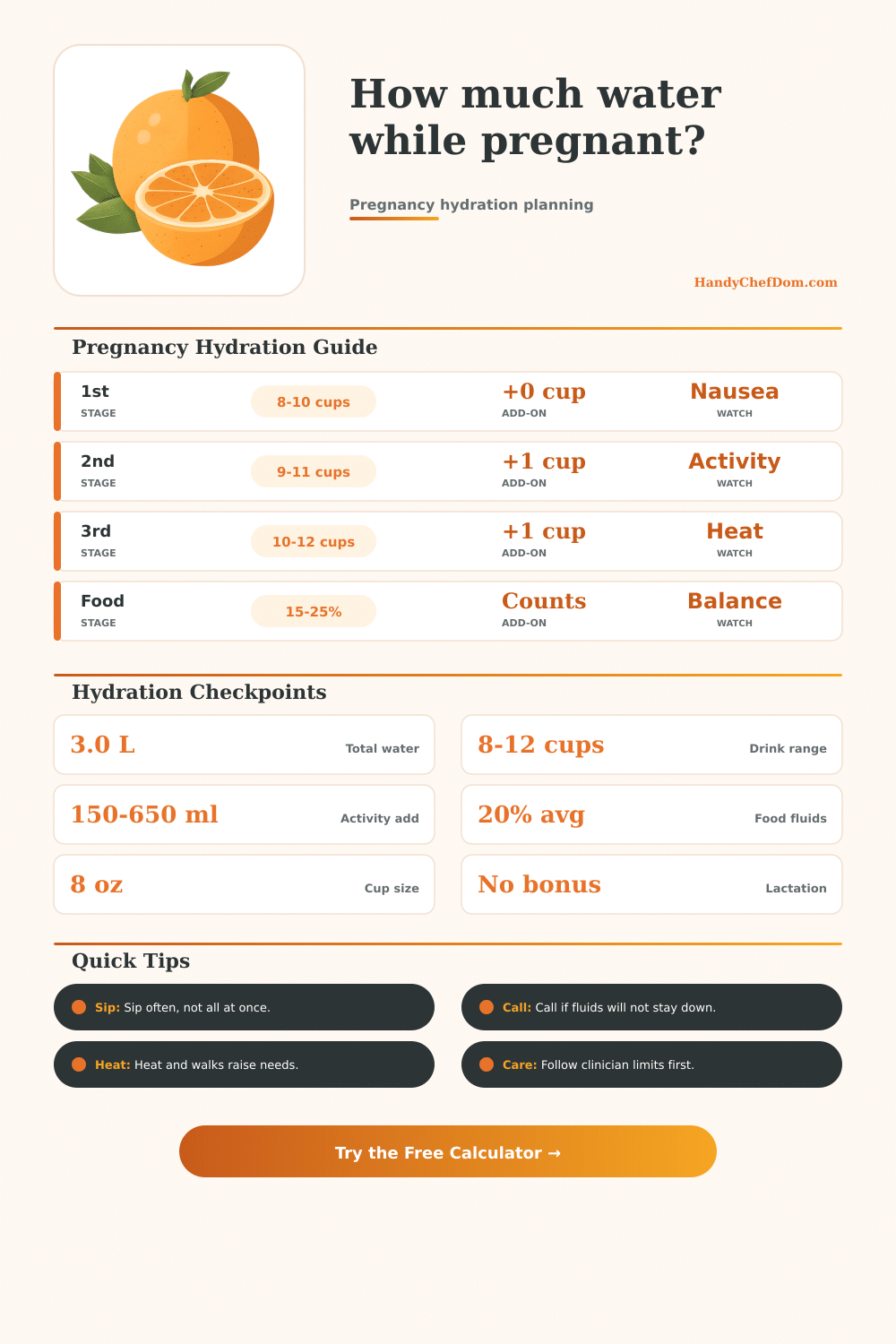
Plan daily pregnancy hydration in cups and ml by trimester, weight, activity, climate, nausea, vomiting, and fluids from food.
The estimate starts with a pregnancy total-water target and subtracts your selected food-fluid share, because soups, fruit, vegetables, milk, and other beverages can contribute fluid. Breastfeeding is set to no for this pregnancy-only planner.
| Pregnancy Stage | Planning Range | Why It Changes | Calculator Add-On |
|---|---|---|---|
| First trimester | 8-10 cups | Nausea may lower intake | 0 ml baseline |
| Second trimester | 9-11 cups | Blood volume and activity often rise | 150 ml |
| Third trimester | 10-12 cups | Later pregnancy often needs steadier sipping | 250 ml |
| Twins or multiples | Clinician set | Needs vary more | Review flag |
| Fluid-restricted care | Clinician set | Some conditions require limits | No override |
| Activity Or Climate | Low Adjustment | High Adjustment | Use When |
|---|---|---|---|
| Mostly resting | 0 ml | 0 ml | Bed rest or very quiet day |
| Light daily movement | 100 ml | 150 ml | Home, work, gentle errands |
| Prenatal walk | 250 ml | 300 ml | Short walk or errands |
| Moderate workout | 400 ml | 450 ml | Approved prenatal exercise |
| Warm or humid day | 250 ml | 350 ml | Sweating, muggy weather, warm rooms |
| Hot day | 450 ml | 650 ml | Heavy sweating or high heat exposure |
| Nausea Or Vomiting | Planner Add-On | Sip Pattern | Safety Note |
|---|---|---|---|
| No nausea | 0 ml | Normal cups | Keep steady through the day |
| Mild nausea | 150 ml | Small frequent drinks | Avoid chugging if queasy |
| Queasy day | 250 ml | 1-2 oz at a time | Try slow, regular sips |
| Vomited once | 350 ml | Pause then restart slowly | Ask care team if worsening |
| Repeated vomiting | 500 ml flag | Clinician plan | Call promptly for guidance |
| Fluid Source | Typical Contribution | Counts Toward Total? | Planning Note |
|---|---|---|---|
| Plain water | Primary source | Yes | Use for the cup target |
| Milk or fortified drinks | Moderate | Yes | May also add nutrients |
| Soup or broth | High | Yes | Useful on queasy days |
| Fruit and vegetables | 15-25% | Yes | Estimate in food-fluid field |
| Caffeinated drinks | Some | Partly | Follow pregnancy caffeine limits |
| Electrolyte solution | As directed | Yes | Use clinician advice after vomiting |
| Cup Size | Milliliters | 10-Cup Day | 12-Cup Day |
|---|---|---|---|
| 6 fl oz | 177 ml | 1.77 L | 2.13 L |
| 8 fl oz | 237 ml | 2.37 L | 2.84 L |
| 10 fl oz | 296 ml | 2.96 L | 3.55 L |
| 12 fl oz | 355 ml | 3.55 L | 4.26 L |
Hydration is an important requirement for pregnant woman, but the needs for hydration change frequently for various reason. The body’s needs for fluids increases during pregnancy because the body is performing task like creating more blood to supply the body and the fetus with a fluids that it needs, and the body must perform the same task for the kidneys. A woman’s comfort with hydration may change due to the effects of morning sickness or hot environmental climate.
Because of these changing requirements for hydration, it is impossible to provide a general recommendation for the amount that a pregnant woman should consume daily. The needs for hydration change according to the weight of the woman, the trimester of pregnancy, the level of activity of the pregnant woman, and the amount of fluid consumed from the foods that she eats. The weight of the pregnant woman is one of the factor that impacts the womans hydration levels; the more fluid a persons body contains, the more fluids that are required to maintain that level of hydration in the system.
Water needs during pregnancy
The trimester that a pregnant woman is experiencing is another of those factors; blood volume increases most during the second trimester. However, pregnant women typically feel thirstier during the later pregnancy months due to the fetus’s daily press against the internal organs of the pregnant woman. The activity level of the pregnant woman is another factor; the more physical activity that the pregnant woman consumes (like yoga or walking), the more fluid that she will lose from her body through sweat.
Finally, the climate that the pregnant woman lives in is another of these factors; warm climates remove the bodys moisture at a faster rate then climates with cooler temperatures. If the pregnant woman does not drink enough water in such a climate, her urine will be darker in color. The feelings of nausea and vomiting are two factors that can impact a pregnant woman’s fluid consumption; if she feels nauseous, she may take sips of water rather than drink large glasses of water.
Additionally, the foods that are consumed provide fluids to the pregnant woman; foods like soups, fruits, milk, and vegetables contain water, and these foods can provide 15 to 25 percent of the womans daily fluid intake. Thus, not only should a pregnant woman count the amount of water that she drinks from a glass, but she should also count the amount of water that she consume from her food intake. The sensation of thirst is not a reliable method of measuring fluid consumption of a pregnant woman.
Fluids may be needed before the pregnant woman feels thirsty; she may feel thirsty after consuming fluids, but before she began to consume the fluids, she could of become dehydrated. An example of dehydration is if the pregnant woman begins to produce darker colored urine, if she experiences headache that improve after drinking water, or if she feels fatigue during the afternoon. Additionally, the type of fluids that are consumed are also not all the same; while water and other fluids contribute to a pregnant woman’s fluid consumption, caffeinated fluids also pose limits to the amount of caffeine that should be consumed during pregnancy.
Finally, if the pregnant woman is vomiting often, she should consume electrolyte solution rather than consuming fluids like water and the calculations provided by a pregnancy calculator. Reference tables can aid the pregnant woman in understanding her fluid needs. These tables are not rules to be followed, but instead are the starting points for pregnant women to understand their hydration need.
These tables can demonstrate how the bodys various factor affect the needs for fluids. For instance, these tables can reveal that hot climates and physical activity increase the amount of fluids that is needed (in milliliters), while eating fluids from foods like soups can decrease the amount of water that the pregnant woman needs to be consumed daily. The hydration levels for pregnant women may vary throughout the day.
For instance, a pregnant woman may not be able to consume fluids early in the morning due to nausea, but may require more additional fluids later in the day. Additionally, since the hydration calculator provides a general indication of the amount of fluids that should be consumed by the pregnant woman each day, the pregnant woman can adjust the fluid consumption according to her activities throughout the day (after lunch, after a walk, after vomiting, etc).
The instructions from the pregnant woman’s medical professional should take priority over the recommendations from the hydration calculator. For instance, if the medical professional tells the pregnant woman to limit the amount of fluids that she consumes due to an illness related to the blood pressure, kidneys, or the heart, then the pregnant woman must follow these recommendations rather than her fluid consumption calculator.
However, the pregnant woman should contact her medical professional should she experience symptom like vomiting repeatedly, black urine, feeling dizzy, or feeling like the fetus is not moving as much as it should. These types of symptoms may indicate an illness that the pregnant woman’s medical professional should treat, not by using the pregnancy calculator to determine the amount of fluids that she should consume. Thus, the pregnancy fluid consumption calculator is a tool that can provide information regarding the effect of weight, movement, heat, and nausea on a pregnant woman’s fluid consumption needs; by knowing these effects, the pregnant woman can better plan her fluid consumption throughout the day.