🍬 Sugar in Dates Calculator
Estimate natural sugar in dates by variety, count, weight, chopped volume, pitted state, servings, and recipe or snack use.
Use the measurement you trust most. Count is best for snacks, weight is best for batches, and chopped volume is useful when dates are already sliced for a recipe.
| Date Type | Sugar per 100 g | Edible g/date | Sugar per Date |
|---|---|---|---|
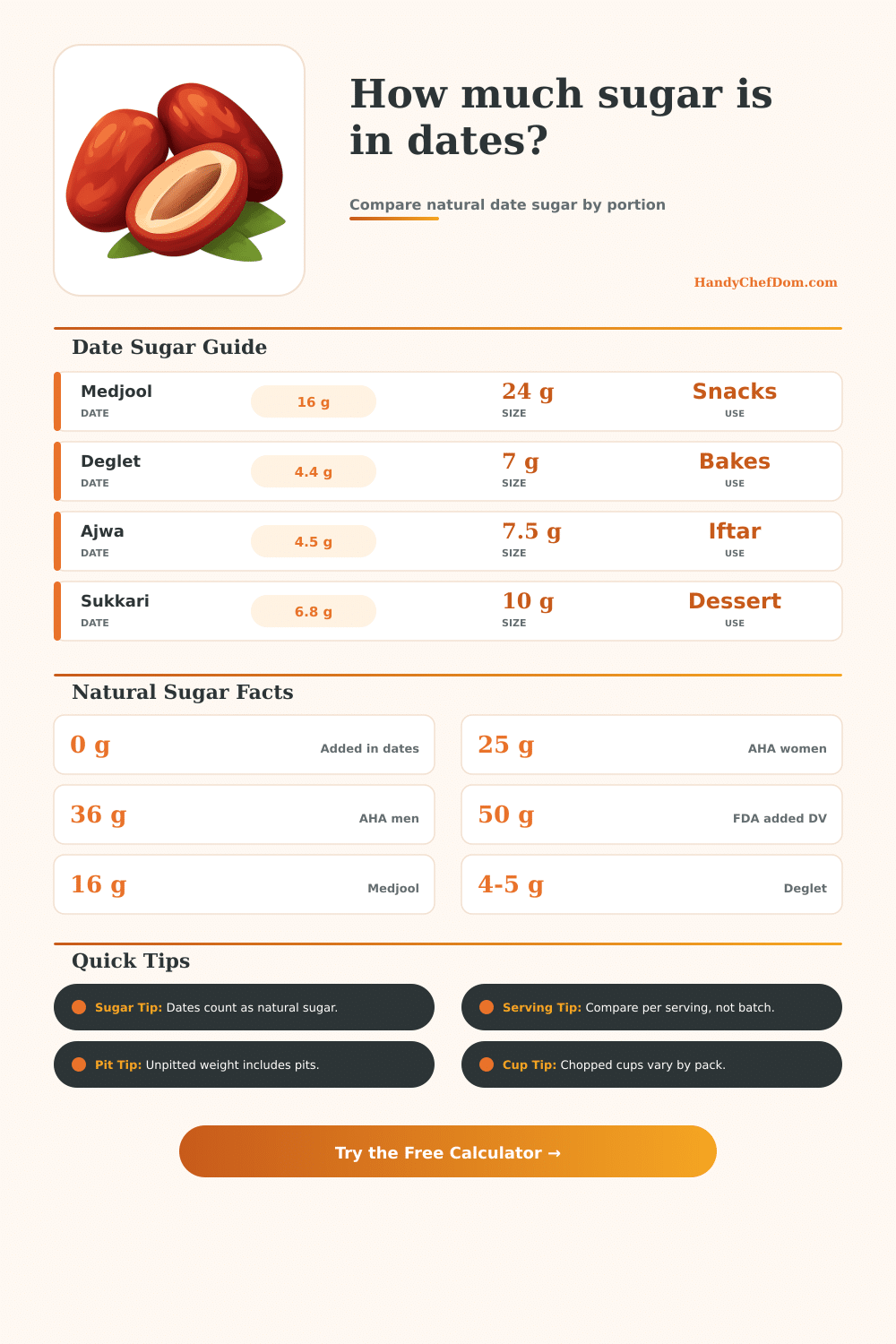
| Medjool | 66.5 g | 24 g | 16.0 g |
| Deglet Noor | 63.4 g | 7 g | 4.4 g |
| Barhi | 64.5 g | 8 g | 5.2 g |
| Zahidi | 62.5 g | 8.3 g | 5.2 g |
| Halawi | 66.0 g | 9 g | 5.9 g |
| Khudri | 64.8 g | 9.5 g | 6.2 g |
| Ajwa | 60.0 g | 7.5 g | 4.5 g |
| Sukkari | 68.0 g | 10 g | 6.8 g |
| Chopped Pitted Volume | Approx Weight | Medjool Sugar | Deglet Sugar |
|---|---|---|---|
| 1 tablespoon | 9 g | 6.0 g | 5.7 g |
| 1/4 cup | 37 g | 24.6 g | 23.5 g |
| 1/3 cup | 49 g | 32.6 g | 31.1 g |
| 1/2 cup | 74 g | 49.2 g | 46.9 g |
| 3/4 cup | 110 g | 73.2 g | 69.7 g |
| 1 cup | 147 g | 97.8 g | 93.2 g |
| Use Case | Common Portion | Natural Sugar | Serving Note |
|---|---|---|---|
| Tea snack | 1 Ajwa | 4.5 g | Small portion |
| Dessert pair | 2 Medjool | 31.9 g | Rich snack |
| Smoothie | 3 Sukkari | 20.4 g | Blended sweetener |
| Oat bowl | 1/4 cup chopped | 24-25 g | Spread through bowl |
| Energy bites | 180 g batch | 113-122 g | Divide by pieces |
| Stuffed tray | 12 Medjool | 191.5 g | Share by guests |
| Comparison | Benchmark | What Counts | How to Use It |
|---|---|---|---|
| Plain dates | 0 g added | Natural sugar | Track as fruit sugar |
| AHA women | 25 g/day | Added sugar | Context only |
| AHA men | 36 g/day | Added sugar | Context only |
| FDA label DV | 50 g/day | Added sugar | Label reference |
| Sweetened recipe | Your entry | Added sugar | Add separately |
| Date paste | Varies | Natural sugar | Divide by serving |
Dates contain natural sugar that is built into the date fruit itself. This is different than added sugar that a person might pour from a bag of sugar. There is a difference between natural sugar and added sugar, and understanding that difference is part of understanding how to calculate the portion of dates that you should consumes within a day.
Knowing the difference between natural and added sugar will allow you to determine whether or not a handful of dates is the right choice for your dietary goal. The calculator on this page will allow you to calculate the amount of sugar in a given number of dates using a few different methods. You can use the count of whole dates to calculate the sugar in dates if you are eating just a few dates as a snack.
How to Calculate Sugar in Dates
Alternatively, you can use the weight of the dates if you are purchasing dates in bulk. Or, if you have chopped up the dates, you can use the volume of those dates to calculate the amount of sugar they contains. The calculator accounts for the weight of the date pits that are naturaly within each date; you can enter whether you want to include those pits in your measurement or not because they is not edible.
Not all varieties of dates contain the same amount of sugar as other varieties of dates. For example, a large Medjool date will contain more sugar than a small Deglet Noor date. However, the amount of sugar that a gram of each variety contains is similar to the amount of sugar within a gram of the other varieties of dates.
The date calculator accounts for these differences between varieties so you can more easy compare dates of different varieties within the same recipe, or to understand how each variety will affect a snack plate. Often, people select the different varieties of dates according to the flavor and texture that the dates should contribute to the food that they is to be added to. However, the size of the dates will still have an impact upon the total amount of sugar that people consumes with those dates.
Many people believe that all dried fruit contain the same amount of sugar. However, dates contain more sugar than prunes or raisins, for example. Dried figs may have less sugar than dates.
These types of comparisons can help you to make decisions about which dried fruits to use in a trail mix or which dried fruits to keep at home to consume for energy. The calculator will allow you to determine the amount of sugar that dates contains once you have decided what other dried fruits you may want to include in your diet or recipe. Because dates are a food that contains natural sugar, portion size is an important topic.
One date may seem like a small portion of food, but two or three Medjool dates may contain a large amount of natural sugar. If you blend those dates into a smoothie, the natural sugar from those dates will be contained within each portion of the smoothie that are consumed. The date sugar calculator will make it easy for you to determine how much sugar is in each portion and each batch of smoothie that you create with dates.
One of the main uses of dates is as a way of replacing added sugar when baking or cooking. In this case, you are replacing one type of sugar with another type of sugar. The date sugar calculator keeps track of the natural sugar that is naturaly within the dates that you use in your recipe.
The calculator can also keep track of any additional sugar that you add to your recipe along with the dates. This allows you to understand how much sugar is in your recipe overall without having to double-count the sugar that you add to your recipe. Depending upon the way in which you are cooking with the dates, you may use one calculation method rather then another.
For example, you may use the count method of calculating the sugar in dates if you are eating dates as a snack. You may use the weight method if you are measuring the dates that you will cook. Finally, you may use the volume method if the dates have been chopped up and incorporated into your recipe.
These different calculation methods eliminates the need for you to perform the arithmetic in your recipe itself.