🫘 Protein in Kidney Beans Calculator
Estimate kidney bean protein from canned, dry, or cooked beans, then scale the result for chili pots, salad bowls, burrito prep, and per-serving protein targets.
Choose how your kidney beans are measured. Canned entries can use drained weight, dry beans can use cooking yield, and every result is split across your serving count and protein target.
| Kidney Bean Form | Protein Basis | Typical Cup Weight | Best Calculator Use |
|---|---|---|---|
| Canned dark red, drained | 7.0 g per 100 g drained | 184 g per cup | Fast chili, pantry meals, taco filling |
| Canned light red, drained | 7.2 g per 100 g drained | 184 g per cup | Cold salad, three-bean mix, side dishes |
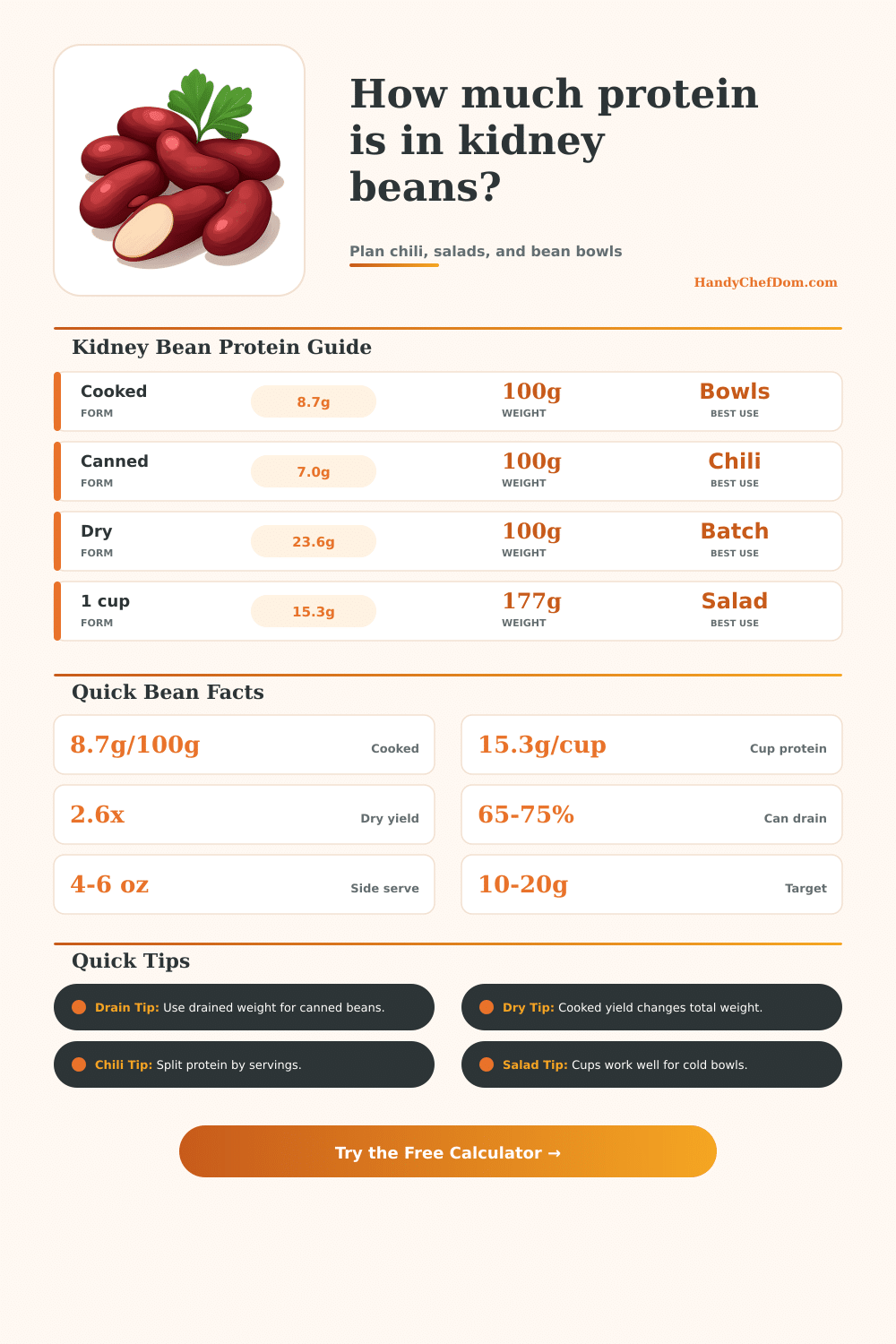
| Home-cooked kidney beans | 8.7 g per 100 g cooked | 177 g per cup | Meal prep, burrito bowls, soup portions |
| Dry kidney beans | 23.6 g per 100 g dry | 184 g per dry cup | Batch planning before cooking |
| Soaked then cooked beans | 8.4 g per 100 g cooked | 180 g per cup | Home-cooked beans with extra hydration |
| Kidney beans in chili mix | 7.8 g per 100 g cooked | 178 g per cup | Shared pot calculations with other beans |
| Conversion | Kidney Bean Amount | Expected Edible Weight | Protein Estimate |
|---|---|---|---|
| 1 cooked cup | 177 g cooked beans | 177 g | About 15.3 g protein |
| 1 drained canned cup | 184 g drained beans | 184 g | About 12.9 to 13.2 g protein |
| 1 dry cup | 184 g dry beans | About 488 g cooked at 2.65x | About 43.4 g protein |
| 15.5 oz can | 439 g can weight | About 299 g drained at 68% | About 21.0 g protein |
| 1 lb dry beans | 454 g dry beans | About 1203 g cooked at 2.65x | About 107 g protein |
| 100 g cooked | 0.56 cooked cup | 100 g | About 8.7 g protein |
| Use Case | Typical Bean Serving | Protein From Kidney Beans | Planning Note |
|---|---|---|---|
| Chili main dish | 3/4 to 1 cup per serving | 10 to 15 g | Use a higher buffer for hearty bowls |
| Cold salad bowl | 1/2 to 3/4 cup per serving | 7 to 11 g | Drained canned beans measure cleanly by cups |
| Burrito or taco bowl | 2/3 cup per serving | 9 to 10 g | Pair with rice, vegetables, or another protein |
| Bean side dish | 1/3 to 1/2 cup per serving | 5 to 8 g | Set a lower target when beans are not the main |
| Meal prep container | 3/4 cup per container | 10 to 12 g | Use serving count to split the cooked batch |
| Three-bean blend | 1/3 cup kidney beans plus others | 4 to 6 g | Lower kidney bean share to reflect the mix |
| Nutrition Basis | Calories | Protein | Carbs and Fiber |
|---|---|---|---|
| 100 g cooked kidney beans | About 127 kcal | About 8.7 g | About 22.8 g carbs, 6.4 g fiber |
| 1 cup cooked kidney beans | About 225 kcal | About 15.3 g | About 40.4 g carbs, 11.3 g fiber |
| 100 g canned drained kidney beans | About 110 kcal | About 7.0 g | About 19 g carbs, 5 to 6 g fiber |
| 1 drained cup canned beans | About 200 kcal | About 13 g | About 35 g carbs, 9 to 10 g fiber |
| 100 g dry kidney beans | About 333 kcal | About 23.6 g | About 60 g carbs, 24 g fiber |
| 1 dry cup kidney beans | About 613 kcal | About 43.4 g | Batch amount before cooking |
Kidney bean is often used in a variety of meal. Kidney beans are used in chili, salad, and meal prep containers. Kidney beans contain protein, but the amount of protein that is contained in the kidney beans are dependent upon a variety of factor regarding the purchase and measurement of those bean.
For instance, canned kidney beans contains liquid that you can discard, but dry kidney beans will swell when cook at home. The weight of kidney beans that are cooked at home can vary, as well, depending upon the length of time that the beans simmer. The kidney bean calculator allow an individual to account for these difference in the kidney beans that is available to an individual.
How to Use the Kidney Bean Protein Calculator
The calculator allows an individual to enter the type of kidney beans that they have, and to choose a method of entry for those beans, and it display the protein content of the kidney beans. An individual can use the calculator to enter the amount of drained canned bean, cooked bean, or dry bean that will be cooked. The drained beans will not contain the protein content of the liquid, but the drained beans can be weighed with the liquid in the beans.
The dry beans will retain its protein content, but the beans will weigh more once they have been cook. The bean calculator perform these calculation for the individual. The portion of kidney beans that is to be use in a meal can also be entered into the calculator.
For instance, kidney beans may be used as the main protein in a chili, in which case more of the bean should be used compared than if the kidney beans are to be used as a side dish. Kidney beans may also be used in a salad, in which case the portion of beans will be of medium size. The portion that is entered into the calculator will allow for the weight of the beans to be compared to the protein target that is set for that meal.
If the total protein of the kidney beans is found to be too low, the individual can decide whether additional kidney beans are needed, or if the number of serving is to be changed. Another common error in the measurement of kidney beans is assuming that a cup of kidney beans is the same as another cup of kidney beans. However, a cup of drained canned kidney beans will not weigh the same as a cup of cooked kidney beans.
The drained canned beans may weigh different than the beans that are canned due to the canning process. Additionally, a cup of dry kidney beans will not weigh the same as a cup of cooked kidney beans due to the amount of water that the dry beans absorb. The bean calculator permits an individual to switch between units and entry mode for kidney beans, rather than remembering the different weight of each type of bean.
Another consideration for kidney beans is the incorporation of a buffer into the calculation of the amount of kidney beans that need to be prepared. A five or ten percent buffer is often incorporated to allow for additional serving of kidney beans to be prepared for those who may want to eat more of the beans than others, or to permit for the preparation of kidney beans that will be prepare for the following meal. The buffer is applied to the total amount of kidney beans that are calculated, before they are to be divide into servings.
Like other beans, kidney beans also contain protein. However, kidney beans are able to hold their shape in simmer product and in salads. For these reason, kidney beans are often used in a variety of meal.
The bean calculator permits an individual to remove the guesswork involved in measuring kidney beans. The kidney bean calculator is also useful to those who would like to adjust the recipe for a meal that has already been prepared. The amount of kidney beans that were used in the previous meal can be entered into the calculator.
Additionally, the size of the cans of bean or the weight of the dry kidney beans can be entered into the calculator to determine if the protein content is appropriate for each serving. Any change in the amount of liquid or yield of the kidney beans will be reflected in these calculations. For instance, different brand of kidney beans can be used in a meal, or the method in which the beans are cooked can change the amount of protein in the beans.
The bean calculator is a useful tool for those who are required to be specific about the type of kidney beans that are to be measured. Once the individual has decided the type of kidney beans, the entry method for those beans, and the use of the kidney beans for which they are preparing the meal, the bean calculator can accurately calculate the amount of protein that will be contained within the kidney beans that are measure.