🍬 Sugar in Marshmallows Calculator
Estimate marshmallow sugar by piece, cup, gram weight, or marshmallow fluff, then split it by eaters and compare it with your daily sugar target.
Use the default kitchen averages or enter a package-label sugar override. Marshmallow sugar varies by brand, size, and creme density, so weighing is best for mini marshmallows and fluff.
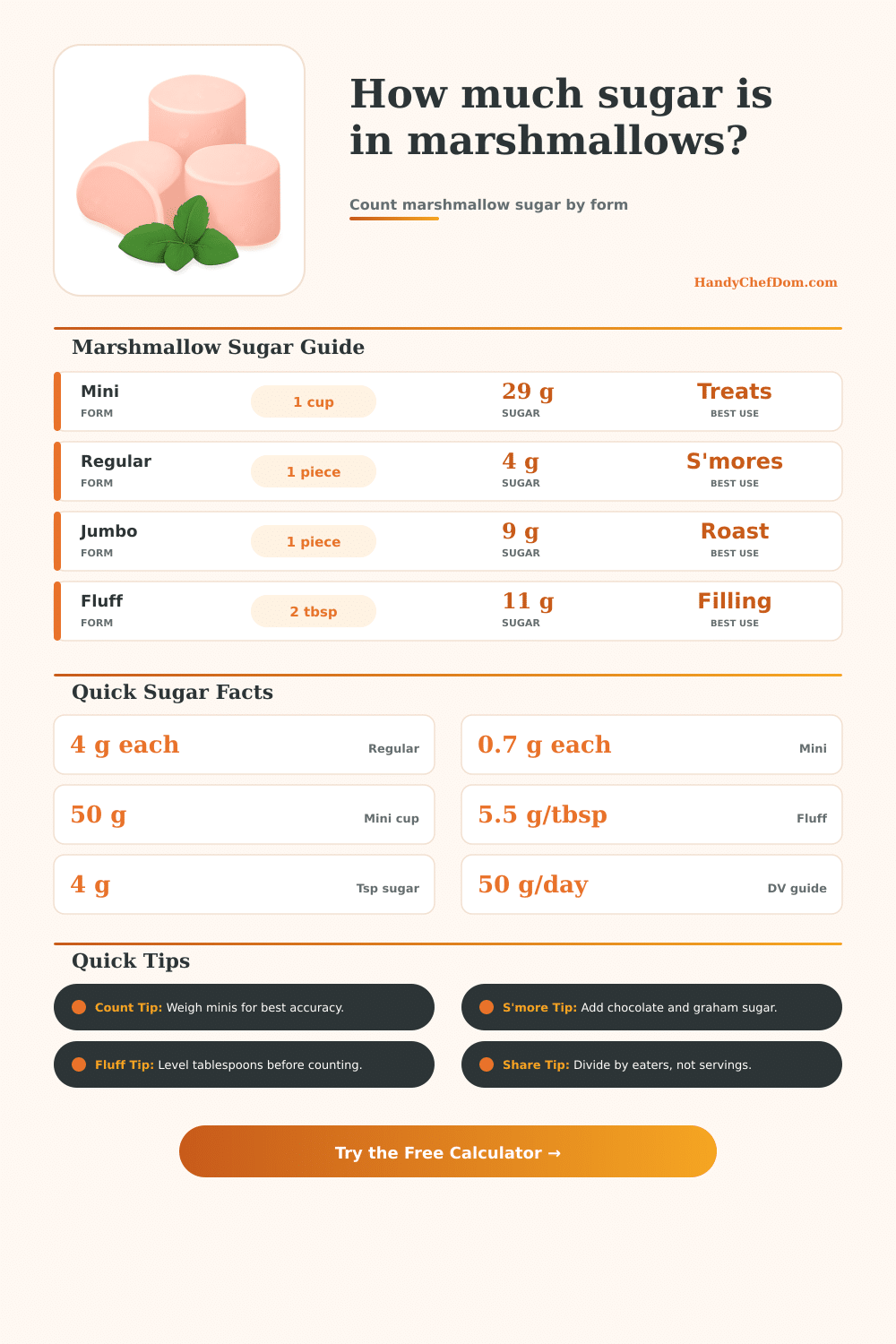
| Marshmallow Form | Typical Unit | Avg Weight | Sugar Estimate |
|---|---|---|---|
| Mini marshmallow | 1 piece | 1.2 g | 0.7 g |
| Mini marshmallows | 1 cup | 50 g | 29 g |
| Regular marshmallow | 1 piece | 7 g | 4 g |
| Jumbo marshmallow | 1 piece | 16 g | 9 g |
| Stacker square | 1 piece | 10 g | 5.6 g |
| Marshmallow fluff | 1 tbsp | 13 g | 5.5 g |
| Quantity Style | Best For | Conversion Used | Accuracy Note |
|---|---|---|---|
| Piece count | S'mores | Unit sugar each | Best for regular sizes |
| Cups | Cereal treats | Cup weight by form | Loose fill changes weight |
| Grams | Baking mix-ins | Sugar per 100 g | Most consistent |
| Servings | Package labels | Label sugar per serving | Use brand override |
| Tablespoons | Fluff or creme | 13 g per tbsp | Level spoons matter |
| Portions | Pan recipes | Total divided by pieces | Use after cooling cuts |
| Recipe Use | Common Amount | Extra Sugar Source | Calculator Treatment |
|---|---|---|---|
| S'mores | 1 regular each | Chocolate and graham | Adds selected add-on |
| Cereal treats | 10 oz bag | Cereal is usually low sugar | Splits by pan pieces |
| Cocoa topping | 1/4 cup minis | Drink sugar not included | Counts topping only |
| Baking mix-ins | 1 cup minis | Dough sugar separate | Uses measured grams |
| Fluff filling | 2 tbsp each | Bread or cookie separate | Uses tablespoon density |
| Party bowl | 2-4 pieces each | Other candy separate | Divides by eaters |
| Daily Sugar Guide | Target Grams | Teaspoons | Marshmallow Example |
|---|---|---|---|
| Daily Value label | 50 g | 12.5 tsp | 12 regular pieces |
| Lower snack target | 25 g | 6.3 tsp | 6 regular pieces |
| Small dessert share | 15 g | 3.8 tsp | 2 jumbo pieces |
| Cocoa topping | 7 g | 1.8 tsp | 10 mini pieces |
| Single s'more | 14 g | 3.5 tsp | with add-ons |
| Fluff sandwich | 22 g | 5.5 tsp | 4 tbsp creme |
The sugar content of snacks like marshmallows and cereal squares can often be more higher than a person realizes. The sugar content accumulate quickly if a person consumes many items that contain sugar. If a person eats snacks that contain chocolate, graham crackers, or other ingredient that contain sugar alongside marshmallows, the total sugar content that the person consumes increase.
A single serving of a snack can contain a significant portion of a person’s daily sugar allowance. The total amount of sugar contained in a snack change based on whether a person is eating just one item or a batch of items. The type of marshmallow impact the total amount of sugar that a person consumes.
How much sugar is in marshmallows and snacks
Regular marshmallows contain approximately one teaspoon of sugar per piece. However, mini marshmallows contain less sugar per marshmallow but can lead to high sugar consumption if a person eat many mini marshmallows. Additionally, marshmallow fluff has a light texture when eaten but is dense with more sugar per spoonful than regular marshmallow.
People can use the calculator to select the type of marshmallow that they will use, select the amount of marshmallows that will be consumed, and the number of people that will consume the marshmallows. Furthermore, people can use a calculator to add the amount of sugar that is contained in other ingredients that will be consumed with the marshmallows. The calculator will automatically divide the total amount of sugar by the number of people that will eat the snack.
The total amount of sugar that is contained in a snack is important because the targets for sugar are also different for every person. For most adults, the target for sugar intake are fifty grams of sugar per day. However, children and individuals with health problems like diabetes requires less sugar than adults.
The calculator will provide the total amount of sugar that the calculator calculates in teaspoons. The calculator will also provide the percentage of a person’s daily sugar target that the snack account for. Because the calculator calculates the sugar content as a percentage of the target amount of sugar that a person should consume in a day, a person can more easy make a decision about whether the sugar content of the snack is acceptable or whether the person should reduce the amount of sugar that is contained in the snack.
Many recipes contain a large amount of sugar. For example, recipes for cereal treats require a whole bag of sugar to be use in the recipe. However, the batch of treats can be divided into many individual squares of the treat.
The amount of sugar that each person consume from the batch of treats depends on how many individual portions of the treat the group of eaters will share. Therefore, the calculator allow a person to enter the number of portions of the treat that will be shared. Furthermore, recipes often require sugar to be measured in batches.
The sugar will adhere to the measuring utensils. Therefore, a person can add a buffer for the amount of sugar that adheres to the measuring utensils to the calculation to account for this lost sugar. Ingredients like chocolate and graham crackers contain sugar.
This sugar must be accounted for in the total sugar calculation for s’mores. The calculator allows people to add the amount of sugar that is contained in chocolate and graham crackers. However, the sugar content of any drink mixes, cookie dough, or cereal must be manualy added to the calculation.
This manual addition of sugar content is required because the sugar in marshmallows isnt automatically accounted for in the calculation. People can use either weight or volume measurements to measure the amount of sugar. Weight is the most accurate measurement of sugar for baking recipes.
However, people can also use volume measurements for sugar, although the density of the sugar can differ from brand to brand. The calculator allows people to input the amount of sugar by weight or volume. Furthermore, the calculator will display which measurement system was used to calculate the total amount of sugar.
A person may make many mistakes when calculating the amount of sugar in a recipe. For instance, the type of marshmallows can differ. Some marshmallows contain more sugar than others, such as regular marshmallows compared to marshmallow fluff.
Furthermore, the amount of sugar divided by the number of pieces of the marshmallow might be entered rather than the number of people who will eat the marshmallows. A person who enters the number of pieces rather than the number of people who will eat the treat will obtain an incorrect amount of sugar per person if both adults and children will eat the item. The calculator will prompt a person to enter the number of eater.
Having these sugar calculations will make the decision-making process easier for a person. A person can decide whether the treat fit within the persons daily target for sugar intake. Additionally, the sugar calculation can help a person decide whether the number of marshmallows that are used will affect the sugar content.
These small adjustment to the amount of sugar that is contained in marshmallows can allow a person to enjoy the treat while maintaining control over their sugar levels. This type of calculation can be used for snacks that are to be taken to school for lunchboxes or for the preparation of a cocoa bar for a group of people.