🍋 Pectin From Lemon Calculator
Estimate lemon juice, fresh lemons, peel and seed pectin stock, acid balance, sugar ratio, and practical set strength for jam or jelly batches.
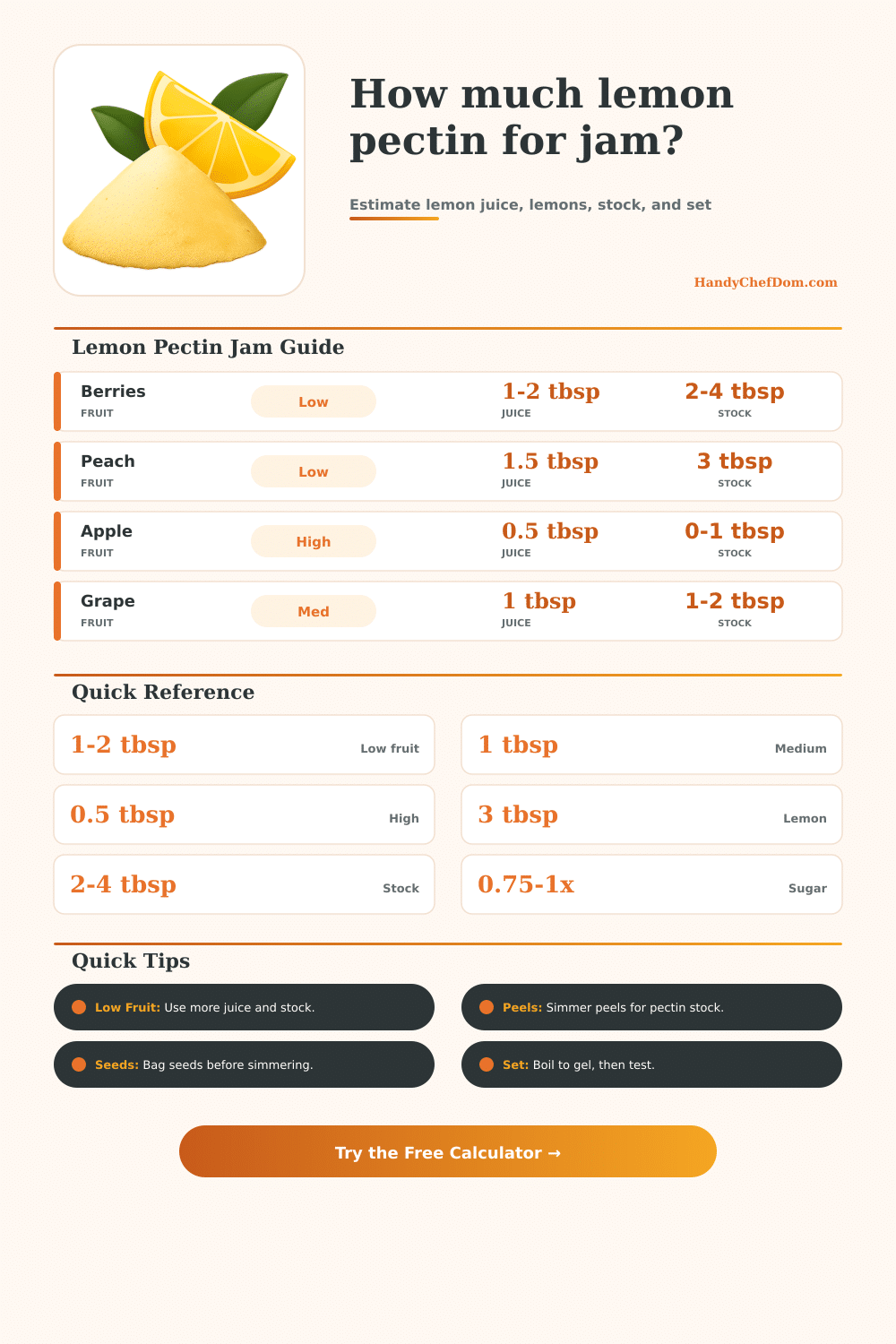
Low-pectin fruit often uses 1 to 2 tablespoons lemon juice per cup of fruit. Lemon peels and seeds can also be simmered into a homemade pectin stock that supports set without masking the fruit.
| Fruit Group | Natural Pectin | Lemon Juice Starting Point | Stock Support |
|---|---|---|---|
| Strawberries, cherries, ripe peaches | Very low to low | 1.5 to 2 tbsp per cup fruit | 3 to 4 tbsp lemon stock per cup fruit |
| Blueberries, raspberries, apricots | Low to medium | 1 to 1.5 tbsp per cup fruit | 2 to 3 tbsp lemon stock per cup fruit |
| Blackberries, grapes, plums | Medium | 0.75 to 1 tbsp per cup fruit | 1 to 2 tbsp lemon stock per cup fruit |
| Apples, cranberries, quince, citrus | High | 0.25 to 0.75 tbsp per cup fruit | Optional or small stock splash |
| Lemon Part | What It Adds | Calculator Use | Practical Note |
|---|---|---|---|
| Juice | Acid for gel formation and brightness | Main tablespoon result | Low-pectin fruit often starts at 1 to 2 tbsp per cup fruit. |
| Peel and pith | Natural citrus pectin | Raises pectin stock estimate | Use yellow peel plus some white pith, then strain. |
| Seeds | Extra pectin during simmer | Adds seed-bag support | Tie in cheesecloth so seeds are easy to remove. |
| Homemade pectin stock | Concentrated pectin liquid | Main stock result | Simmer peels, pith, cores, and seeds, then strain clear. |
| Batch Style | Fruit | Sugar Ratio | Lemon And Stock Direction |
|---|---|---|---|
| Loose spoon jam | 4 cups fruit | 0.55 to 0.70x fruit weight | Use more lemon stock because lower sugar sets softer. |
| Classic jam | 4 cups fruit | 0.75 to 0.90x fruit weight | Use the standard lemon juice result, then gel test. |
| Clear jelly | 4 cups juice | 0.90 to 1.00x juice weight | Favor clear strained pectin stock and balanced lemon juice. |
| Firm preserve | 4 cups fruit | 0.85 to 1.10x fruit weight | Increase lemon stock and reduce slightly longer. |
| Desired Set | Lemon Juice Factor | Pectin Stock Factor | Expected Texture |
|---|---|---|---|
| Loose spoonable | 0.85x | 0.80x | Soft, glossy, easy to spoon over yogurt or toast. |
| Medium jam set | 1.00x | 1.00x | Classic spreadable jam that mounds gently. |
| Firm sliceable | 1.15x | 1.25x | Holds a stronger mound and spreads thicker. |
| Clear jelly | 1.10x | 1.35x | Cleaner gel target with strained juice and stock. |
Making jams requires use a specific amount of pectin for the jam to set into a gel. Many people has difficulty determining whether the jam will set. One reason for this is that the amount of pectins within fruits can differ from batch to batch.
A pectin calculator can help determine the amount of lemon juice that is required, the number of lemons that you should use in the jam, and the amount of lemon peel and seed stocks that is required for setting jams. To use the pectin calculator, all a person must do is entering the amount of fruit they have, the type of fruit they will use, and the firmness that they would like the jam to reach. The calculator will provide information regarding the amount of each ingredient that is required to create a batch of jam that will reach the desired firmness.
Use a pectin calculator to make your jam set
The amount of pectin that is contained within fruits can differ depending on the type of fruit that is being used and how ripe the fruits are when they are harvested. For instance, apples contains more pectin than fruits like strawberries. Additionally, the level of ripeness of the fruit affect the amount of pectin that it contains.
The more ripe the fruit is, the more different amount of pectin it may contain compared to fruit that isnt yet ripe. Because the amount of pectin that the fruit contains can change, the amount of lemon juice that is used in the jam must change as well. If the fruit that is used in the jam contain low levels of pectin, then more lemon juice will be required to set the jam.
Conversely, if the fruit contains high level of pectin, then less lemon juice will be required for setting the jam. Additionally, the amount of sugar that the cook will use for making the jam will affect the jams ability to set. If there will be less sugar for the jam, then there will need to be more pectin for the jam to reach the desired firmness.
This information jam makers can calculate with the use of a pectin calculator. To make lemon pectin stocks, the lemon peels, white pith, and seeds will be simmered in a large amount of water. Once simmered, this lemon pectin stock will contain natural pectin, which will assist in the jam setting process.
The pectin calculator will indicate for the jam maker the amount of lemon pectin stock that will be required for jam making so that the jam will not be too bitter in its flavor. Additionally, the pectin calculator will indicate the number of whole lemon that would be required for using fresh lemon juice instead of lemon pectin stock. Using fresh lemon juice can be preferred for jam makers who chooses to simmer the lemon peels and seeds to make lemon pectin stock.
For jams to reach the correct texture, it is necessary to balance the amount of acid within the jam. Additionally, jams also need to have a pleasant flavor. If the amount of acid in the jam is too low, the jam will not set.
If the amount of acid in the jam is too high, then the jam may have an unpleasent flavor. To weigh the fruit pectin to the amount of jam that will be made, the pectin calculator will provide the amount of lemon juice that must be used to achieve a balanced flavor with the jam ingredients. While it is possible to use a chilled plate to test the setting of the jam, the pectin calculator will suggest the amount of lemon juice to use so that the jam sets properly.
The firmness of the jam will depend upon the amount of pectin that are added to the jam. The more firm that the jam is to be, the more pectin must be added compared to jam that is to be softer. The pectin calculator takes this relationship between jam firmness and pectin addition into consideration.
When selecting the firmness of the jam that will be made with the pectin calculator, the amount of lemon juice and lemon pectin stock will increase. Jam makers can prevent the addition of large amount of lemon juice by using the pectin calculator. If jam makers avoid adding lemon juice to jam, the flavor of the jam will not become too flat.
It is more effective to add the correct amount of pectin to jam recipes at the beginning of the jam making process then to attempt to fix jams that has failed to thicken. A pectin calculator allows jam makers to plan for the variables within the jam making process. Jam makers can add the type of fruit that will be used for jam, the preference for the amount of sugar that will be used, and the desired firmness of the jam.
Based off these inputs, the pectin calculator will provide jam makers with a set of instructions for making jam. By using a pectin calculator, jam makers can turn the making of jam into a repeatable process. The pectin calculator will eliminate the guesswork that jam makers may feel within the requirements for pectin and acid for jam making.