🥣 Protein in Oats Calculator
Estimate oat protein from dry cups, cooked portions, grams, milk prep, serving count, recipe use, and batch size.
Use dry weight for the tightest protein estimate, or enter cooked oats when you are portioning a prepared pot.
| Oat Type | Protein Per 40 g | Calories Per 40 g | Best Calculator Use |
|---|---|---|---|
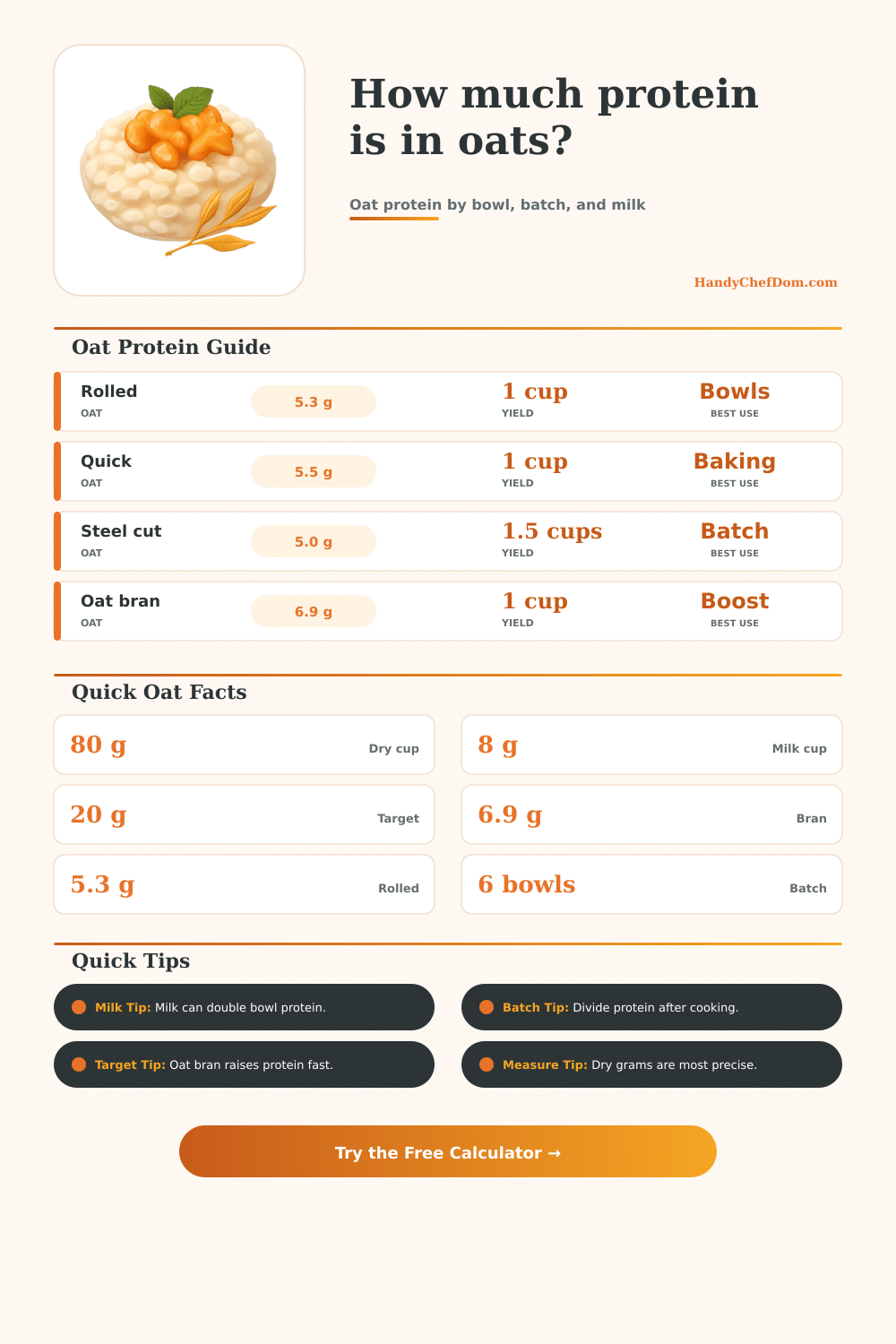
| Old-fashioned rolled oats | 5.3 g | 156 | Breakfast bowls |
| Quick oats | 5.5 g | 152 | Baking and quick bowls |
| Steel-cut oats | 5.0 g | 150 | Cooked batch prep |
| Oat bran | 6.9 g | 100 | Protein and fiber boost |
| Scottish oatmeal | 5.4 g | 154 | Creamy porridge |
| Plain instant oats | 4.7 g | 146 | Single serve cups |
| Whole oat groats | 5.3 g | 156 | Chewy meal prep |
| Sprouted rolled oats | 5.2 g | 150 | Overnight jars |
| Oat Type | Dry Cup Weight | Cooked Yield From 1 Dry Cup | Dry Grams In 1 Cooked Cup |
|---|---|---|---|
| Rolled oats | 80 g | 2.0 cups | 40 g |
| Quick oats | 81 g | 2.1 cups | 39 g |
| Steel-cut oats | 160 g | 4.0 cups | 40 g |
| Oat bran | 94 g | 2.2 cups | 43 g |
| Scottish oatmeal | 120 g | 3.0 cups | 40 g |
| Instant oats | 86 g | 2.1 cups | 41 g |
| Oat groats | 160 g | 3.6 cups | 44 g |
| Sprouted oats | 80 g | 2.0 cups | 40 g |
| Prep Liquid | Protein Per Cup | Calculator Effect | Good Fit |
|---|---|---|---|
| Water | 0 g | Counts oat protein only | Light bowl |
| Whole milk | 7.7 g | Adds dairy protein | Creamy breakfast |
| 2 percent milk | 8.1 g | Adds steady protein | Daily bowl |
| Skim milk | 8.3 g | High protein liquid | Lean target |
| Soy milk | 7.0 g | Plant protein boost | Dairy-free bowl |
| Oat milk | 3.0 g | Small protein lift | Oat-forward flavor |
| Almond milk | 1.0 g | Minimal protein | Light recipe |
| Half water, half milk | 4.0 g | Blended protein add | Balanced batch |
| Recipe Use | Typical Dry Oats | Common Liquid | Protein Planning Note |
|---|---|---|---|
| Breakfast bowl | 40 to 60 g | Water or milk | Milk often closes the target gap |
| Overnight oats jar | 40 to 50 g | Milk or yogurt mix | Divide after chilling |
| Smoothie thickener | 20 to 40 g | Milk or soy milk | Small oat scoop adds texture |
| Pancake batter | 60 to 120 g | Milk or water | Batch servings matter most |
| Muffin or cookie mix | 80 to 200 g | Recipe liquid | Use serving count for pieces |
| Meal prep batch | 160 to 320 g | Milk, water, or blend | Cook once, portion protein later |
Determining the protein content in oatmeal can be dificult. There are several factor that will change the protein content in your bowl of oatmeal. Factors include the type of oats that you use, the amount of oats that you use, the type of liquid that you use to cook your oats, and the batch size of the oatmeal that you cook.
All of these variable can be managed with this calculator. The calculator will make the calculation for you so that you dont have to perform the math in your head or guess at the protein content in your oatmeal. In order to use the calculator, you must understand the difference between dry weight and cooked weight.
How to Calculate Protein in Oatmeal
Dry weight is a precise measurement of the weight of the oats. Many people, however, prefer to measure the cooked weight of their oatmeal. Both of these option are available on the calculator so that the protein content will remain the same whether you cook your oatmeal or if you reheat the same portion of oatmeal that you cooked earlier in the day.
Additionally, you must also consider the batch size and the number of person that you are feeding with this batch size of oatmeal. Divide the total protein by the number of individuals that you are feeding in order to ensure that each person recieve the same amount of protein. The type of liquid that you use to cook your oats can also have a significant impact on the protein content.
Water contains no protein. Using water to cook your oatmeal will not add any protein to your oatmeal. However, if you use milk or soy milk, the protein content of your oatmeal will increase.
You may use milk or soy milk to increase the protein content of your oatmeal without increasing the number of oats that you consume. The calculator calculates the amount of protein that the liquid contributes to the oatmeal, as the volume of the liquid is multiplied by the protein density of the chose liquid. The type of oat that you use will change the protein content of your meal.
Rolled oats contain a moderate amount of protein. Steel cut oats and oat bran contain a different amount of protein then rolled oats. Steel-cut oats will create more volume than rolled oats when cooked.
Therefore, one serving of steel-cut oats may contain more volume than one serving of rolled oats. Additionally, oat bran contains more protein per gram of oats than other types of oats. Thus, using oat bran to make your oatmeal increases the protein content of your meal.
The calculator makes it easy for you to read these different amount of protein for each type of oat so that you dont have to memorize these tables. Use the calculator to adjust the protein content target that you aim for with your oatmeal. The calculator can determine how much more oatmeal you need to reach that target protein level.
This can be of significance in that you can also add other products to your oatmeal that contain more protein, such as yogurt or seeds. The calculator can determine how much protein that these item will add to your oatmeal. Although the protein content and protein calculations cannot be measured in terms of taste and texture, these factor are important to consider in the eating habits of individuals.
Some individuals may prefer steel-cut oats to other types of oats. Others may prefer quick oats. The texture of the oats may influence your appetite for oatmeal.
The calculator will provide you with the protein content and the protein information that you need, but you are in charge of determining if the amount of protein and the texture of the oatmeal meet your appetite. Consistency in the method by which you measure your protein content will ensure the accuracy of the calculations that the calculator performs. For instance, if you measure dry oats on some days and cooked oats on others, the accuracy of the calculator will be lost.
Choose a primary method of measuring your oatmeal and use the calculator to quickly and easy determine the protein content whether you choose to use dry or cooked methods to measure your oats. Using one primary method will ensure the honesty of the protein content numbers and your eating habits with oatmeal.