🥘 Salt in Soy Sauce Calculator
Estimate sodium and salt equivalent from soy sauce tablespoons, ml, sauce style, serving count, reduced-sodium labels, and marinade retention.
Use the label value when you have it. This calculator is informational only for cooking and nutrition estimating, not medical advice.
| Soy Sauce Style | Typical Sodium Per Tbsp | Salt Equivalent | Best Calculator Use |
|---|---|---|---|
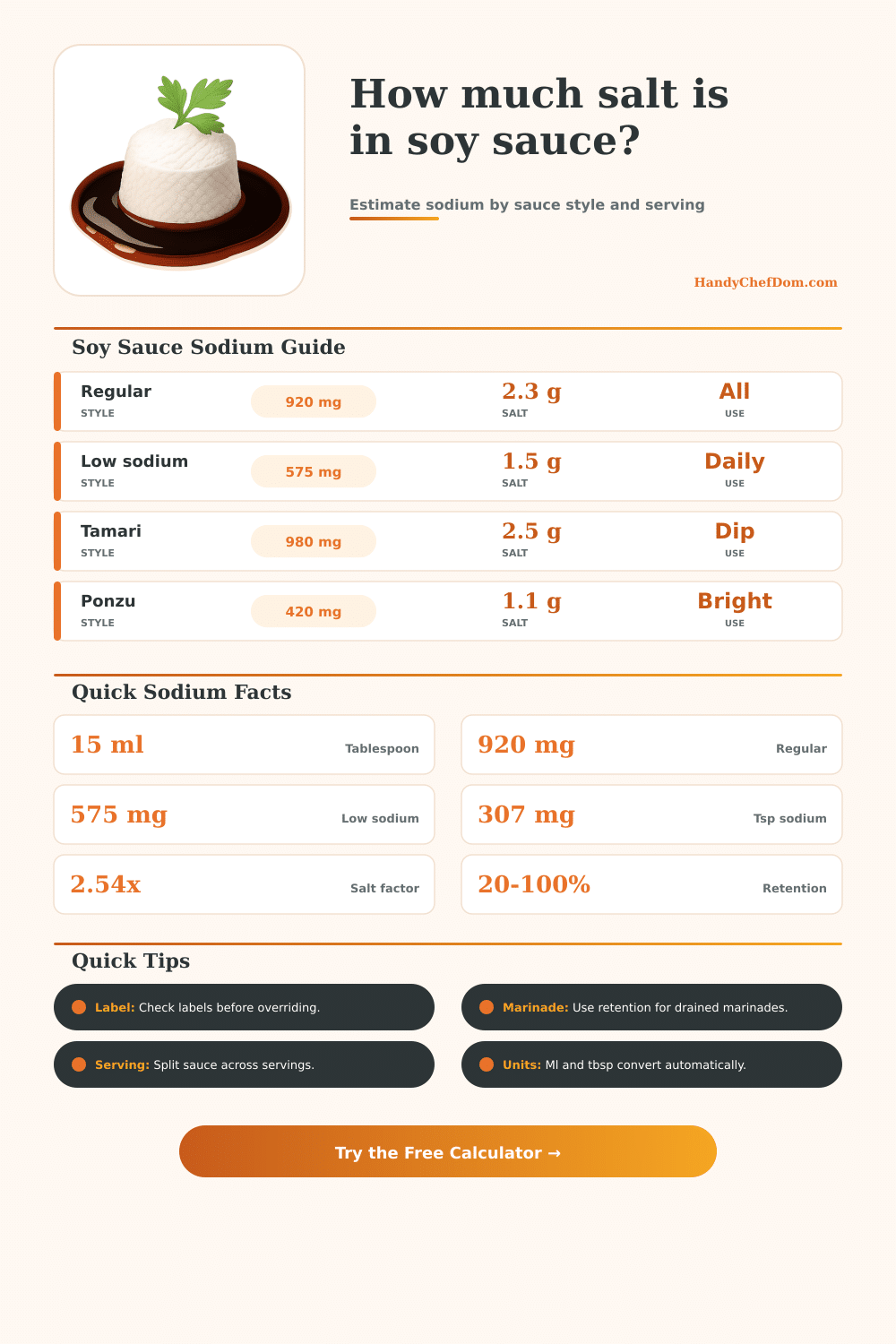
| Regular Japanese style | 920 mg | 2.34 g salt | Default estimate when no label is available |
| Low-sodium soy sauce | 575 mg | 1.46 g salt | Reduced-sodium bottles and meal prep sauces |
| Tamari | 980 mg | 2.49 g salt | Bold dipping sauces and gluten-free style labels |
| Shoyu | 880 mg | 2.24 g salt | Balanced seasoning and noodle dishes |
| Chinese light soy sauce | 1050 mg | 2.67 g salt | High-seasoning impact in stir-fry sauces |
| Chinese dark soy sauce | 700 mg | 1.78 g salt | Color-heavy sauces and glazes |
| Ponzu soy blend | 420 mg | 1.07 g salt | Citrus dipping sauces and dressings |
| Coconut aminos | 270 mg | 0.69 g salt | Sweeter soy-style substitution estimates |
| Kitchen Measure | Metric Volume | Regular Soy Sodium | Low-Sodium Soy Sodium |
|---|---|---|---|
| 1 teaspoon | 4.9 ml | 307 mg | 192 mg |
| 2 teaspoons | 9.9 ml | 613 mg | 383 mg |
| 1 tablespoon | 14.8 ml | 920 mg | 575 mg |
| 2 tablespoons | 29.6 ml | 1840 mg | 1150 mg |
| 1/4 cup | 59.1 ml | 3680 mg | 2300 mg |
| 1/2 cup | 118.3 ml | 7360 mg | 4600 mg |
| Use Case | Typical Retention | What It Means | Calculator Setting |
|---|---|---|---|
| All sauce eaten | 100% | Sauce stays in bowl, broth, rice, or noodles | All sauce consumed |
| Glaze or finishing sauce | 80% | Most sauce clings to the food | Glaze mostly retained |
| Stir-fry pan sauce | 65% | Some sauce remains in pan or serving dish | Tossed sauce partly left behind |
| Shared dipping bowl | 55% | Part of the dip remains unused | Shared dipping bowl |
| Drained marinade | 35% | Most liquid is discarded before cooking | Marinade drained |
| Quick brush or baste | 20% | A thin layer reaches the finished food | Quick brush or basting |
| Recipe Scenario | Soy Sauce Amount | Servings | Regular Soy Per Serving |
|---|---|---|---|
| Sushi dip for two | 1 tbsp | 2 | 460 mg sodium |
| Weeknight stir-fry | 3 tbsp | 4 | 690 mg before retention |
| Ramen bowl splash | 2 tsp | 1 | 613 mg sodium |
| Teriyaki marinade | 1/4 cup | 6 | 613 mg before retention |
| Fried rice batch | 2 tbsp | 5 | 368 mg before retention |
| Potluck noodles | 1/2 cup | 12 | 613 mg before retention |
This tool converts sodium to salt equivalent using sodium x 2.542. It is for recipe planning and general nutrition math only, not medical advice.
Soy sauce contain sodium, but the amount of sodium that a person consume from soy sauce depend on in what ways that soy sauce is used. While many individual may read the nutrition label on the bottle of soy sauce to determine the sodium content of the soy sauce per tablespoon, the sodium content of that soy sauce dont necessarily reflect the sodium content of the soy sauce that an individual eater consumes. The amount of sodium that a person consumes from soy sauce can depend upon the retention level of that soy sauce; retention is the amount of soy sauce that remain upon the food that is prepared with that soy sauce.
For instance, if a cook utilize soy sauce as a marinade for meat, the sodium will likely not remain upon that meat after the meat is cooked, but if soy sauce is utilize as a glaze prior to cooking the meat, the sodium will remain upon the meat. Additionally, there is different amounts of sodium contained within different types of soy sauce. For instance, regular Japanese soy sauce typicaly contain a high amount of sodium, while low-sodium soy sauce contain less sodium than regular soy sauce.
How Much Sodium Comes From Soy Sauce
Other types of soy sauce, like tamari, contains more sodium than other types of soy sauce, while ponzu sauce, which contain citrus components, contains less sodium than other soy sauce products. Soy sauce alternatives, like coconut aminos, contains less sodium than soy sauce, but contain a more higher amount of sweetness than soy sauce. Thus, the type of soy sauce that is used can impact the amount of sodium that an individual consumes, so knowing the type of soy sauce that is utilize allows for the cook to calculate the sodium content of that soy sauce.
Beyond the type of soy sauce that an individual use, the amount of soy sauce that is used can also impact the sodium content of the meal that is prepare with the soy sauce. For instance, a person may use a teaspoon of soy sauce in a recipe or recipes, while another recipe may call for the use of a tablespoon of soy sauce. Additionally, if a recipe utilize soy sauce to prepare a meal for many individual, the volume of soy sauce that is used will increase the total sodium content of that meal.
Furthermore, the number of servings in which the cook divide that soy sauce will impact the amount of sodium per serving of that meal. Thus, an individual can utilize the soy sauce calculator to factor in these variable. The soy sauce calculator help an individual to calculate the amount of sodium that will be contain in the meal that utilize that soy sauce.
The soy sauce calculator account for the retention level of the soy sauce (those that remain upon the food), the number of servings in which the cook will divide the meal, the type of soy sauce that will be utilize, and even account for other ingredients in the recipe that may contain sodium. Thus, this calculator allow for an individual to accurately calculate the amount of sodium that will be contain within that meal altogether. Additionally, the reference table that are provided with the soy sauce calculator can provide additional information about soy sauce and the sodium content that it may contain.
These tables can indicate the amounts of different volume of soy sauce in relation to one another, as well as the amount of sodium that can be contain in meals that utilize different types of soy sauce. Thus, those tables can allow for individuals to understand how the sodium content change with the use of different amounts of soy sauce, or with the use of different types of soy sauce in comparison to other types of soy sauce. By understanding the soy sauce and sodium content in relation to each other, individuals can have flexibility in the meals that they prepare.
For instance, an individual can utilize a low-sodium soy sauce if the remainder of the meal is high in sodium content. Additionally, individuals can adjust for the retention level of the soy sauce if they are aware that the individuals that eat the food will entirely consume the soy sauce. Overall, then, understanding the relationship of soy sauce and sodium allow individuals to control the sodium content in their meals throughout the day.