🍜 Sodium in Miso Soup Calculator
Estimate the sodium load in a miso soup pot from miso paste, dashi, soy sauce, salty toppings, serving size, and your per-serving target.
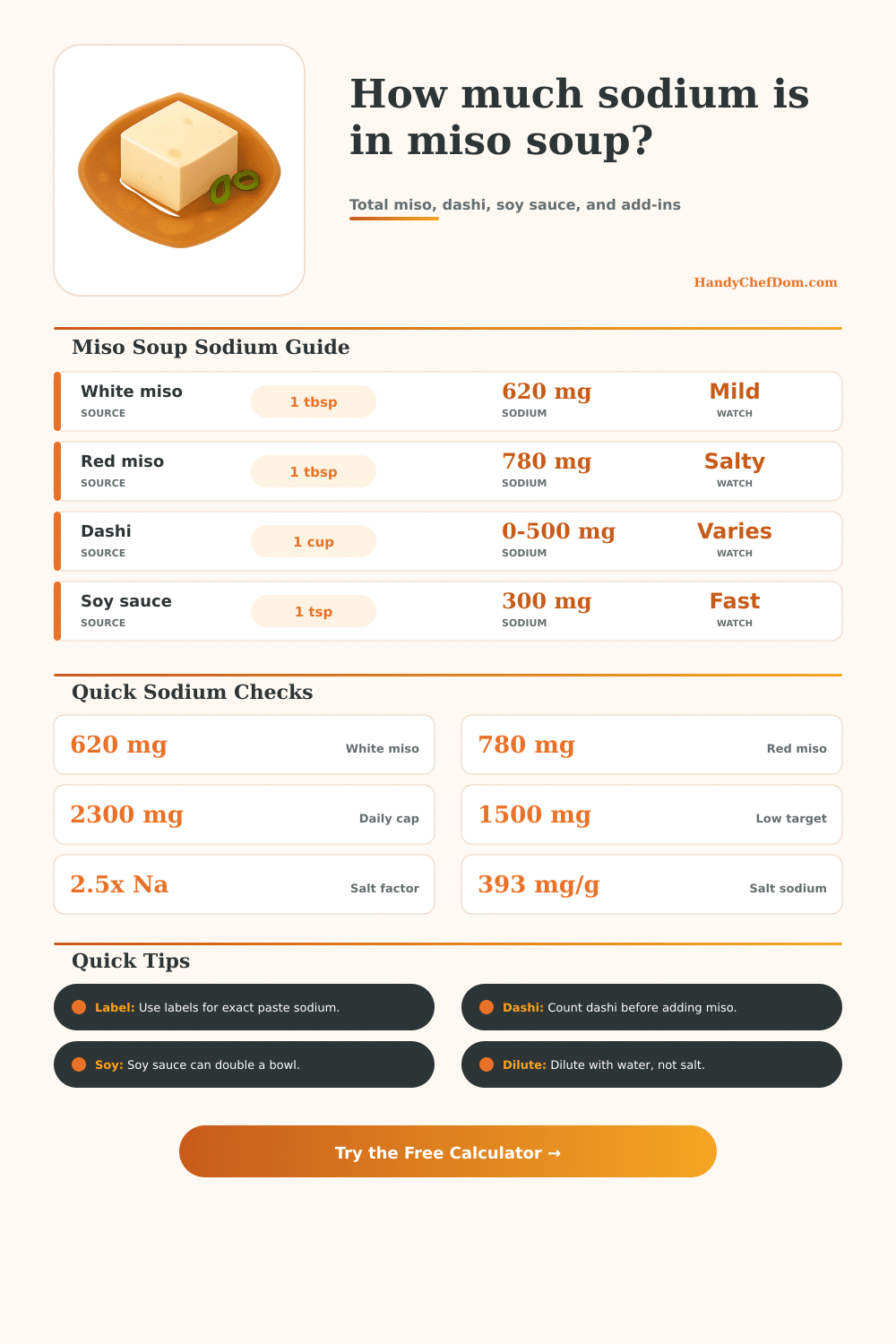
Use the label override when your miso tub lists sodium per tablespoon. Otherwise the calculator uses typical sodium estimates and adds dashi, soy sauce, and salty toppings separately.
| Miso type | Typical sodium | Typical tbsp weight | Best sodium note |
|---|---|---|---|
| White miso | 620 mg per tbsp | 17 g | Milder taste, still sodium-dense |
| Yellow miso | 680 mg per tbsp | 18 g | Balanced default for everyday soup |
| Red miso | 780 mg per tbsp | 18.5 g | Use less when targeting a lighter bowl |
| Awase miso | 720 mg per tbsp | 18 g | Blended paste with moderate-high sodium |
| Barley miso | 700 mg per tbsp | 18 g | Earthy style, label values vary |
| Low sodium miso | 420 mg per tbsp | 17 g | Best starting point for sodium caps |
| Soup serving | Liquid volume | Common setting | Planning note |
|---|---|---|---|
| Small starter cup | 0.75 cup | Appetizer or side | Lower liquid means sodium is concentrated |
| Standard bowl | 1 cup | Home soup serving | Useful default for per-serving targets |
| Large soup bowl | 1.5 cups | Noodle or rice bowl | Add toppings into the sodium count |
| Meal bowl | 2 cups | Ramen-style portion | Often needs a stricter miso amount |
| Family pot | 4 to 6 cups | Shared dinner broth | Divide by the true number of bowls |
| Add-in or seasoning | Typical amount | Sodium estimate | How to count it |
|---|---|---|---|
| Regular soy sauce | 1 teaspoon | 300 mg | Add as total teaspoons in the pot |
| Low sodium soy sauce | 1 teaspoon | 190 mg | Still meaningful in a small bowl |
| Tamari | 1 teaspoon | 320 mg | Check gluten-free labels separately |
| Coconut aminos | 1 teaspoon | 90 mg | Often lower but sweeter |
| Dried wakame | 2 tablespoons | 80 to 200 mg | Varies by rinse and brand |
| Seasoned tofu or noodles | 1 serving | 100 to 600 mg | Enter the package total as add-ins |
| Broth base | Sodium per cup | Best use | Calculator setting |
|---|---|---|---|
| Water plus miso only | 0 mg | Cleanest sodium baseline | Set dashi sodium to 0 |
| Homemade kombu dashi | 0 to 40 mg | Low sodium soup control | Use package-free estimate |
| Homemade bonito dashi | 20 to 80 mg | Savory broth with modest sodium | Use 40 to 80 mg if unsure |
| Low sodium packaged broth | 70 to 180 mg | Convenience with a label | Enter label mg per cup |
| Instant dashi powder | 300 to 600 mg | Fast soup base | Use the packet value when possible |
| Restaurant-style broth | 500 to 900 mg | Dining-out estimate | Pair with a conservative miso amount |
Estimates are for cooking and meal planning. If sodium is medically restricted, use product labels and the target from your clinician or dietitian.
Miso soup contain a significant amount of sodium. If you are to account for the total amount of sodium that a person consume from miso soup, then you must account for the sodium content that is contain within the miso soup itself. Miso soup can be considered a light food by many individuals, yet the nutritional content of miso soup can contain a high amount of sodium depending upon the ingredient that are used within the miso soup.
The total amount of sodium that is contain within a bowl of miso soup can come from three main source: the miso paste that is use to make the soup, the dashi that is use to prepare the soup, and any additional ingredients that are add to the miso soup. Miso paste is the primary source of sodium of miso soup. The different type of paste that are used in the preparation of miso soup contain different amounts of sodium within the paste due to the different types of miso paste and the different method of fermentation of those pastes.
How Much Sodium Is in Miso Soup and How to Reduce It
For instance, the cook typically use white paste to make miso soup when the soup is to be mild in its flavor; however, miso paste of this type does still contain a high amount of sodium. In contrast, red miso paste contain a stronger flavor then white paste; however, the red paste contains an even more higher amount of sodium than the white paste. Furthermore, the concentration of sodium within the miso paste that is used to make the soup change in relation to the amount of paste that is add to the amount of liquid in which the paste is dissolve.
If a large amount of paste is add to a small amount of liquid, the resulting miso soup will contain a high concentration of sodium. In contrast, if a small amount of paste is add to a large amount of liquid, the resulting soup will contain a low concentration of sodium. The second major source of sodium in a pot of miso soup is the dashi that is used to prepare the soup.
Dashi can be prepared at home using kombu and bonito; however, a cook can add sodium to the liquid during the preparation process, or you can replace the dashi with a dashi that contains sodium, such as a package of powders that are used to prepare dashi at home. Most package of powders that are used to prepare dashi contain several hundred milligrams of sodium per cup of liquid. Additionally, the more liquid that is prepared, the more sodium will be prepared with the dashi; thus, you must read the sodium label on the package of powders to determine how much sodium the preparation of the dashi will contribute to the miso soup.
Additional ingredients that can be add to miso soup, such as soy sauce and toppings, also contain sodium. For instance, if a cook add a teaspoon of soy sauce to the miso soup, the soup will contain an additional three hundred milligrams of sodium. Though low-sodium soy sauce can be used in the miso soup, the low-sodium soy sauce will still contain some amount of sodium; thus, you must read the label of the soy sauce to determine the amount of sodium that will be contribute to the miso soup.
Similarly, toppings to the soup, such as seasoned tofu or noodles also contain sodium. Therefore, you must read the label of the package of these products to determine the amount of sodium that adding these toppings will contribute to the miso soup. The portion sizes in which the miso soup is divide will also affect the amount of sodium that is consume by each person who consume the soup.
If a large pot of miso soup is divided into a large number of small servings, each serving will contain less sodium than if the same pot of soup is divided into fewer large servings. Though the total amount of sodium that is contained in the entire pot of soup will remain the same, the amount of sodium that is contained in each serving will change in response to the portion size of the soup. Therefore, you must know the number of serving that are to be contain within the pot of miso soup in order to calculate the amount of sodium that will be contain in each serving of the miso soup.
By determining the amount of sodium that is contain in each of the ingredients within the miso soup, a person can ensure that they are within their daily sodium intake limit. In many instances, the daily sodium limit for an individual is low; thus, the amount of sodium that is contained in a bowl of miso soup may represent a significant portion of that daily limit for that individual. Should an individual desire to reduce the amount of sodium that is contain in their pot of miso soup, they can use less miso paste to prepare the soup, use a dashi that contains less sodium than the standard miso soup dashi, or even increase the amount of liquid that is prepared with the miso paste to thin the soup; all of these step will contribute to the control of the sodium content of the miso soup that is prepared.
You should of checked the labels to avoid too much sodium in your meal. Its important to be aware of this for your health and avoid a extra sodium. Its naturaly easy to miss these details if you dont look closely at teh labels.
Actualy, many people dont realize how much sodium is in a bowl of soup. Miso soup is delicious, but the sodium content is alot more than most people thinks. Be careful when you are making your delicious soup at home.