🥣 Flour to Substitute for Cornstarch Calculator
Convert a cornstarch thickening amount into flour tablespoons, grams, slurry liquid, roux fat, and simmer time adjustments for sauces, gravy, pie filling, and frying coatings.
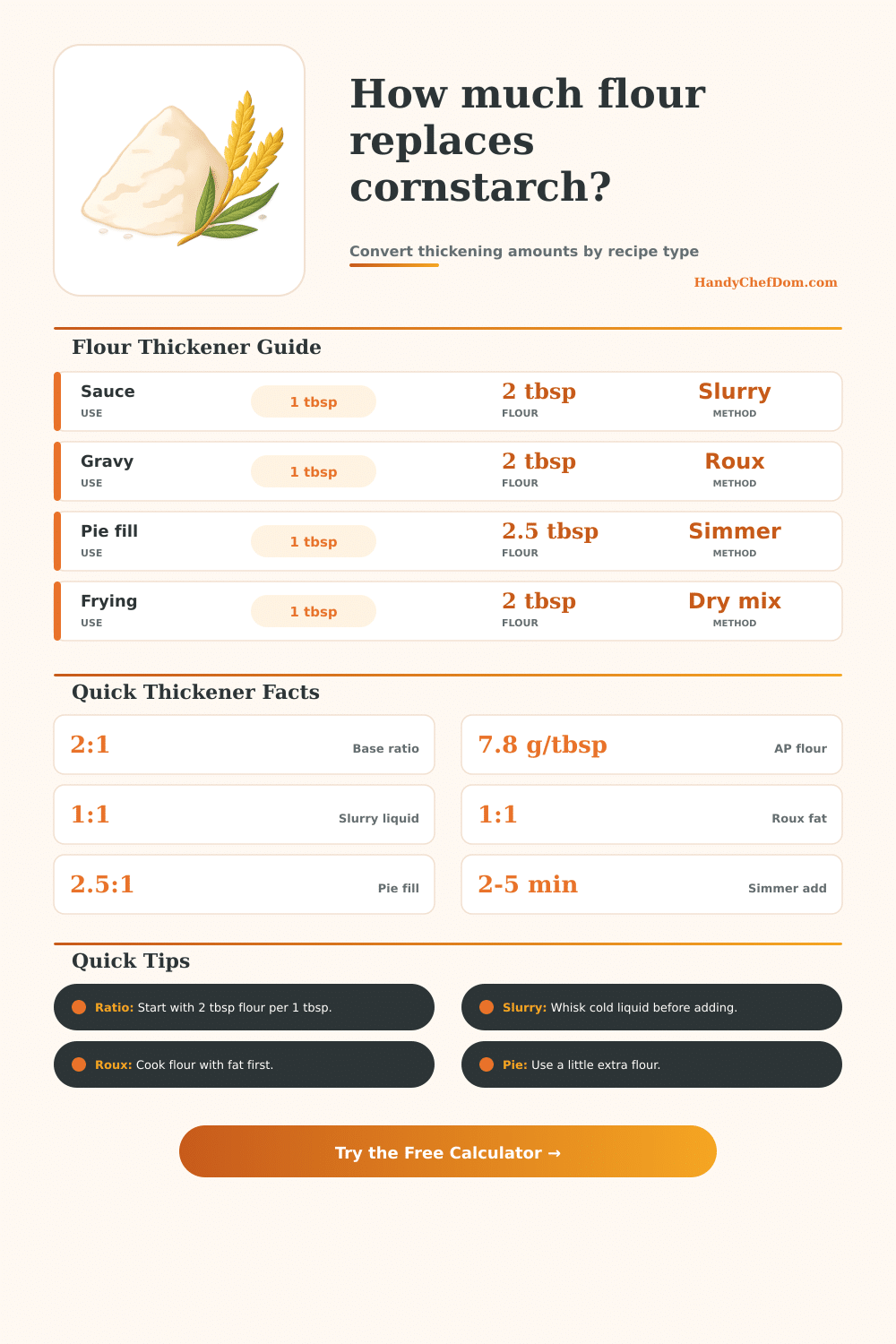
A common thickening swap is about 2 tablespoons flour for every 1 tablespoon cornstarch. This calculator adjusts that baseline by flour type, recipe context, liquid volume, method, gluten-free needs, simmer time, and desired thickness.
| Recipe Context | Starting Ratio | Best Method | Texture Note |
|---|---|---|---|
| Sauce or pan sauce | 2 tablespoons flour for 1 tablespoon cornstarch | Slurry or roux | Medium body with a slightly opaque finish. |
| Gravy | 2 tablespoons flour for 1 tablespoon cornstarch | Roux preferred | Cook flour with fat for a smoother savory base. |
| Pie filling or fruit filling | 2.5 tablespoons flour for 1 tablespoon cornstarch | Direct mix with sugar or cool juice | Needs more flour to handle fruit juices. |
| Frying coating or dredge | 2 tablespoons flour for 1 tablespoon cornstarch | Dry blend | Less crisp than cornstarch, but browns well. |
| Flour Type | Approx Grams Per Tbsp | Calculator Factor | Gluten-Free? |
|---|---|---|---|
| All-purpose wheat flour | 7.8 g | 1.00x | No |
| Cake or pastry flour | 6.8 g | 1.08x | No |
| Bread flour | 8.0 g | 0.98x | No |
| Whole wheat flour | 7.5 g | 1.10x | No |
| White rice flour | 9.5 g | 1.10x | Yes |
| Oat flour | 7.0 g | 1.18x | Use certified GF if needed |
| Chickpea flour | 6.9 g | 1.15x | Yes |
| Gluten-free all-purpose blend | 8.0 g | 1.08x | Usually, check label |
| Liquid Volume | Light Body | Medium Body | Thick Body |
|---|---|---|---|
| 1 cup liquid | 1 to 1.5 tbsp flour | 2 tbsp flour | 2.5 to 3 tbsp flour |
| 2 cups liquid | 2 to 3 tbsp flour | 4 tbsp flour | 5 to 6 tbsp flour |
| 3 cups liquid | 3 to 4.5 tbsp flour | 6 tbsp flour | 7.5 to 9 tbsp flour |
| 4 cups liquid | 4 to 6 tbsp flour | 8 tbsp flour | 10 to 12 tbsp flour |
| Fruit filling | Reduce if fruit is dry | Use the calculator target | Add more for juicy berries |
| Thickener | Swap Strength | Appearance | Best Use |
|---|---|---|---|
| Cornstarch | Strongest of these options | Glossy and more translucent | Quick sauces, stir fry sauce, fruit glaze. |
| All-purpose flour | About half as strong by tablespoon | Opaque and creamy | Gravy, cream sauce, stew, roux bases. |
| Rice flour | Slightly weaker than wheat flour | Pale and smooth when whisked | Gluten-free gravy and sauces. |
| Gluten-free blend | Varies by starch blend | Can be smooth or slightly starchy | Use small batches and simmer gently. |
| Chickpea flour | Moderate thickening | Yellow tint and savory flavor | Savory sauces and coatings. |
Substituting flour for cornstarch require adjusting the amount of flour to use. Flour and cornstarch dont behaves the same way when you heat the liquid and the ingredient containing flour. You must use more flour then you would use if you were to use cornstarch.
Use two tablespoon of flour for every tablespoon of cornstarch that the recipe require. Using too little flour will make the liquid not thick enough. Using too much flour can make an unpleasant texture of the cooked liquid.
How to Replace Cornstarch with Flour
The thickness that a dish require will also change the amount of flour you need. The type of dish you are making will have an effect on the amount of flour you need. For instance, a sauce or gravy might require a different amount of flour then a pie filling.
Gravies contains fat that allow the flour to integrate into the liquid. Fruit pie fillings contain the juice of the fruit, which will release when baking the pie. Because of this, more flour might be required for pie filling compared to sauce recipes.
Different recipes require different amount of flour than others. Thus, the type of recipe will also have an effect on the amount of flour you need to use. The type of flour you use will also have an effect on the amount of flour you need.
All-purpose flour is one of the most common types of flour used in cooking. However, cake flour and gluten-free flour will have different properties to all-purpose flour. Cake flour is light than all-purpose flour.
Thus, you will need a larger volume of cake flour than all-purpose flour to achieve the same thickening power. Similarly, gluten-free flours such as rice flour will produce a grit in the cooked product if not cooked long enough. Thus, you must be mindful of the type of flour that you use.
The amount of flour you need will change with the type of flour that you use. The amount of liquid in the recipe and the amount of time to cook the recipe will also play a role in the amount of flour you need. A recipe with a large amount of liquid will require a large amount of flour to thicken the liquid.
If you are not going to cook the product for a long time, the flour may not become fully thickened. Thus, you must consider the amount of time that the recipe will cook for. The amount of time that a sauce cooks compared to a stew will impact the amount of flour needed.
Stews that simmer for a long time will allow the flour to thicken the liquid compared to a sauce that cook for a shorter period of time. Finally, you should taste the food while it is cooking. Flour can leave a chalky taste or even a raw taste in the food if not cooked long enough in the liquid.
The flour will affect the flavor of the food. To avoid this, use the amount of flour suggested for the recipe and add more flour if need. By adjusting the amount of flour based on the type of recipe, type of flour, amount of liquid, and the amount of time to cook the food, you can successfully substitute flour for cornstarch.