🌶 Chili Powder Per Pound of Meat Calculator
Estimate chili powder for ground meat, turkey, pork, venison, tacos, sloppy joes, and chili using a practical 1 to 2 tablespoon per pound range.
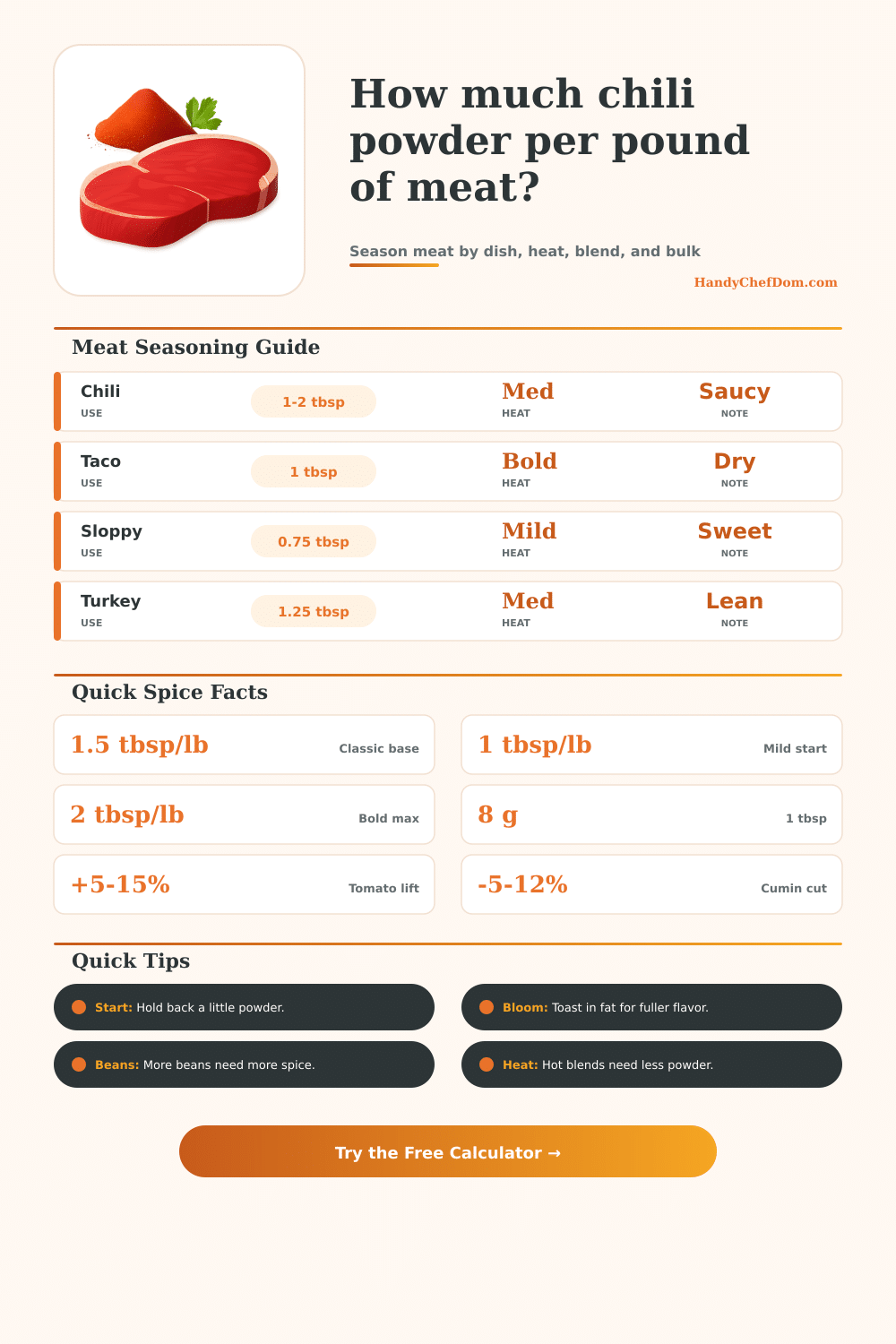
A common kitchen starting point is 1 to 2 tablespoons chili powder per pound of meat. This calculator adjusts that range by meat type, dish style, heat target, chili powder strength, extra cumin or paprika, tomato and bean bulk, and servings.
Balanced starting point when meat is simmered with tomatoes, beans, and liquid.
Lower total powder works because the meat is drier and seasoning is more concentrated.
Sweet tomato sauce can turn muddy if the chili powder is pushed too high.
Beans and extra tomato absorb spice, so a small lift keeps the meat flavor clear.
| Meat or protein | Good use | Starting chili powder | Adjustment note |
|---|---|---|---|
| Ground beef | Classic chili, tacos, nachos | 1 to 2 tbsp per lb | Standard reference meat for this calculator. |
| Lean beef or sirloin | Chunky chili or skillet beef | 1.1 to 2 tbsp per lb | Lean meat benefits from a slightly fuller spice dose. |
| Ground turkey | Turkey chili or meal prep bowls | 1 to 1.75 tbsp per lb | Use medium heat and enough tomato so the powder blooms. |
| Ground chicken | Mild chili, taco bowls, soup | 0.8 to 1.5 tbsp per lb | Chicken tastes lighter, so keep hot blends conservative. |
| Pork or mixed meat | Pork chili, sloppy joe mix, taco filling | 0.9 to 1.8 tbsp per lb | Paprika-heavy blends pair well with pork but can taste sweet. |
| Venison or game | Bold chili or bean pot | 1.25 to 2 tbsp per lb | Game meat can carry a stronger earthy chili powder profile. |
| Heat level | Typical amount per lb | Best with | Calculator factor |
|---|---|---|---|
| Mild | About 1 tbsp per lb | Kids portions, sloppy joes, mild turkey chili | Uses a 0.75x heat factor. |
| Medium | About 1.5 tbsp per lb | Everyday chili, beans, and balanced taco meat | Uses the neutral 1.00x factor. |
| Bold | About 1.75 tbsp per lb | Beef chili, venison, and tomato-heavy pots | Uses a 1.25x flavor factor. |
| Hot | Up to 2 tbsp per lb with mild blends | Spicy chili blends or pepper-forward meat | Uses a 1.45x target, then hot blends pull it down. |
| Measure | Approx chili powder weight | Equivalent | Kitchen use |
|---|---|---|---|
| 1 teaspoon | About 2.7 grams | 1/3 tablespoon | Small corrections after tasting. |
| 1 tablespoon | About 8 grams | 3 teaspoons | Default per-pound planning measure. |
| 2 tablespoons | About 16 grams | 6 teaspoons | Upper bold range for 1 pound of meat. |
| 1/4 cup | About 32 grams | 4 tablespoons | Useful for 2 to 4 pound batch seasoning. |
| Dish style | Chili powder direction | Cumin or paprika effect | Tomato and bean effect |
|---|---|---|---|
| Chili con carne | 1.25 to 2 tbsp per lb depending heat | Extra cumin may var you cut powder slightly. | More tomato or beans usually needs a small lift. |
| Taco meat | 0.8 to 1.25 tbsp per lb | Taco packets already contain chili powder and salt. | Low bulk means spice tastes stronger. |
| Sloppy joe meat | 0.5 to 1 tbsp per lb | Paprika can support color without extra heat. | Sweet tomato sauce needs a softer dose. |
| Bean-heavy chili | 1.5 to 2 tbsp per lb meat | Extra cumin adds earthiness without much color. | Beans absorb flavor, so taste after simmering. |
When cooking meat with spices, the amount of chili powder that you should use in the pot must be balanced against the amount of meat that is to be used in a recipe. Using too little chili powder will make the flavor of the meat taste flat, while using too much chili powder can make the flavor of the meat harsh. However, many cooks uses between one and two tablespoons of chili powder for every pound of raw meat that is to be used in the recipe.
The exact amount of chili powder that are needed for a particular recipe, however, may change based off the type of meat that is to be used, the style of the dish, and the other ingredients that is to be used within the pot. The calculator that is provided here allow a person to determine the amount of chili powder that should be used within the recipe based upon the weight and the type of meat that is to be used. For instance, lean meats, like turkey or venison, will require more chili powder then fatty meats, like ground beef.
How Much Chili Powder to Use With Meat
This is because fatty meats contains more flavor than lean meats due to the ability of the fat in the meat to carry flavor. Additionally, some styles of dishes requires more chili powder than others. For instance, an filling for a taco will require less chili powder than a chili pot that simmers for long periods of time with ingredients like beans and tomatoes.
The heat level of the chili also affect the amount of chili powder that should be used within the dish. For instance, if a person desires a mild chili dish, then the amount of chili powder that is used will be less than if the person desired a hot chili dish. Additionally, the age of the chili powder can also affect the amount of chili powder that should be used within the recipe.
For instance, if using older chili powder, whose aroma have lessened over time, more chili powder will need to be added to the pot to provide the same flavor as fresh chili powder. Fresh chili powder or chili powder that contains a heavy amount of ancho chili will provide a deep flavor to the chili, allowing for the use of less of the spice. Bulk ingredients for the chili, such as beans, tomatoes, or broth, will act to dilute the spices that is added to the chili.
Thus, if bulk ingredients are used, the calculator will increase the amount of chili powder that is to be used to ensure the flavor of the chili dont dissapears within the pot. Additionally, if other spices are to be used within the recipe, such as cumin or paprika, the amount of chili powder that should be used will change. For instance, if a recipe contains cumin or paprika, less chili powder will need to be added to the recipe.
The same is true for dishes that contains a taco seasoning packet; less standalone chili powder will be needed due to the presence of the spices within the seasoning packet. Other techniques for improving the flavor of the chili can also change the amount of chili powder that is to be used within the recipe. For instance, the cook can add chili powder to the hot fat within which the meat is seared.
Toasting the chili powder prior to add it to the hot fat allows the spices to develop a more pronounced flavor when added to the meat. Additionally, holding back ten percent of the calculated amount of chili powder allows for the flavors of the ingredients to interact. After boiling the chili pot, the ten percent of chili powder that was held back can be added if the chili needs more of the spice.
Many people tend to make mistake with chili powder due to the consideration of chili powder in the same manner as the spice salt. While salt is a single spice, chili powder are a blend of spices. The blend of chili powder will interact with the other ingredients in the chili pot.
For instance, a sloppy joe recipe that contains both sugar and tomato will require less chili powder than a chili recipe that contains beans and simmers for long periods of time. Finally, chili powder does not need to be doubled if the amount of meat in the recipe is to be doubled. For instance, if the amount of meat in a recipe is doubled, but if ingredients like beans and tomatoes is also doubled, the amount of chili powder does not need to be doubled.
Thus, the chili spice calculator ensure that the amount of chili powder is adjusted for this factor. Furthermore, the calculator will convert the amount of chili powder needed from tablespoons to teaspoons, tablespoons to grams, or grams to tablespoons to allow the cooks to understand the correct measurement of chili powder to be used in the recipe. Thus, the main goal of utilizing this calculator is to ensure that the amount of chili powder that is added to the meat will enhance the flavor of the meat without overpowering it.