Korean BBQ Calories Calculator
Get a complete nutritional breakdown of your KBBQ meal — calories, protein, fat, and carbs
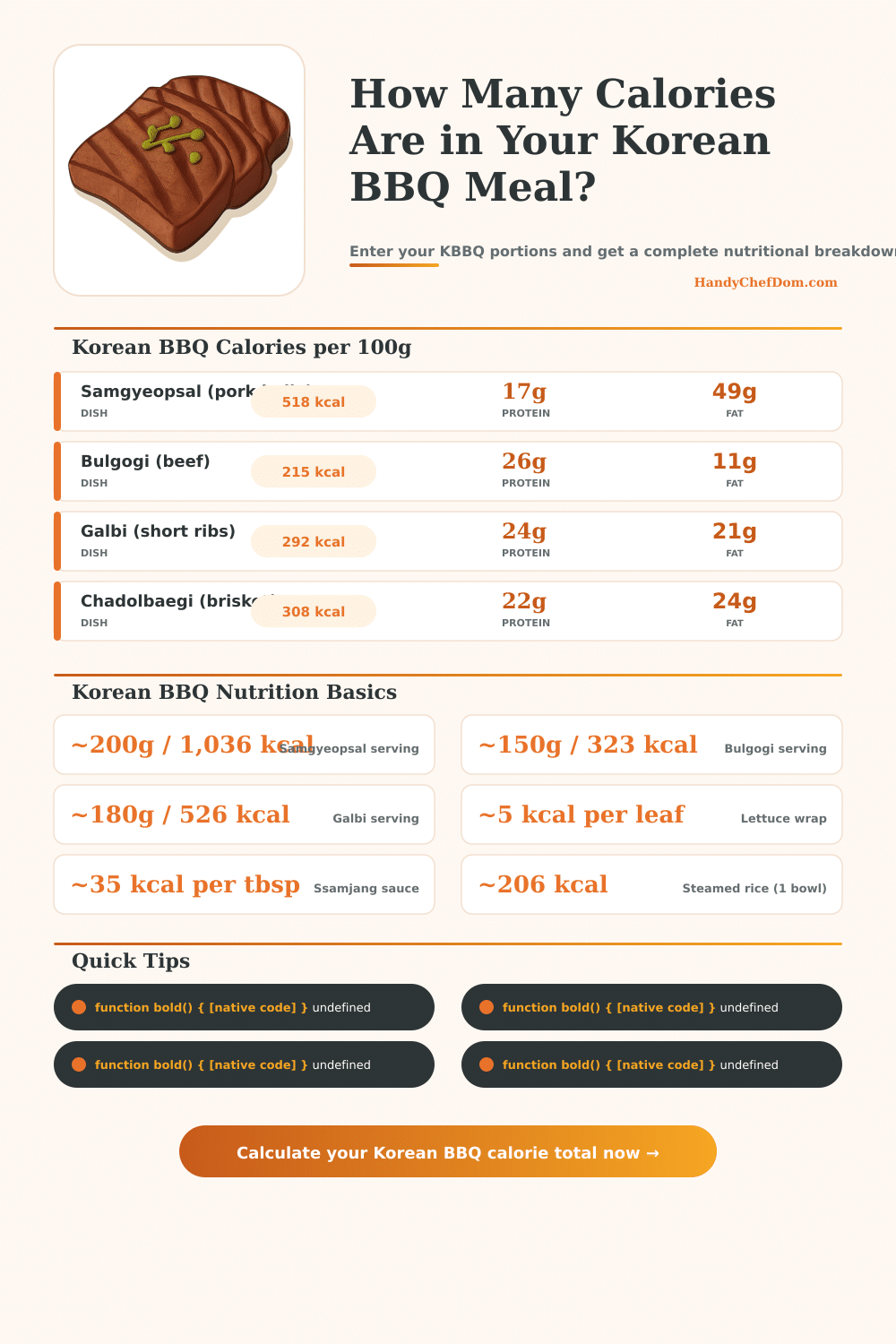
| Meat Cut | Calories | Protein (g) | Fat (g) |
|---|---|---|---|
| Samgyeopsal (Pork Belly) | 518 | 17 | 49 |
| Bulgogi (Marinated Beef) | 215 | 26 | 11 |
| Galbi (Short Ribs) | 292 | 24 | 21 |
| Chadolbaegi (Brisket) | 308 | 22 | 24 |
| Dak-galbi (Spicy Chicken) | 175 | 28 | 6 |
| Dwaeji-galbi (Pork Ribs) | 265 | 22 | 19 |
| Seafood Mix | 95 | 18 | 2 |
| Mixed Assortment (avg) | 250 | 23 | 18 |
| Banchan | Per Serving (80g) | Carbs (g) | Notes |
|---|---|---|---|
| Kimchi | 18 kcal | 3 | Low calorie, fermented |
| Kongnamul (Bean Sprouts) | 25 kcal | 4 | Very low calorie |
| Japchae (Glass Noodles) | 115 kcal | 18 | Higher carb |
| Spinach Namul | 30 kcal | 3 | Low calorie |
| Gamja-jorim (Potato) | 90 kcal | 15 | Moderate carb |
| Dubu-jorim (Tofu) | 75 kcal | 4 | Good protein |
Korean BBQ is basically a grill tradition from the land itself, that won big popularity everywhere in the world. Usually one works with meat of beef, pig or bird, but truly the secret lies in that, that the grills are built right into the table. Some versions use gas heat, while others stay on carbon, and if you have chance some stores offer portable grills for self control the whole thing.
The main draw consists in cooking the meat self at the table before your eyes. The slices come slim and already soaked, simple and ready for the heat. Here what does korean bbq separate: the meats grill surprisingly easily, even for newcomers that never tried.
Korean BBQ Basics
The most many bits cook in less than five minutes, ideal for those, that worry about overcooking. After everything cooked nicely, one finds various sauces ready… Of those based on sesame, mixed with salt and peppers.
For beginners in korean bbq, galbi is the plate, that you must try. It forms teh core of the menu, and the stores well know that, many offer great lists of meats to choose. Pig, beef, bird, seafood, the range is wild.
One main category can have more than twenty kinds of pork cuts alone. Add beef into the mix, and you have more than hundred options. Bulgogi appears commonly, and pork belly is another favorite.
Those belly slices are rich in fat, so do not wonder, that they taste like this well.
The banchan, those tiny side plates, that go with everything; form truly half of the meal. They beat simply add-ons; many folks expect them more then the main dish. Between the most pleasant ways to eat are making ssam, those one-bite packets.
Take a sheet of lettuce, lay on it meat and rice, later cover with sauce or toppings as you like. Simple garlic and kimchi do wonders inside.
The marinades usually mix sugar, sesame oil, soy sauce, garlic and ginger to create something special. Gochujang, fermented Korean hot paste, gives that wonderful mix of warmth, sweetness and umami at once. Even so note one cause: those marinades can add up calories.
Normal serving, around 150 grams, commonly reaches between 250 and 280 calories. The most many folks eat three to four servings each person as main service.
Eating stew while one grills the meat? It is truly a great idea. Jjigae poured above rice, while the protein bits cook, makes everything more enjoyable.
Steamed rice, kimchi and roasted sweet potato each fits perfectly with thewhole thing.
One can fully prepare korean bbq at home. George Foreman grills sit well on the table and get the job done. In Korea itself, electric grill plates are common.
Truly, to start you only need pork, red lettuce, ssamjang sauce and rice. From here one can try things. Grilled kimchi with eggs, cheese, corn, whatever pleases.
Some stores even changed the custom, bringing the complete korean bbq experience to clients by means of servers, that cook instead of letting eaters do it self.