🍜 Fish Sauce in Pho Calculator
Estimate fish sauce for pho broth from broth volume, pho style, sauce saltiness, target seasoning, added salt, aromatics, simmer reduction, servings, and garnish dilution.
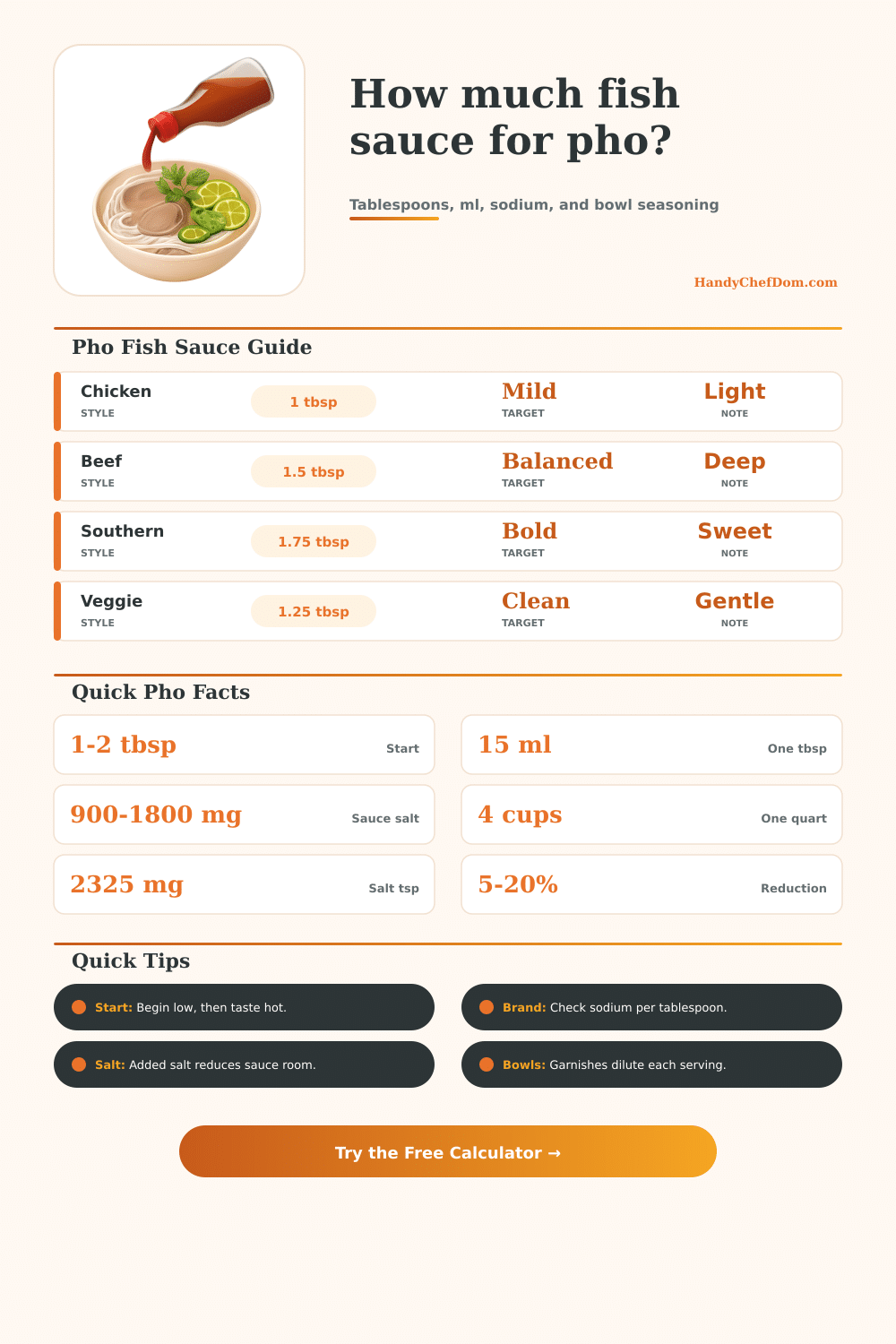
Reference start: use about 1 to 2 tablespoons fish sauce per quart of pho broth, then adjust for sauce saltiness, existing salt, reduced broth concentration, and how much fresh garnish or noodle water dilutes each bowl.
Good for a clear, gentle chicken broth where ginger and onion should stay forward.
Balanced range for beef pho when the broth already has bones, spices, and moderate salt.
Useful when noodles, sprouts, herbs, lime, and sauces will soften the broth in the bowl.
If the sauce label or added salt is high, reduce tablespoons and finish by tasting.
| Pho style | Fish sauce start | Seasoning target | Adjustment note |
|---|---|---|---|
| Chicken pho | About 1.0 to 1.25 tablespoons per quart | Gentle to balanced | Keep the finish lighter so chicken, ginger, and onion stay clear. |
| Northern beef pho | About 1.25 to 1.6 tablespoons per quart | Clean savory | Works well when the broth already has good bone depth and spice clarity. |
| Southern beef pho | About 1.5 to 2 tablespoons per quart | Bold savory | Often benefits from a little more seasoning because garnishes and sauces dilute the bowl. |
| Oxtail or marrow-rich pho | About 1.35 to 1.75 tablespoons per quart | Rich balanced | Fat and collagen can soften salt perception, but reduce slightly after a long simmer. |
| Vegetable pho | About 1.1 to 1.4 tablespoons per quart | Clean umami | Use enough fish sauce for savoriness, then stop before it dominates the vegetables. |
| Sauce strength | Sodium used | Calculator effect | Label note |
|---|---|---|---|
| Mild label | About 900 mg sodium per tablespoon | Allows more tablespoons before the sodium target is reached. | Often tastes rounder or less salty tablespoon for tablespoon. |
| Standard label | About 1200 mg sodium per tablespoon | Balanced default for most home pho calculations. | Use this when the label is unknown and the bottle tastes moderately salty. |
| Robust label | About 1500 mg sodium per tablespoon | Reduces the total tablespoon recommendation. | Common for saltier bottles or concentrated sauce styles. |
| Very salty label | About 1800 mg sodium per tablespoon | Needs a lower tablespoon dose and more careful tasting. | Best handled by adding in stages, especially with added salt. |
| Custom label | Uses your entered mg per tablespoon | Matches the nutrition panel on your bottle. | Most accurate when the serving size on the label is one tablespoon. |
| Broth volume | Gentle start | Balanced start | Bold start |
|---|---|---|---|
| 2 quarts broth | About 2 tablespoons fish sauce | About 3 tablespoons fish sauce | About 4 tablespoons fish sauce |
| 4 quarts broth | About 4 tablespoons fish sauce | About 6 tablespoons fish sauce | About 8 tablespoons fish sauce |
| 6 quarts broth | About 6 tablespoons fish sauce | About 9 tablespoons fish sauce | About 12 tablespoons fish sauce |
| 8 quarts broth | About 8 tablespoons fish sauce | About 12 tablespoons fish sauce | About 16 tablespoons fish sauce |
| 12 quarts broth | About 12 tablespoons fish sauce | About 18 tablespoons fish sauce | About 24 tablespoons fish sauce |
| Seasoning source | Primary role | Sodium planning | How it changes pho |
|---|---|---|---|
| Fish sauce | Salt plus fermented umami | Usually 900 to 1800 mg sodium per tablespoon | Adds depth, aroma, and salt together, so it is the main calculator focus. |
| Table salt | Clean salt only | About 2325 mg sodium per teaspoon | Raises salinity without adding fish sauce aroma; useful for final small corrections. |
| Rock sugar | Sweet balance | No sodium contribution | Rounds broth but does not replace salt or fish sauce seasoning. |
| Soy sauce | Salt plus darker flavor | Often sodium-heavy per tablespoon | Can darken the broth profile, so this calculator does not treat it as a pho default. |
| Bowl garnishes | Dilution and brightness | Usually lowers perceived salt per bite | Noodles, sprouts, herbs, lime, and sauces can make broth taste less salty in the bowl. |
Adding fish sauces to pho requires careful considerato the amount of fish sauce to add. Fish sauce add sodium to the pho broth. Additionally, fish sauce adds flavor to the broth that complement and enhances the flavor of the broth ingredients to provide depth to the flavor of the broth.
You need to consider how much sodium is already in the pot of broth before you add the fish sauce. If you add to much fish sauce to the pot, the broth will end up tasting more salty. If you add to little fish sauce to the pot, the broth will end up lacking flavor.
How Much Fish Sauce to Add to Pho
The amount of fish sauce to add to the broth will depend on the volumes of the broth and the various garnishes you will add to the bowl of pho that you serve. The volume of the broth and the amount of salt in the broth in the pot is two variables that will impact the amount of fish sauce you have to add. For instance, a light chicken broth will contain less fish sauce than a beef stock that contains beef bone that have simmered for long periods of time.
Additionally, the different style of pho that you make will impact the amount of fish sauce that you use. For instance, because southern style pho contains more garnishes than northern style pho, the southern style pho can contain more fish sauce than the northern style broth. The different garnishes used in southern style pho will balance out the excess saltiness that the fish sauce add to the broth.
Another variable to consider are the strength of the fish sauce that you use in your pho recipe. Not all brand of fish sauce are the same in terms of the amount of sodium that they contain. While the fish sauce may say on its label that it contains a specific amount of sodium, the fish sauce can taste much stronger when heated in the broth.
You must taste the broth to determine how strong the fish sauce is, as tasting the fish sauce with a cold spoon isnt the same than tasting the fish sauce that has been heated in the broth. The last factor to consider is the effect that the garnish will have on the seasoning of the broth. When you add the rice noodle, bean sprout, and lime to the bowl of pho, these garnishes will dilute the seasoning of the broth in the bowl.
Because of this dilution of the seasoning of the broth, many cooks will make the broth in the pot taste stronger than they would like when they serve the broth in a bowl with the garnishes. The broth must taste less flavorful when you serve it in the bowl to account for the dilution of the seasoning cause by the garnishes. To add fish sauce to the pot of broth, you should add most of the calculated amount of fish sauce to the pot.
You should let the fish sauce sit in the broth for a few minutes. After this sit period, taste the broth. If the broth taste flat, add the remaining amount of fish sauce to the broth.
If the broth taste complete, dont add any more fish sauce. By tasting the broth after adding the fish sauce and tasting it after adding the remainder of the fish sauce, you will learn how much fish sauce your pot of broth require to develop a balanced broth.