🥧 Tomato Paste in Shepherd Pie Calculator
Balance paste intensity, gravy thickness, pan capacity, and potato topping coverage before the shepherd pie goes into the oven.
Enter the cooked filling plan, not raw recipe promises. The calculator treats tomato paste as concentrated body, then checks gravy volume, simmer reduction, pan depth, servings, and topping coverage.
| Filling style | Paste starting point | Why it works | Watch point |
|---|---|---|---|
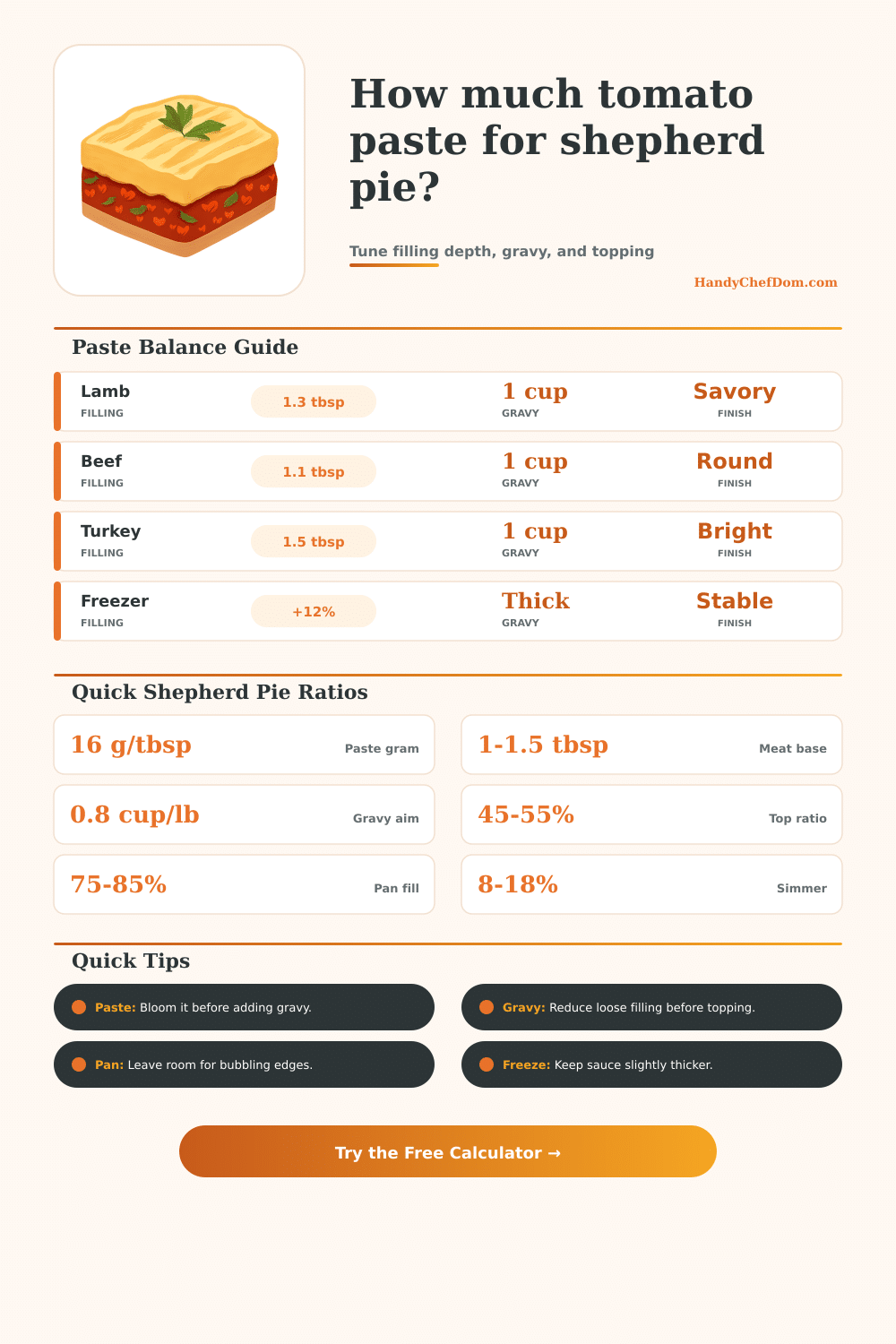
| Ground lamb shepherd pie | 1.2 to 1.5 tbsp per lb meat | Balances lamb richness and browned fond. | Too much can taste sharp if not bloomed. |
| Ground beef cottage-style filling | 1.0 to 1.3 tbsp per lb meat | Rounds out beef gravy without masking stock. | Lean beef may need the higher end. |
| Lamb and beef blend | 1.1 to 1.4 tbsp per lb meat | Keeps savory depth while staying familiar. | Reduce slightly when using wine gravy. |
| Turkey or very lean meat | 1.4 to 1.7 tbsp per lb meat | Adds color and body to a lighter filling. | Add enough fat or gravy for softness. |
| Lentil mushroom filling | 1.3 to 1.6 tbsp per lb equivalent | Supports mushroom umami and starches. | Paste can thicken quickly during simmer. |
| Gravy condition | Good range | Paste signal | Adjustment |
|---|---|---|---|
| Loose filling | Over 1.05 cup per lb meat | Paste can disappear in sauce. | Simmer longer or add a small paste bump. |
| Balanced filling | 0.70 to 1.00 cup per lb meat | Paste reads savory, not tomatoey. | Use calculated amount as written. |
| Tight pub-style filling | 0.50 to 0.70 cup per lb meat | Paste tastes stronger after baking. | Use the lower richness setting. |
| Freezer tray filling | 0.55 to 0.85 cup per lb meat | Sauce loosens after thawing. | Keep gravy thicker and paste steady. |
| Vegetable-heavy pan | Add 0.15 to 0.25 tbsp per cup veg | Sweet vegetables dilute savoriness. | Bloom paste with onions before stock. |
| Pan size | Usable depth | Typical servings | Filling cue |
|---|---|---|---|
| 8 x 8 inch square | 1.8 to 2.0 in | 4 to 6 | Best with 5 to 7 cups filling. |
| 9 x 9 inch square | 2.0 to 2.3 in | 6 to 8 | Good all-purpose family pan. |
| 9 x 13 inch rectangle | 1.8 to 2.2 in | 10 to 12 | Needs enough gravy to avoid dry corners. |
| Deep 2 quart dish | 2.3 to 2.8 in | 6 to 8 | Reduce filling well so center sets. |
| Half steam table pan | 2.0 to 2.5 in | 14 to 18 | Spread topping evenly to cover edges. |
| Make-ahead plan | Paste change | Gravy change | Best texture target |
|---|---|---|---|
| Bake today | No change | Normal simmer | Soft spoonable filling. |
| Chill overnight | Add about 5% | Slightly thicker | Filling holds under cold topping. |
| Freeze unbaked | Add about 12% | Reduce gravy 8% to 12% | Thick enough to avoid watery thaw. |
| Bake and reheat | Add about 7% | Keep moderate gravy | Moist after second heat. |
| Mini ramekins | Reduce about 5% | Keep gravy smooth | Small portions taste more concentrated. |
Shepherd pie benefit from a bit of tomato paste, which is what you find out through trial and error as most home cooks do. Brown the meat, then add your veggies, pour over some stock, and…hmmm, it’s kind of watery. Drop in a spoonful of paste for body, something that even a generous splash of stock won’t achieve, and be careful because too much can send you off in direction of tomato sauce. It’s about the right balance, not something many recipes will tells you.
After plugging in your pan size, gravy amount, vegetable volume, and meat weight (those count, since they influence how much paste the filling can carries without tipping into sharpness), the calculator crunches numbers above. For example, a filling loaded with browning will accommodate slightly more paste then one made with lean white turkey; similarly, a lot of vegetables requires additional paste, lest sweetness overwhelm the flavor.
How to Use Tomato Paste in Shepherd’s Pie
It takes into account reduction that occurs as the filling simmers. It also considers whether it is headed for the freezer. Both affect overall strength. Similarly, gravy volume count. Dilute the paste with loose gravy, and the calculator compensate by adding more. Concentrated tomato taste from tight fills means that same quantity of paste might be stronger in a dry mixture. Other factors include potato topping weight and depth of your pan.
A deep dish requires sufficient sauce to remain moist beneath the mash; otherwise, a shallow pan may go dry even with thick filling. The topping ratio check show only whether the spuds will sink and mingle with the filling, or lie snugly as a proper lid.
And a lot of people toss it into their pies like salt and taste as they go. Sure, but what happens when your pie come out of oven and all those flavors have melded? It’s good up front, not-so-much later. Freezing or even just chilling overnight softens the tomato edge (and also loosens the sauce), and what was a wonderful looking filling on day one will be flat tasting once thawed. The calculator accounts for these changes so you should of guessed how much they will be.
You can deepen the flavor by blooming the paste first. Let the sugars start to caramelize with a minute or two of stirring into the vegetable/meat mixture. When adding to stock keep it bright and on-note by just dropping in whole. Gravies based off wine have their own tangy acidity; that allows you to pull back on your target a bit while still keeping balance.
On the page, it sets those patterns down in a table of references that I find super-useful. One part is for gravy condition and one is for type of meat. This lets you glance at results to see what makes each recipe different without having to do all the combinations yourself. When you get familiar with how they relate, the calculator turn from main event into something like a quick check.
The secret to making good pies is getting the paste correct. That doesn’t make your pie perfect, but it eliminates one variable that can goes wrong. After that, it’s all about the taste of the filling before adding toppings and whether there will be enough space in the pan to let the edges bubble without spilling over. These are little things that makes a shepherds pie memorable or one that just gets eaten.