Sesame Seeds Calcium Calculator
Estimate calcium from whole sesame, hulled kernels, toasted seeds, tahini, and sesame flour by portion, recipe batch, or calcium target.
Reference values use USDA FoodData Central/SR Legacy style data and equivalent culinary nutrition databases derived from USDA records. Values are estimates; packaged brands can vary.
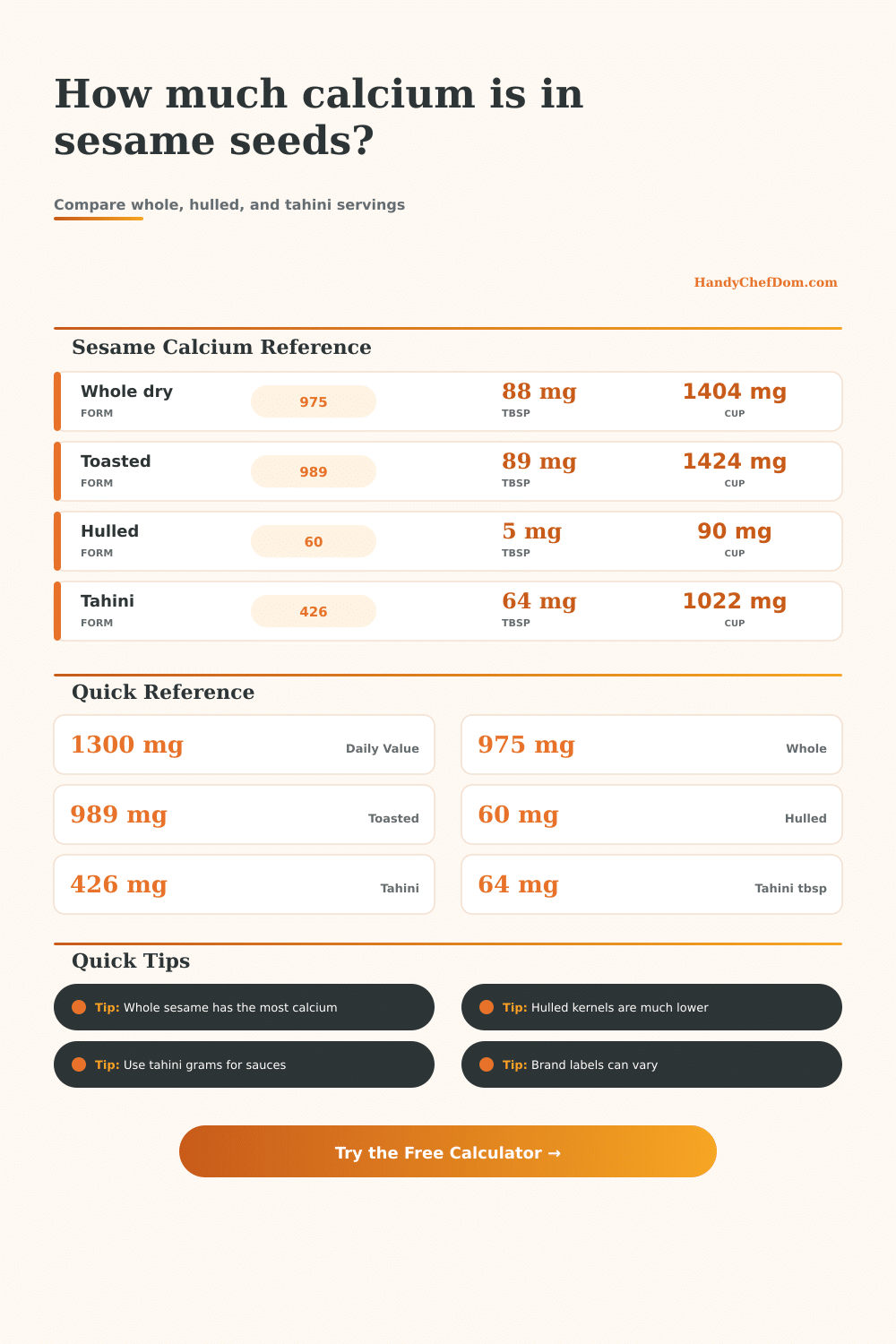
| Sesame Form | Calcium mg/100g | Typical Tbsp | Calcium/Tbsp | Best Calculator Use |
|---|---|---|---|---|
| Whole sesame seeds, dried | 975 | 9 g | 88 mg | Raw toppings, seed blends |
| Whole sesame seeds, toasted | 989 | 9 g | 89 mg | Salads, noodles, bagels |
| Hulled kernels, dried | 60 | 8 g | 5 mg | Pale bakery sesame |
| Hulled kernels, toasted | 131 | 8 g | 10 mg | Toasted white garnish |
| Tahini, roasted kernels | 426 | 15 g | 64 mg | Hummus, dressings, sauces |
| Tahini, raw unroasted kernels | 141 | 14 g | 20 mg | Raw tahini labels |
| Sesame flour, partially defatted | 150 | 7 g | 11 mg | Baking and protein blends |
| Black sesame, whole seed estimate | 975 | 9 g | 88 mg | Black sesame paste |
| Measure | Whole Seeds | Hulled Kernels | Tahini | Sesame Flour |
|---|---|---|---|---|
| 1 teaspoon | 3 g | 2.7 g | 5 g | 2.3 g |
| 1 tablespoon | 9 g | 8 g | 15 g | 7 g |
| 1/4 cup | 36 g | 32-38 g | 60 g | 28 g |
| 1/2 cup | 72 g | 64-75 g | 120 g | 56 g |
| 1 cup | 144 g | 128-150 g | 240 g | 112 g |
| Target per Serving | Whole Dried Seeds | Toasted Whole Seeds | Roasted Tahini | Hulled Toasted |
|---|---|---|---|---|
| 50 mg | 5.1 g / 0.6 tbsp | 5.1 g / 0.6 tbsp | 11.7 g / 0.8 tbsp | 38.2 g / 4.8 tbsp |
| 100 mg | 10.3 g / 1.1 tbsp | 10.1 g / 1.1 tbsp | 23.5 g / 1.6 tbsp | 76.3 g / 9.5 tbsp |
| 150 mg | 15.4 g / 1.7 tbsp | 15.2 g / 1.7 tbsp | 35.2 g / 2.3 tbsp | 114.5 g / 14.3 tbsp |
| 200 mg | 20.5 g / 2.3 tbsp | 20.2 g / 2.2 tbsp | 46.9 g / 3.1 tbsp | 152.7 g / 19.1 tbsp |
| 300 mg | 30.8 g / 3.4 tbsp | 30.3 g / 3.4 tbsp | 70.4 g / 4.7 tbsp | 229.0 g / 28.6 tbsp |
| Use Case | Typical Sesame Amount | Best Matching Form | Approx Calcium |
|---|---|---|---|
| Salad topping | 1 tbsp toasted seeds | Whole toasted | 89 mg |
| Noodle bowl garnish | 2 tsp toasted seeds | Whole toasted | 59 mg |
| Hummus batch | 1/4 cup tahini | Roasted tahini | 256 mg |
| Tahini dressing serving | 1 tbsp tahini | Roasted tahini | 64 mg |
| Sesame bagel crust | 1 tbsp seeds | Whole toasted | 89 mg |
| Black sesame paste | 2 tbsp ground seeds | Black whole | 176 mg |
Do you have sesame seeds? If so, they’re already in your cupboard. We put them in noodle dishes and toss them onto our bagels, yet those little flecks is packed with nutrients. Here’s why: most of us lump all sesame products together. Not true. How you prepare them affects their nutrition. The outer hull of whole seeds include calcium. It dissapears when it’s removed during hulled-seed processing. Get to know the difference (and enjoy more nutrition).
The calculator on this page handles the complex conversions for you. It displays amount of calcium found in certain kinds of sesame, based off the amount of seeds that you enter (in cups, grams, or tablespoons). Select whether the seeds are hulled, dried whole, toasted kernels, or made into tahini paste. Then compare it with the daily value of 1,300 milligrams. And you can even factor in the difference between brands.
Why Whole Sesame Seeds Have More Calcium
You won’t have to guess when meal-planning because you will have an easy-to-understand picture of what you’re getting.
Of all the variations on sesame, what’s the greatest nutritional disparity? The main difference are between hulled and whole seeds. Most of the calcium is found in the hull. When that’s removed, the mineral content go way down. Whole toasted seeds contain almost 90 milligrams of calcium per tablespoon; hulled kernels has about 5 milligrams.
That’s a big number to consider if you’re reading labels. Perhaps you purchase hulled seeds because they are milder tasting and more colorful then their whole counterparts. In exchange for visual appeal, however, you get fewer minerals. Again, not so great for your bones, but good for your recipe’s presentation.
In between are products like tahini: typically prepared using roasted whole seeds, so they retain much of its calcium. But oil content (along with processing) change its density. And eating tahini in hummus or as a sauce mean less sesame per serving compared to sprinkling on seeds. To adjust for mixtures, the calculator lets you guess at how much of something is in a recipe, such as guessing that 50% of your dressing is tahini; the calculator will then adjust the calcium yield accordingly. This is handy if you’re counting your intake from combined recipes instead of individual ingredients.
Calcium doesn’t change much through roasting. Seeds can be toasted with no loss to nutrients. But how do you store your seeds? That is more important than you think. The fat found in sesame seeds oxidizes (rancid) when exposed to air, light and heat. Store seeds in fridge or pantry in an airtight container, and they’ll stay fresh. Calcium does not help prevent rancid oil. That maintains the quality.
Sesame doesn’t require big handfuls for benefit: A few seeds sprinkled on salad, a dollop of tahini in dressing, a bit in granola, that’s all you need to increase your minerals. But consistency matters, and you also need to make sure the sesame is whole rather than ground. This app shows you how those add up visually so you can determine how to use them and what you should of purchase accordingly. It makes it more concrete, turning abstract “health” into something real.
Sesame seeds are shelf stable, versatile, and nutrient dense, provided you choose wisely. Look in your jar. Is it whole or hulled? That makes all the difference between getting real nutrition and a garnish. Depends what’s hiding inside the seed.