🐔 Soy Sauce To Marinate Chicken Calculator
Balance soy sauce, sodium level, chicken weight, pieces, marinade hours, acid, sugar, oil, garlic, ginger, coverage, and servings in one batch.
| Chicken Cut | Base Marinade | Best Hours | Formula Note |
|---|---|---|---|
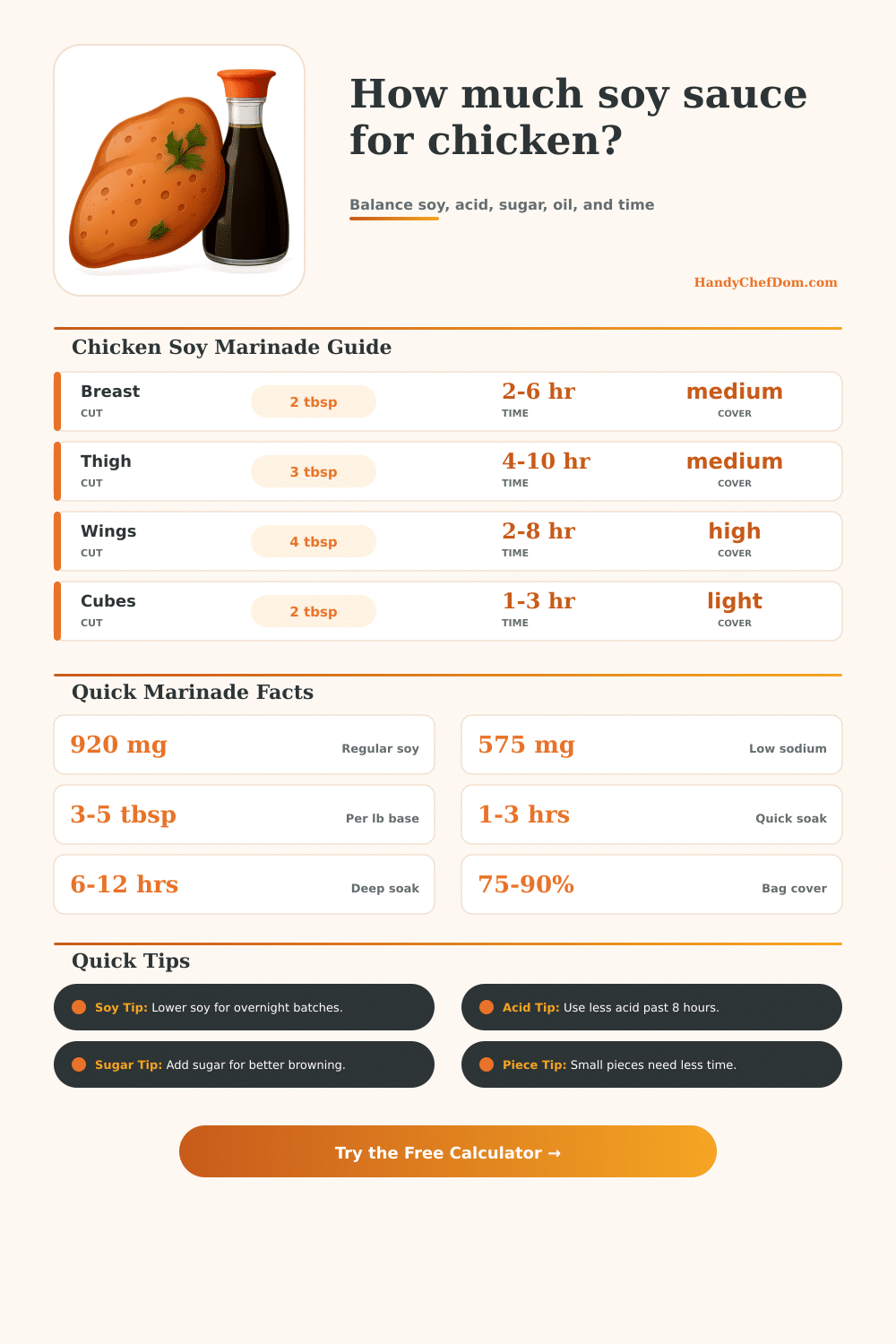
| Boneless breast | 3 to 4 tbsp/lb | 2 to 6 | Lean meat takes soy quickly, so long soaks need less soy. |
| Boneless thigh | 4 to 5 tbsp/lb | 4 to 10 | More forgiving texture supports a savory target. |
| Wings | 5 to 6 tbsp/lb | 2 to 8 | High surface area raises coverage need. |
| Cubes or skewers | 3 to 4 tbsp/lb | 1 to 3 | Small pieces absorb fast, so acid and soy are trimmed. |
| Bone-in mix | 5 tbsp/lb | 6 to 12 | Bone shapes need more liquid for surface contact. |
| Soy Type | Typical Sodium | Salt Factor | Best Use |
|---|---|---|---|
| Regular soy sauce | 920 mg/tbsp | 1.00 | Balanced everyday chicken marinade. |
| Light Chinese soy | 1050 mg/tbsp | 1.08 | Sharper soy flavor with high salt impact. |
| Low-sodium soy | 575 mg/tbsp | 0.68 | Longer marinating or lower sodium targets. |
| Tamari | 980 mg/tbsp | 1.03 | Rounder, gluten-free style when labeled as such. |
| Coconut aminos | 300 mg/tbsp | 0.42 | Milder saltiness and sweeter finish. |
| Marinade Hours | Soy Adjustment | Acid Adjustment | Chicken Note |
|---|---|---|---|
| 0.5 to 1 hour | Raise 10% | Normal | Good for thin tenders, cubes, and quick dinners. |
| 2 to 4 hours | Base amount | Normal | Balanced range for most boneless cuts. |
| 6 to 8 hours | Trim 8% | Trim 10% | Useful for thighs and bone-in pieces. |
| 10 to 12 hours | Trim 18% | Trim 25% | Better with low-sodium soy and gentle acid. |
| Over 12 hours | Trim 28% | Trim 40% | Use a mild target to avoid over-seasoning. |
| Balance Element | Light | Balanced | Bold |
|---|---|---|---|
| Soy share of marinade | 16% to 20% | 22% to 28% | 30% to 36% |
| Acid share | 6% to 9% | 10% to 14% | 15% to 18% |
| Sugar per soy tbsp | 0.10 tbsp | 0.22 tbsp | 0.40 tbsp |
| Oil share | 0% to 5% | 6% to 9% | 10% to 12% |
The marinade has to be balanced, getting it right decides whether your dinner tastes balanced or just salty. How many times have you heard others complain about their meat being bland or briny? They uses a lot of soy sauce, right? And then they wonder what happened?
Marinades are complex: the amount of soy sauce varys with the type of cut (chicken), the length of time it’s marinated and what else is added. It isn’t only about how much soy sauce is used but how much that soy sauce change the end result. Salt is what happens. More specifically, it’s about the movement of salt through meat. The initial marinade will continue to work its way in to the chicken even after an hour. If you’re going to let your bird rest overnight, you don’t want to use as much soy sauce initially; more soaking time mean that more salt gets into the chicken.
How to Make Good Chicken Marinades
Similarly, acidity does double duty: It tenderizes and adds brightness to meat, but again, too much for too long can breaks it all down. Sitting somewhere in between is sugar and oil. They promotes browning and prevent the outside from getting dry during cooking.
Some cuts of chicken absorbs flavor faster then others. For example, boneless breast is lean and will absorb flavor quickly. It doesn’t usually need as many hours or as much liquid as a bone-in thigh. A thigh has more surface area to absorb flavor and more connective tissue that need breaking down. Wings are sort of in-between because there’s lots of skin relative to meat, so it absorbs flavors quick, but can dry out if left in the marinade too long.
Enter your desired cooking times, your chicken weight, and the cut of chicken into the calculator above. It do the math for you, so you don’t have to guess what to change if you alter any of those variables. This is where the cooking method comes into play. With a shallow dish (unless turned), some areas of the chicken may not be covered at all. In contrast, a zip bag will have the liquid up tight on all surfaces and waste are minimal. This means how much liquid you end up needing in total.
Similarly, if you’re targeting sodium levels, using a low-sodium soy sauce allow you to keep higher volumes of liquid without exceeding your maximum sodium content. Next, consider what your end-goal is. If it’s a weeknight meal that will require no more than an hour or two, that changes things from the beginning. Or if you’re making multiple pound’s worth to freeze for the rest of the week, that also affect your choice of how much effort you should of put into it. Knowing either allows you to more easly assess the impact of your remaining ingredient decisions.
For example, you can decide how many aromatics to use, how tart or sweet you want the final dish to be and how much acid to include. Because now they aren’t competing with X amount of soy. A small tweak in one place can affect everything else so spending a moment to run the numbers before combining them not only saves time but prevents the occasional too-salty batch.
It’s no different at the table. If your six chicken thighs is cooking on the grill with a marinade that you like, you may want to rethink that exact same marinade when you’re making cubes of chicken for skewers. You might also rethink it when marinating in a low-sodium soy sauce for a much longer period. With the calculator, all these trade-offs show up ahead of time, before anything gets tossed into the bowl, so the end result come out tasting as intended, not what the bottle decided to give you.