🍅 Tomato Paste in Soup Calculator
Estimate tomato paste tablespoons, grams, per-quart strength, acidity balance, simmer concentration, and serving depth for brothy soups, tomato bases, beans, meat, and vegetable-heavy pots.
These presets load real soup situations: light broth, classic vegetable soup, tomato-forward minestrone, bean soup, meat stew soup, and large batch kettles. Each preset updates the paste target and recalculates.
Use the finished soup volume you expect after vegetables, beans, meat, tomato liquid, and broth are in the pot. The calculator adjusts paste for tomato base strength, solids load, simmer time, acidity, and number of servings.
Tomato Paste Plan For This Soup
Your tomato paste result will appear here after calculation.
Paste Target By Soup Style
| Soup style | Base tbsp per quart | Best use | Calculator cue |
|---|---|---|---|
| Light brothy soup | 0.65 to 0.90 | Clear broth with a soft tomato note | Lower target, acidity guarded |
| Classic vegetable soup | 1.00 to 1.45 | Mixed vegetables with broth and some tomato | Balanced default range |
| Minestrone or pasta soup | 1.25 to 1.80 | Pasta, beans, vegetables, and herbs | Solids support more paste |
| Bean or lentil soup | 1.35 to 2.00 | Hearty legumes and thick spoonfuls | Higher solids adjustment |
| Tomato-forward soup | 1.80 to 2.60 | Deep red soup with tomato as the main base | Checks tomato liquid first |
Soup Quarts And Classic Paste Amounts
| Finished soup | Light paste | Classic paste | Bold paste | Typical servings |
|---|---|---|---|---|
| 2 quarts | 1.5 tablespoons | 2.5 tablespoons | 4 tablespoons | 4 cups or 4 small bowls |
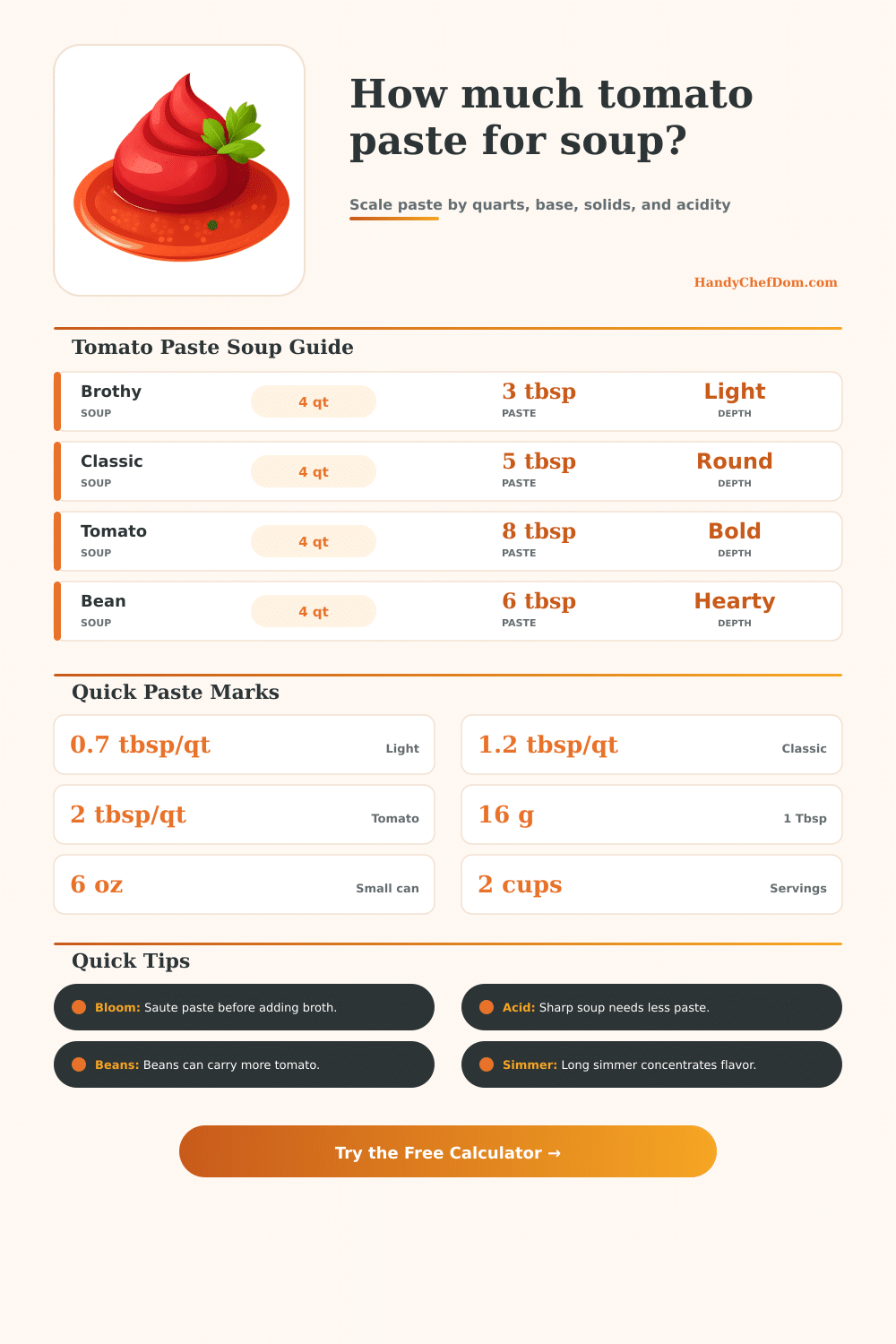
| 4 quarts | 3 tablespoons | 5 tablespoons | 8 tablespoons | 8 two-cup bowls |
| 6 quarts | 4.5 tablespoons | 7.5 tablespoons | 12 tablespoons | 12 two-cup bowls |
| 8 quarts | 6 tablespoons | 10 tablespoons | 16 tablespoons | 16 two-cup bowls |
| 12 quarts | 9 tablespoons | 15 tablespoons | 24 tablespoons | 24 two-cup bowls |
Solids, Tomato Base, And Acidity Adjustments
| Soup condition | Low effect | Medium effect | High effect |
|---|---|---|---|
| Tomato liquid already present | 0 to 15 percent keeps paste central | 20 to 45 percent reduces paste gently | 50 percent or more needs careful paste |
| Vegetable load | Under 1 cup per quart stays brothy | 1 to 1.75 cups per quart is balanced | Over 2 cups per quart can carry depth |
| Beans, lentils, or pasta | Small amount lightly softens acidity | 1 cup per quart supports more paste | Heavy starch needs more tomato backbone |
| Acidity impression | Flat soup benefits from extra paste | Rounded soup follows target amount | Sharp soup should reduce paste |
Tomato Paste Conversion Table
| Paste measure | Approx grams | Approx ounces | Useful soup cue |
|---|---|---|---|
| 1 tablespoon | 16 grams | 0.56 ounce | Small correction for a flat quart |
| 3 tablespoons | 48 grams | 1.7 ounces | Light four-quart brothy soup |
| 5 tablespoons | 80 grams | 2.8 ounces | Classic four-quart vegetable soup |
| 8 tablespoons | 128 grams | 4.5 ounces | Bold four-quart tomato-rich pot |
| 1 small 6 ounce can | 170 grams | 10.7 tablespoons | Large batch or deep tomato base |
To a pot of soup, some tomato paste can make all the difference. Simmering flavors and adding that to the pot help improve the flavor. A lot of people put it in out of habit, but that means they’re guessing and you could end up with an overly flat soup or one with a bitter bite. Know what your soup require and know how much paste to add to match it.
But it’s more complicated than just volume. Pasta requires less paste than a dense lentil stew, or even a brothy chicken soup made with limited vegetable. How far does the tomato flavor spread? Is the acidity well-balanced? Root vegetables, beans, pasta all soak up some of that acidity. This softens the overall effect so the same quantity of paste will be mild-tasting in one dish but dominant in another.
How to Add Tomato Paste to Soup
The other factor is simmer time and reduction. More cook time can concentrates not only the flavor but also the acid. Something that was fine early on may be too much later. Preexisting acidity in the pot alters things, too. Already have some vinegar or even crushed tomatoes in there? You might want to err on side of less with the paste to avoid tipping things toward being too sour.
A dash of additional paste can help bring out the flavors when it’s the broth itself that seems flat rather than the sauce. And again, no need for any herb boost, either: just a little extra paste to restore depth without needing more salt or herbs.
After entering your desired finished volume, the calculator does all the math (see example above). Then you add in target depth you’re after, along with the portion that’s broth versus solid. Does it go into water and then bloom? Will it simmer awhile? It accounts for those things as well. The output shows up in either grams or tablespoons (so you know how much to scoop even if you don’t have right measuring device).
A series of reference tables across the page break it down, soup-style. So it’s simpler to compare, say, a lighter vegetable broth to minestrone.
As for one practical practice: When I want to cook down my paste and start off by softening some flavorful ingredients in the pan they’ll also be bloomed in, I do a brief bloom just in the pot itself. A few moments of skin-to-fat contact build the flavor and helps make sure it dissolves evenly when liquid is added. And if that doesn’t get the soup off the ground: The tool will recommend a gentle rescue dose.
For most soupy purposes, the lower end of its recommendation is all you really need; better to leave the last bowl bright rather then heavy. The key is getting amount right… Not too much or it’ll overpower everything else in the pot, but enough that the tomato note blends into the whole thing.
The result? Soup that tastes like it’s supposed to and no more cycles of taste-and-add-until-dinner-goes-cold. It would of been easier with a tool. Actually, most people should of used this before.