🥔 Mashed Potato Calorie Calculator
Estimate calories, carbs, fat, and protein for mashed potato batches by cups, grams, butter, milk, cream, cheese, and serving size.
Enter finished mashed potatoes first, then add butter, milk, cream, cheese, or yogurt. The calculator totals the batch and divides it by your serving count or target serving size.
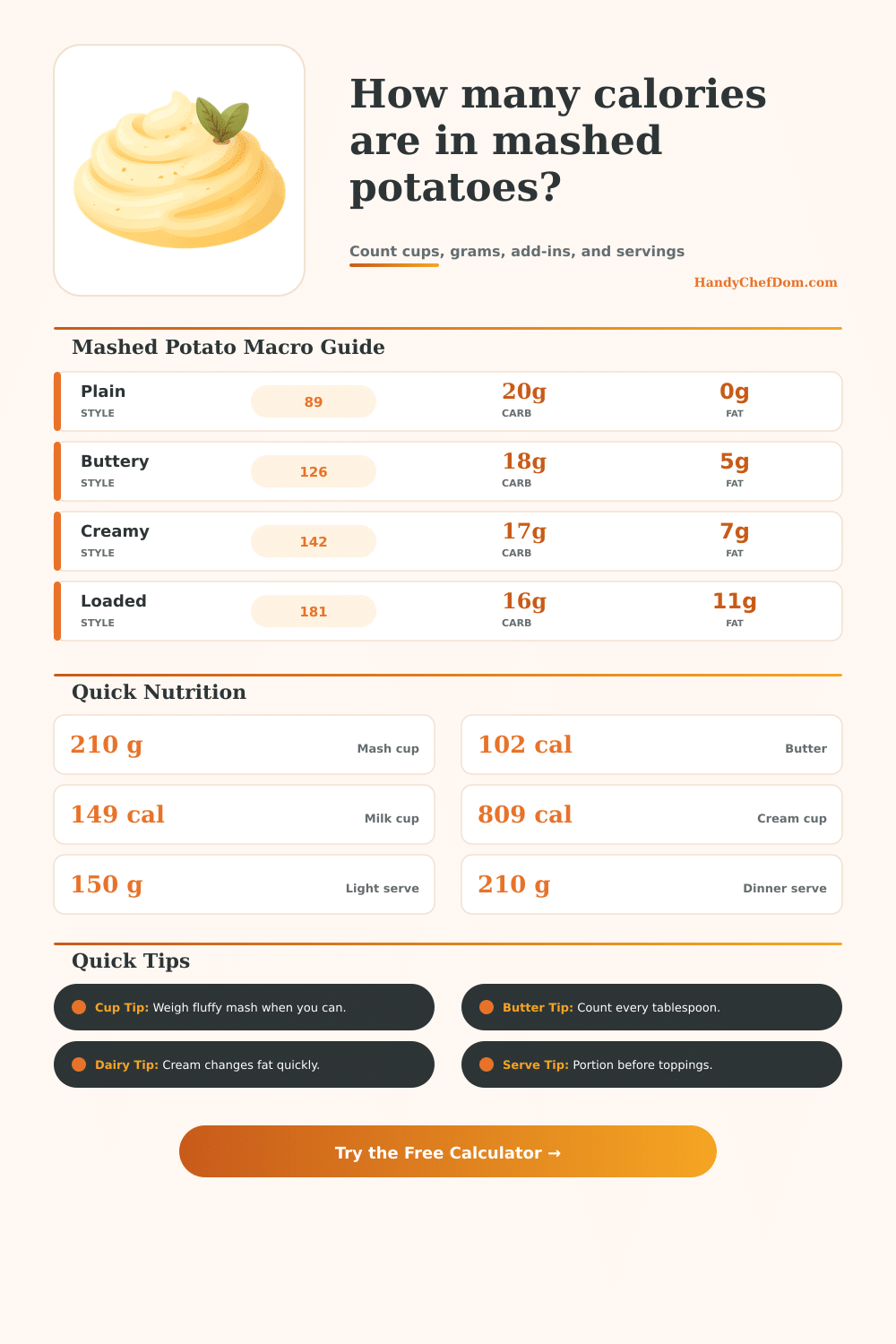
| Mashed Potato Style | Calories / 100 g | Carbs / 100 g | Best Use |
|---|---|---|---|
| Plain russet mash | 89 | 20.1 g | Basic calorie tracking |
| Yukon gold mash | 94 | 20.4 g | Richer potato flavor |
| Red skin mashed potatoes | 92 | 19.7 g | Rustic side dishes |
| Skin-on rustic mash | 98 | 21.2 g | Higher fiber batches |
| Prepared instant mash | 113 | 17.9 g | Packaged mash estimates |
| Garlic mashed potatoes | 105 | 19.5 g | Seasoned base batches |
| Potato cauliflower blend | 66 | 13.3 g | Lighter carb servings |
| Sweet potato blend mash | 101 | 22.4 g | Sweeter holiday sides |
| Add-In | Common Measure | Calories | Macro Effect |
|---|---|---|---|
| Butter | 1 tablespoon | 102 | Adds 11.5 g fat |
| Whole milk | 1 cup | 149 | Adds carb and protein |
| Half and half | 1 cup | 315 | Adds moderate fat |
| Heavy cream | 1 cup | 809 | Adds high fat |
| Sour cream | 1 cup | 455 | Adds tang and fat |
| Cheddar cheese | 1 ounce | 113 | Adds fat and protein |
| Batch Size | Light Serving | Dinner Serving | Hearty Serving |
|---|---|---|---|
| 4 portions | 2 cups mash | 3 cups mash | 4 cups mash |
| 6 portions | 3 cups mash | 4 1/2 cups mash | 6 cups mash |
| 10 portions | 5 cups mash | 7 1/2 cups mash | 10 cups mash |
| 12 portions | 6 cups mash | 9 cups mash | 12 cups mash |
| 20 portions | 10 cups mash | 15 cups mash | 20 cups mash |
| 25 portions | 12 1/2 cups mash | 18 3/4 cups mash | 25 cups mash |
| Measurement | Approx Grams | Plain Calories | Serving Note |
|---|---|---|---|
| 1/2 cup mashed potatoes | 105 g | 93 cal | Small side |
| 2/3 cup mashed potatoes | 140 g | 125 cal | Light plate |
| 3/4 cup mashed potatoes | 158 g | 141 cal | Standard side |
| 1 cup mashed potatoes | 210 g | 187 cal | Hearty side |
| 1 1/2 cups mashed potatoes | 315 g | 280 cal | Large scoop |
| 2 cups mashed potatoes | 420 g | 374 cal | Bowl portion |
You might not realize it until you look at the ingredients, but the humble potato can hold its own when it comes to calories. One scoop of mashed potatoes has as many as your average sandwich. Sure, the potato itself isn’t too shabby, but everything we put on there alters the nutritional breakdown. We mix in butter because it’s rich, milk/cream to create consistency and some cheese because it adds flavor. All of these alter the end product significanly. Without monitoring these inputs closely, an otherwise simple carb turns into a calorie bomb.
Once you plug in those numbers (including add-ins) into the calculator above, it do the rest. No need to perform calculations in your head while whipping up dinner.
How to Control Calories in Mashed Potatoes
Unless they’re weighing every ingredient, most homecooks guess at portion sizes based off eyeballing. However, that’s not very reliable for airy dishes. Two diner each served the exact same visual portion could end up eating wildly varying amount of calories depending on whether their food is tightly packed or fluffy. To be precise, either weigh your finished dish, or measure your base ingredient by one method consistently before adding toppings. Here’s how much energy a certain weight in grams provides, even if the food is very light.
Where folks tend to get lost is understanding the dairy contribution. Fat has more than twice as many calories per gram as carbohydrates or protein. Four tablespoons of butter equates to several hundred calorie additions that don’t come from potatoes themselves. Same goes for heavy cream vs skim milk. An entire cup of heavy cream hold approximately eight hundred calories whereas skim milk is barely any fat and have much fewer calories. Just that one substitution can be enough to completely alter the macro profile of your dish. It is small, yes. But if you’re attempting to control portions without compromising on satisfaction, it counts.
Then there’s the matter of which potatoes to mash up. Waxy potatoes such as Yukon Gold or red skin holds their form more easily in a mash. They don’t typically need as much butter because they have some natural starch to give them body. Russet-style “baking” potatoes are fluffier, breaking down and soaking up liquids in a different way. The nutrient calculator will account for any cauliflower you toss in to lighten things up, lowering the overall carb count… Another helpful hack for making it go farther without losing character. Just be sure to think about main vegetable itself as an ingredient, not necessarily the defining factor in the total nutrition profile.
With a visual reference of what you’re plating up, it’s a lot harder to over-serve yourself. That normal dinner serving size could be something like three-quarters of a cup, but at a sit-down meal, who cares about measuring? That amount may double (or triple) and no one will notice. With this tool, you can account for light sides vs. Hearty servings, so you will know how to plan. Or if you want a precise per-person estimate, you can split up the entire batch into however many people are being served. It’s easy to underestimate how much food gets gobbled down as everyone grazes all evening. It keeps things honest, and demystified cooking all at once.
There’s no need to quit eating rich sides when you’re watching your intake: Simply count each splash of cream and spoonful of fat. With a little perspective about how fast those add-ins can pile up, you might start reaching for less butter and more milk. You might also serve slightly smaller scoops. This way, you’ll know exactly what is in them and feel confident about it.
It’s not about eliminating comfort food; it’s about understanding it so thoroughly that you could of enjoy it with surprise-free ease. Creamy potatoes, anyone? Just make sure you know what they realy cost in calories.