🌭 Sausage Link Protein Calculator
Estimate protein, calories, fat, sodium, cooked yield, and servings by link size, count, and sausage style.
Enter the raw link size and link count. The calculator estimates cooked batch weight, total nutrition, per-link nutrition, and per-serving nutrition using style-specific cooked data.
Small links usually fit two to three per breakfast plate.
Common chicken, turkey, and pork dinner link size.
A bratwurst-style link often serves one bun portion.
Use smaller cooked portions when links are sliced for sharing.
| Sausage style | Protein per 100 g | Calories per 100 g | Fat per 100 g |
|---|---|---|---|
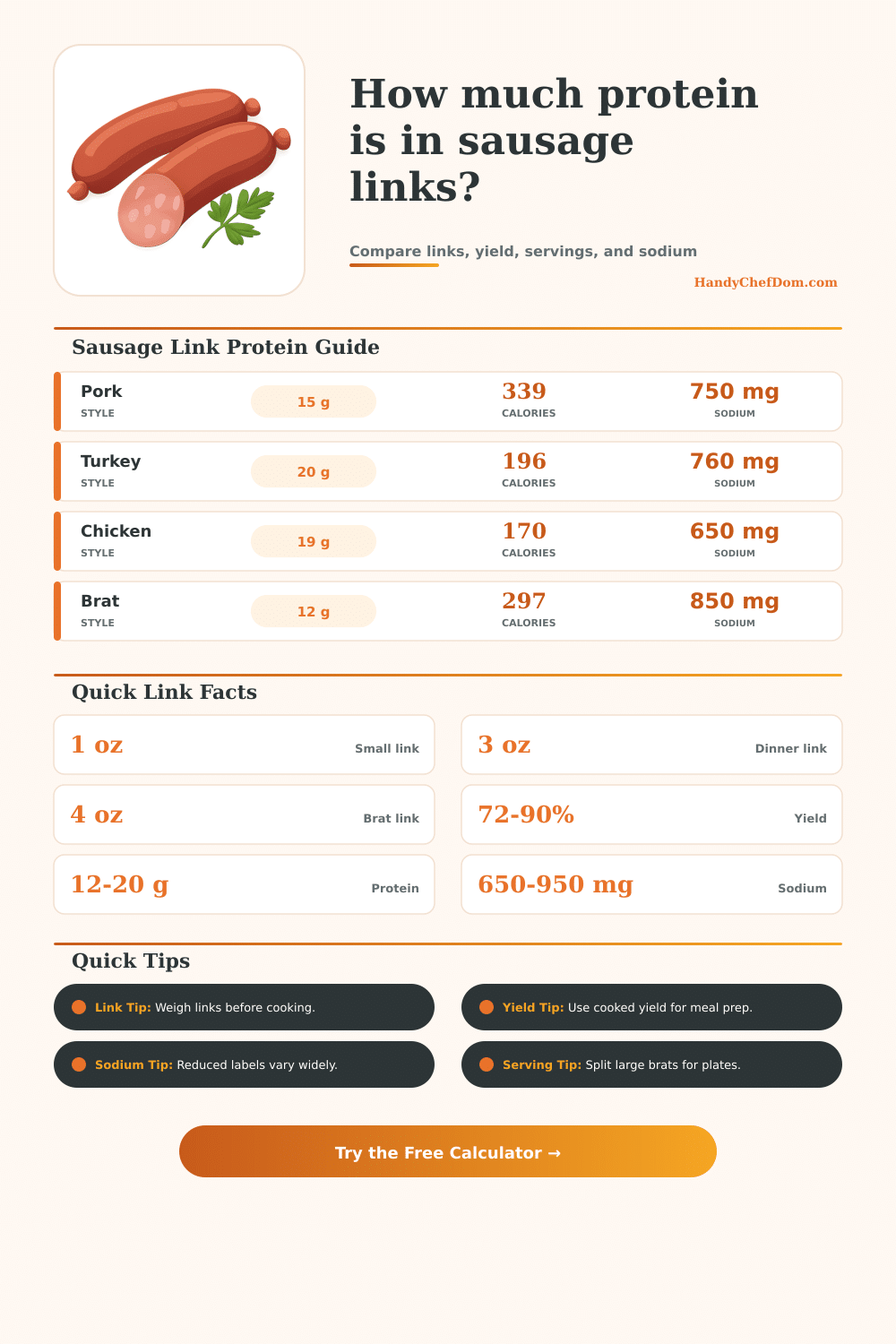
| Pork breakfast link | 15.1 g | 339 | 30.0 g |
| Pork Italian link | 17.0 g | 304 | 26.0 g |
| Turkey sausage link | 19.5 g | 196 | 10.0 g |
| Chicken sausage link | 18.5 g | 170 | 9.0 g |
| Bratwurst style link | 12.2 g | 297 | 26.0 g |
| Smoked kielbasa link | 12.5 g | 310 | 27.0 g |
| Lean pork dinner link | 17.5 g | 250 | 19.0 g |
| Beef smoked sausage link | 13.0 g | 315 | 28.0 g |
| Link size | Raw weight | Typical yield | Serving use |
|---|---|---|---|
| Small breakfast link | 1 oz / 28 g | 75% to 82% | Two or three per plate |
| Lean turkey link | 2.5 oz / 71 g | 78% to 86% | One or two per plate |
| Chicken dinner link | 3 oz / 85 g | 80% to 88% | Meal prep or salad bowl |
| Italian pork link | 3.5 oz / 99 g | 72% to 82% | Pasta, sandwich, or plate |
| Bratwurst link | 4 oz / 113 g | 76% to 84% | One bun portion |
| Kielbasa portion | 2 oz / 57 g | 85% to 92% | Sliced platter or skillet |
| Serving plan | Links per person | Cooked weight aim | Best fit |
|---|---|---|---|
| Light breakfast | 1 to 2 small | 1.5 to 2 oz | Eggs and toast plate |
| Standard breakfast | 2 to 3 small | 2 to 3 oz | Higher protein breakfast |
| Dinner plate | 1 large | 2.5 to 3.5 oz | Turkey or chicken link |
| Brat in bun | 1 brat | 3 to 3.5 oz | Cookout serving |
| Sliced platter | Half to 1 link | 1.5 to 2.5 oz | Potluck or appetizer tray |
| Hearty plate | 2 large | 5 to 7 oz | High appetite meal |
| Label sodium level | Sodium factor | When to use it | Calculator effect |
|---|---|---|---|
| Regular label estimate | 1.00x | Most packaged links | Uses style baseline |
| Reduced sodium label | 0.72x | Reduced-salt package claim | Lowers sodium only |
| Boldly seasoned label | 1.18x | Smoked, spicy, or extra seasoned | Raises sodium only |
| Uncured-style label | 0.95x | Uncured or simpler label | Slight sodium trim |
How many sausages do you need to make enough for everyone? Or will there be shriveled sausage links left over after eight go down? Why does this kitchen math problem gets so many cooks in trouble? (Even seasoned ones.) There is more going on than meets the eye.
This includes the difference between what a label says something weighs before it is cooked and how many grams you actualy eat on your dinner plate. What goes up the pipe as raw weight doesn’t always come out the other end as actual food: Moisture evaporates, fat renders off. Enter your preferred link type and amount, and let the calculator do the rest: It’s not enough to simply estimate how many brats per bun will fit, will they spill over the sides? Or will one normal-sized bun have too much empty space? The calculator takes all of that guesswork out.
Why a Sausage Weight Calculator Is Helpful
Based off style-specific information, it translates raw weights into cooked yields: how much cooked protein are you actualy left with after grilling? For example, most pork sausages shrinks by around 20% when cooked. Chicken or turkey varieties tends to be leaner and keep an estimated 85%+ of their original weight. This difference make a huge impact when calculating portions. If you estimate by raw weight, you will miss your personal protein goals or even underfeed your company.
You also have to be aware that not all sausages was made equal when it comes to macro density. Just because two links appear to have the same diameter does not mean they’ll weigh the same on the scale. While one might be a turkey link (low in protein/ high in fat) and another could be a bratwurst (high in protein/ low in fat). So the tool will auto adjust based on those nutritional baselines. But, in order to do so you must choose which one you’re adding to your food log.
For example, if you add a low fat chicken breast and a fatty italian pork sausage under ‘chicken’ then your whole meal plan gets f’d up. Because there’s no way they should of weigh the same. This is why choosing the exact type of meat is important beyond simply labeling something as ‘sausage’.
The other moving part here is sodium: some packs are labeled “less sodium” and others are boldly spiced, pushing their sodium counts well past the norm. While salt doesn’t factor into the sausage’s weight all that much, it has a large impact on both the taste balance and health profile of any given meal. That’s why we allow you to toggle those values in the calculator, so you can get a realistic range (not just one hard number). Sometimes you want a high protein breakfast, but then you wake up and notice you’ve already had half your day’s sodium intake from three links. Tweaking by label type lets you be aware of that trade-off without having to cook anything yet.
The largest mistake home cooks consistently make is with portion size. I realize that we imagine links as individual portions, but there’s no comparison between a mini breakfast link and a large dinner brat; one is an entirely different type of serving proposition. A large dinner sausage contain easily three or four times the weight of actual meat compared to a mini pork sausage. If you’re slicing them up for a pasta dish or to serve on a platter, the visual portion decreases so it becomes difficult to determine just how much food you’ve consumed. The reference section details average serving sizes based on how you use them, ranging from light breakfast side dishes to hearty dinner plates. Now you can visualize what a real serving looks like outside of your hand holding a perfect cylinder.
One little trick I like: add a buffer of additional links. Whether for a crowd, or just because people won’t evenly match up on their eating, some folks are going to want second helpings; other folks aren’t touching anything. Having a bit of a buffer (ten or fifteen percent) means you don’t find yourself cooking again at the end of the cookout. It is better to have leftovers for sandwiches later than to apologize because your plate was empty. That feature exists in the calculator, so you can confidently order what you think you need instead of scrambling.
But really, when it comes down to it, you can predict weight loss and plan with actual data. It’s a matter of controlling for expectations: How many calories are in this? How little will I be losing? How much should I expect to get, and how do I make sure I have enough to actually consume? When you know what to expect once the grease renders out (and render out it shall), you don’t need to guess anymore, you plan based on fact. What’s left is the meat; after knowing how many grams you’re eating on the plate, you don’t need to guess any longer. The sausage doesn’t fall apart on the tray, but you’ll know exactly what’s on the other side of the link.