Sweet Potato Fiber Calculator
Estimate dietary fiber from sweet potato weight or count, peel choice, orange or purple varieties, cooked yield, servings, daily fiber goals, and cooling style.
The calculator estimates dietary fiber from cooked edible sweet potato mass. Cooling affects the separate resistant starch estimate, while peel choice and variety affect the dietary fiber estimate.
Values are practical planning estimates for cooked edible sweet potato. Use the calculator above for batch size, scale, servings, and cooling adjustments.
| Sweet Potato Type | Peel Choice | Best Matching Method | Fiber per 100 g Cooked |
|---|---|---|---|
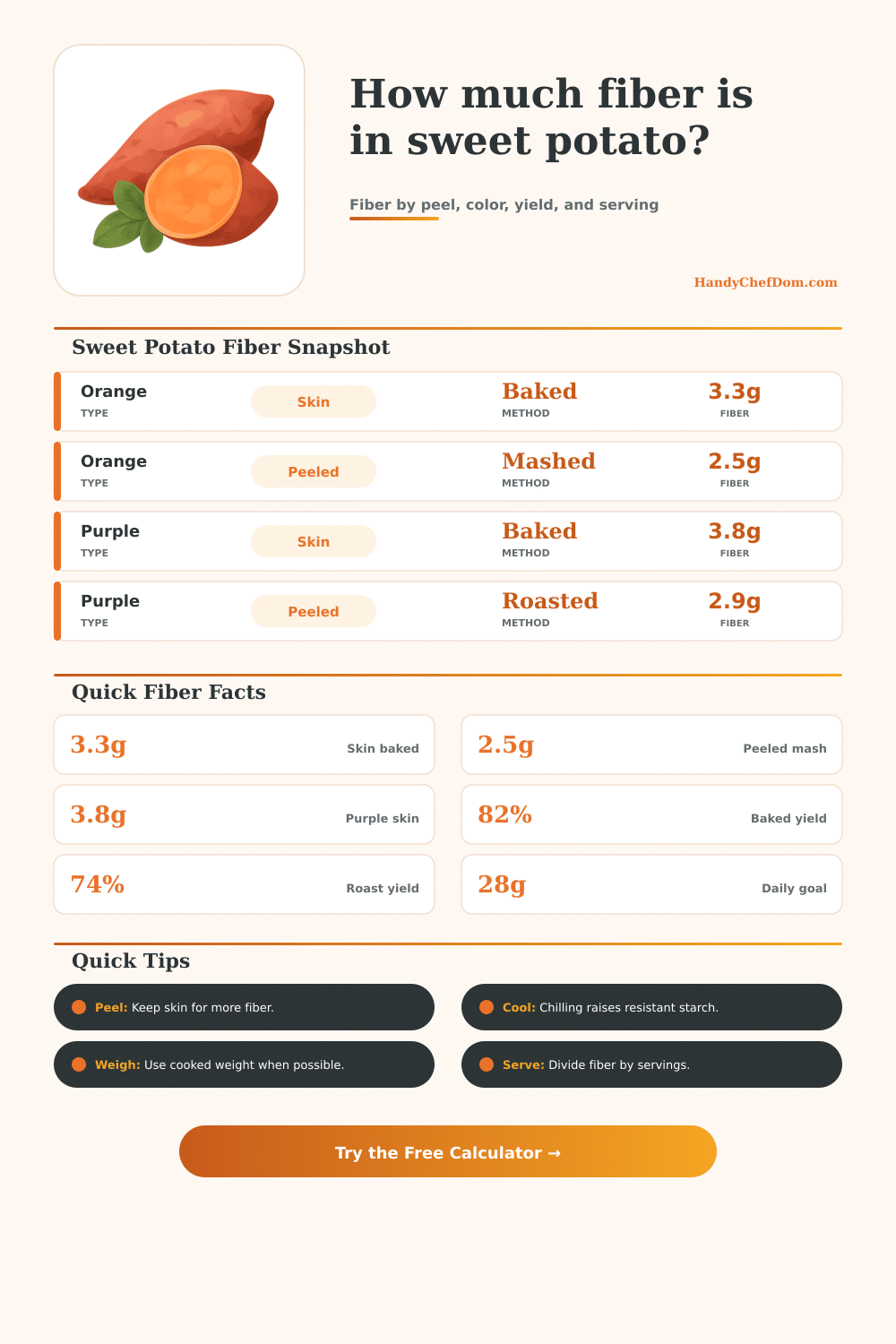
| Orange moist flesh | Skin included | Baked whole or roasted wedges | 3.3 g |
| Orange moist flesh | Peeled | Mashed plain or peeled cubes | 2.5 g |
| Purple flesh | Skin included | Baked whole or chilled slices | 3.8 g |
| Purple flesh | Peeled | Roasted cubes or mash | 2.9 g |
| Japanese purple skin | Skin included | Baked whole, sliced after cooking | 3.5 g |
| White sweet potato | Peeled | Mashed plain | 2.4 g |
| Method | Cooked Yield from Raw | Approx. Cooked Cup Weight | Fiber Planning Note |
|---|---|---|---|
| Baked whole | 82% of raw weight | 180 g per cup pieces | Good all-purpose estimate for skin-on servings. |
| Roasted pieces | 74% of raw weight | 170 g per cup cubes | Water loss concentrates fiber per cup. |
| Mashed plain | 88% of raw weight | 200 g per packed cup | Use plain mash before added liquids or fats. |
| Steamed cubes | 94% of raw weight | 160 g per cup cubes | Highest finished weight because moisture loss is low. |
| Serving Style | Cooked Portion | Approx. Fiber | Share of 28 g Goal |
|---|---|---|---|
| Small side scoop | 100 g cooked | 2.5-3.8 g | 9-14% |
| Medium dinner side | 150 g cooked | 3.8-5.7 g | 14-20% |
| Large meal-prep portion | 220 g cooked | 5.5-8.4 g | 20-30% |
| Shared holiday tray | 125 g per guest | 3.1-4.8 g | 11-17% |
| Scenario | Raw Amount | Servings | Fiber Planning Use |
|---|---|---|---|
| Dinner for 4 | 700-800 g raw | 4 | Balanced side portions with skin-on baked potatoes. |
| Meal prep bowls | 1.2-1.5 kg raw | 6 | Pairs well with cooled resistant-starch tracking. |
| Potluck tray | 2.5-3 kg raw | 12 | Use roasted yield to avoid overestimating finished volume. |
| Holiday side | 4-5 kg raw | 20 | Mashed yield works best before adding enrichments. |
You don’t have to guess your way through the conversion: The calculator figures out how much fiber is in your meal depending upon what you cook it with and how heavy you are. But to understand why that number varies, lets take a peek into biology of sweet potato itself.
The biggest variable of all is its skin. We know we’re supposed to eat our vegetables, except when it comes to sweet potatoes, where many folks remove the skin, assuming that it’s merely a matter of looks and the nutrient-rich orange part are “the good stuff.” That overlooks half of the story: In addition to being densely packed with insoluble fiber, the sweet-potato skin is a broom for your digestive system. By leaving the skin intact, you turn an otherwise basic starchy dish into a whole-fiber meal. Skin-on versus peeled portions can also make a big difference, contributing upwards of 20% in additional fiber density per serving. For those looking to meet their daily goals without resorting to a bowl of bran cereal, it’s certainly no small addition.
Why Sweet Potato Fiber Changes
Then there’s cooking: The method you choose is just as important as whether you peel them. Many nutrients is soluble in water, yes, but water weighs something. Moisture leaves during roasting, concentrating what remains. A roast potato is denser in terms of grams of fiber (and other stuff) different than its steamed counterpart, so while you may have begun with an equal amount of raw potato, when you weigh it after roasting it’ll weigh less then if you weighed it after steaming. This tool takes those yield variances into account (without requiring you to remember to under- or overestimate based off your method). It knows that roasted cubes takes up less space but carry more punch, per gram, than watery, water-retentive mash.
That leads us back to cooling, which adds resistant starch into the equation. Resistant starch, a carbohydrate, doesn’t break down in your small intestine; it reaches your large intestine where it ferments (like fiber). And when you cool cooked sweet potatoes, the starch molecules crystallize, making them more difficultly to digest. Retrograding will occur after cooking, as well: When you reheat those spuds later, they won’t be completely undone. Meal-prep once on Sunday, then enjoy leftovers at room temperature throughout the week and you’re benefiting from these newly created resistant starches in addition to regular dietary fiber. Though both are beneficial for gut health, the calculator splits up these two figures because they aren’t digested similarly within your body.
The variety also matters (to some extent). Because purple sweet potatoes has more anthocyanins compared to their orange cousins, the cell walls are structured differently, too. They usually have somewhat more fiber. The white ones are at the low end of scale. It is not a big deal, but if you make one side dish from plain old white spuds and another from Japanese purple, for example, and cook them the same way, the latter will be better, and that is just what most people fail to consider. This leads to variations from recipe to recipe.
Lastly, there’s serving size. Big meals will account for almost a third of your total. Small scoops won’t make much difference. Does this mean sweet potatoes don’t help? Not at all! It depends on context: a big portion of meal prep may meet most of your needs, and a small scoop probably won’t help very much. To get a sense of what makes a significant serving, check the reference table on page. Don’t worry, it doesn’t take half a kilogram to be helpful here. But you also should of not think that because they have a lot of volume that it isn’t helpful.
Sweet potatoes provide steady, slow fuel… Not a huge burst. So what? In the end, it’s not accuracy; it’s knowledge. Do you care whether your meal is helping you stay healthy in the long run, or are you filling up on empty calories? When you think through cooling, cooking method, and peeling, you turn a straightforward vegetable side into part of a mindful eating strategy. Hot oven, skin-on, cold leftovers. Your gut will appreciate your diligence.