🫘 Tempeh Protein Calculator
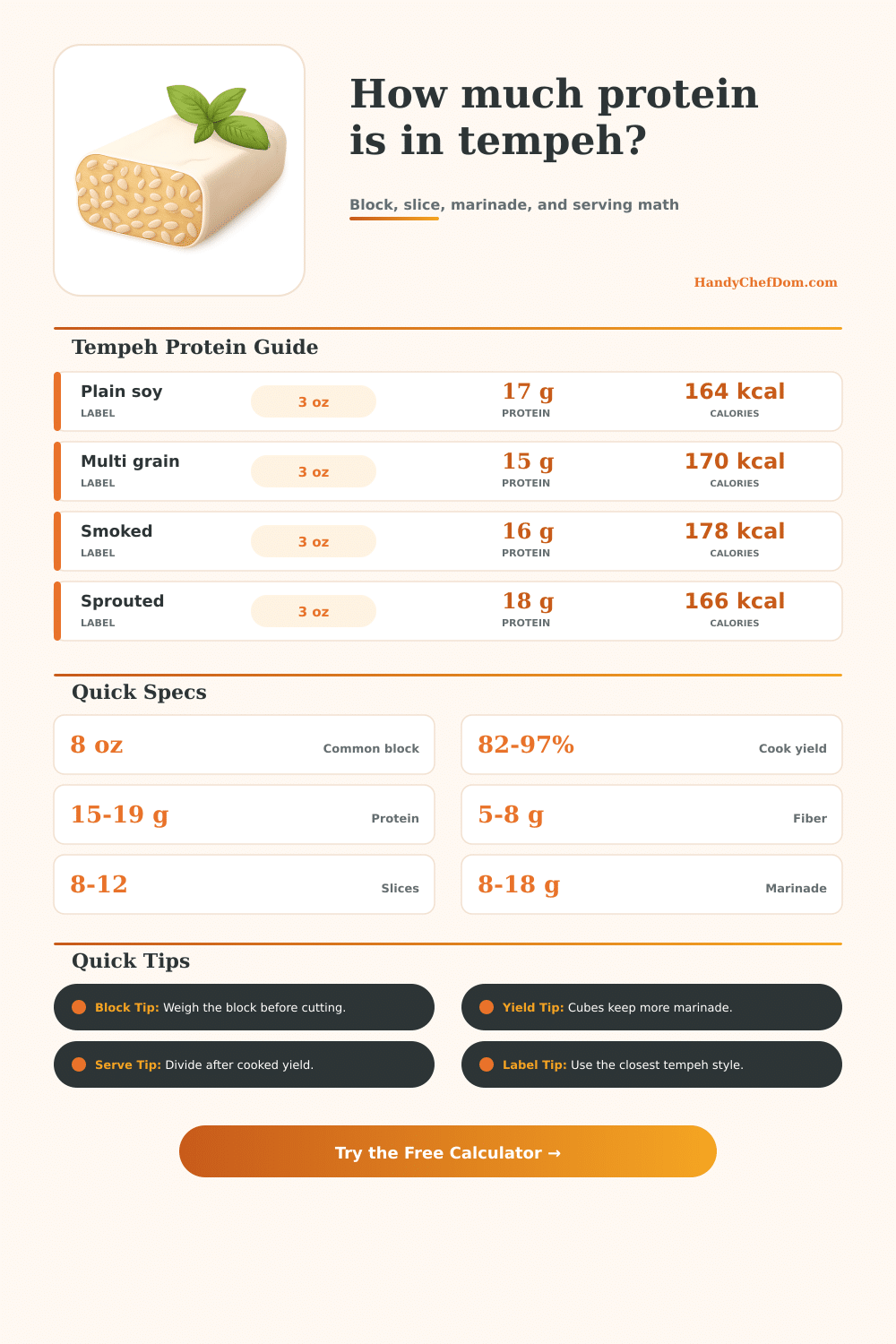
Calculate tempeh protein, calories, fat, fiber, cooked yield, marinade pickup, slices or cubes, and servings from block weight.
Use block mode when you know how many packs you have. Use protein target mode when you want the calculator to estimate how many blocks meet a serving goal.
| Tempeh label | Protein/100g | Calories/100g | Fat/100g | Fiber/100g |
|---|---|---|---|---|
| Plain soybean | 19.9 g | 193 kcal | 10.8 g | 9.0 g |
| Sprouted soybean | 20.8 g | 195 kcal | 10.2 g | 8.5 g |
| Multi-grain | 17.4 g | 200 kcal | 9.4 g | 7.2 g |
| Brown rice blend | 16.8 g | 205 kcal | 8.8 g | 6.9 g |
| Flax seed | 18.6 g | 218 kcal | 12.7 g | 8.1 g |
| Smoked | 18.9 g | 210 kcal | 11.5 g | 7.8 g |
| Black bean soy | 18.1 g | 198 kcal | 8.9 g | 8.8 g |
| Chickpea blend | 16.2 g | 189 kcal | 7.8 g | 9.6 g |
| Prep yield | Yield factor | Best serving state | Calculator note |
|---|---|---|---|
| Raw chilled | 100% | Raw portion | No shrink before dividing servings |
| Steamed or warmed | 97% | Soft pieces | Almost all block weight remains |
| Skillet browned | 88% | Slabs or strips | Moderate moisture loss |
| Baked tray | 85% | Cubes or slabs | More surface drying |
| Air fried | 82% | Cubes | Highest shrink in this calculator |
| Cut style | Typical pieces/block | Marinade pickup | Serving use |
|---|---|---|---|
| Slabs | 4 to 8 | Lower | Sandwiches and plates |
| Thin slices | 10 to 14 | Medium | Bowls and wraps |
| Cubes | 24 to 36 | Higher | Skewers and meal prep |
| Strips | 12 to 18 | Medium | Stir-fry portions |
| Crumbles | 6 to 10 scoops | Highest | Salads and grain bowls |
| Marinade type | Retained/100g | Calories/100g | Best cut |
|---|---|---|---|
| None or dry rub | 0 g | 0 kcal | Any cut |
| Light glaze | 8 g | 12 kcal | Slabs |
| Soy-ginger style | 12 g | 22 kcal | Slices |
| Citrus herb soak | 14 g | 18 kcal | Strips |
| Sweet chili glaze | 15 g | 35 kcal | Cubes |
| Peanut-lime coating | 18 g | 65 kcal | Crumbles |
You have good intentions when you purchase a block of tempeh and intend to cook it. Three days later, it’s hanging out in your refrigerator as you contemplate your plan of attack. On Tuesday night, you plop that sucker in the skillet, thinking about all the portions you’ll get out of it. Why aren’t they looking like you thought? Tempeh shrivels. Tempeh dries out. Tempeh soaks up marinade. Eight ounces of raw tempeh doesn’t equal eight ounces of cooked-and-eaten-on-your-plate tempeh (unless you have dropped an entire piece on the floor).
With this calculator, simply enter type of cooking you’re doing and size of block and let machine do the rest. No more guesswork on your protein intake!
How to Cook Tempeh Correctly
It’s something most of us believe: food weigh the same before and after we take a bite. Pasta and rice bulk up, so that makes sense. But fermented bean cakes aren’t like that. Steaming tempeh removes just a fraction of a percent from its pre-steam weight; basically none. It loses a little chewiness but otherwise, scale doesn’t move much. Brown it in a skillet? Moisture will leave the block quickly, causing you to lose about twelve percent of your starting weight. Air fry it longer? Even more water comes out. Eighty-two percent of what you had in package remains… but now calories are packed tighter into smaller physical space. For someone watching their portions, this is important.
Another variable is marinade retention. It may seem obvious that extra sauce would mean more flavor, not much else. But what happens when the sauce coats your food? Is it a glaze? Is it thick? Sticks. Sweet chili dips and peanut coatings cling to cubed tempeh’s porous surface. Grams of sodium/fat/sugar per serving. It clings to the porous surface of cubed tempeh like a peanut coating, adding grams of sodium, fat, and sugar per serving. To account for that, tool estimates the percentage of liquid retained following cook/cut/other changes. For example, more surface = more marination. Cubes rather than slabs? Dramatic increase in surface area. That’s a little thing, but can change calorie count enough to matter if you’re tracking carefully.
The nutrition also vary depending on whether you select multi-grain blend or simple soybeans. Because the bean takes up more space then the grains, the plain ones is denser in protein (assuming they aren’t packed with a lot of grain filler). If your stomach is sensitive, sprouted versions will be a little bit easier on it while providing slightly more protein as well (for a small premium). Smoking the tempeh adds some flavor, but typically result in some extra fat + salt from the smoking process. This is all explained in the reference table on this page. The table shows how your macro intake will differ based off the label choice, regardless of brand you choose.
A big part of avoiding waste in the kitchen is thinking in terms of individual servings, not giant blocks. Whether you’re making a stir-fry for four, do the math from one 8-ounce package (will this be a side dish? Will it go far enough to also serve as your main source of protein? For most dishes, a normal portion would fall somewhere between three and four ounces, cooked weight. This will give you plenty of full amino acids and fiber but not overpower any accompanying grains or vegetables. Three ounce may suffice for lighter dishes, particularly those featuring rice or beans or hearty greens that bulk up the dish.
This is where meal-planning really comes in handy; no more mid-meal freak-out at seeing skimped out portions. If you have weighed the raw block beforehand (and accounted for some shrinkage) you’ll know exactly what to expect. Tweak your veggies up or down accordingly. The shrivelled tempeh goes quite well with a bigger head of cabbage. What could of been a letdown becomes a filling bowl, and a reminder that there’s no guessing game in plant-based eating.
The bottom line: Tempeh is versatile. It can be steamed lightly or fried heavily. And once you understand the weight dynamics, you can do that without feeling guilty or having to wonder where food fits into your meal plan. It’s no longer a question of “was this light? I hope so.” Instead you know. You know precisely what got on the table.
Knowing your own portion size gives you the confidence to make fermented beans not feel like an added chore, but a routine part of a varied diet as a different sort of protein. When it doesn’t feel like just one more thing to buy at the store, buying a block becomes its own act of progress.