🍞 Bread Slice Protein Calculator
Estimate protein by bread type, slice thickness, crust trimming, toast loss, spreads, servings, and target protein goals.
Use a weighed slice when you have one. Otherwise, the calculator starts with standard slice weights and adjusts for thickness, crust trimming, and add-on protein.
| Bread type | Standard slice | Protein / 100 g | Protein / slice | Best calculator use |
|---|---|---|---|---|
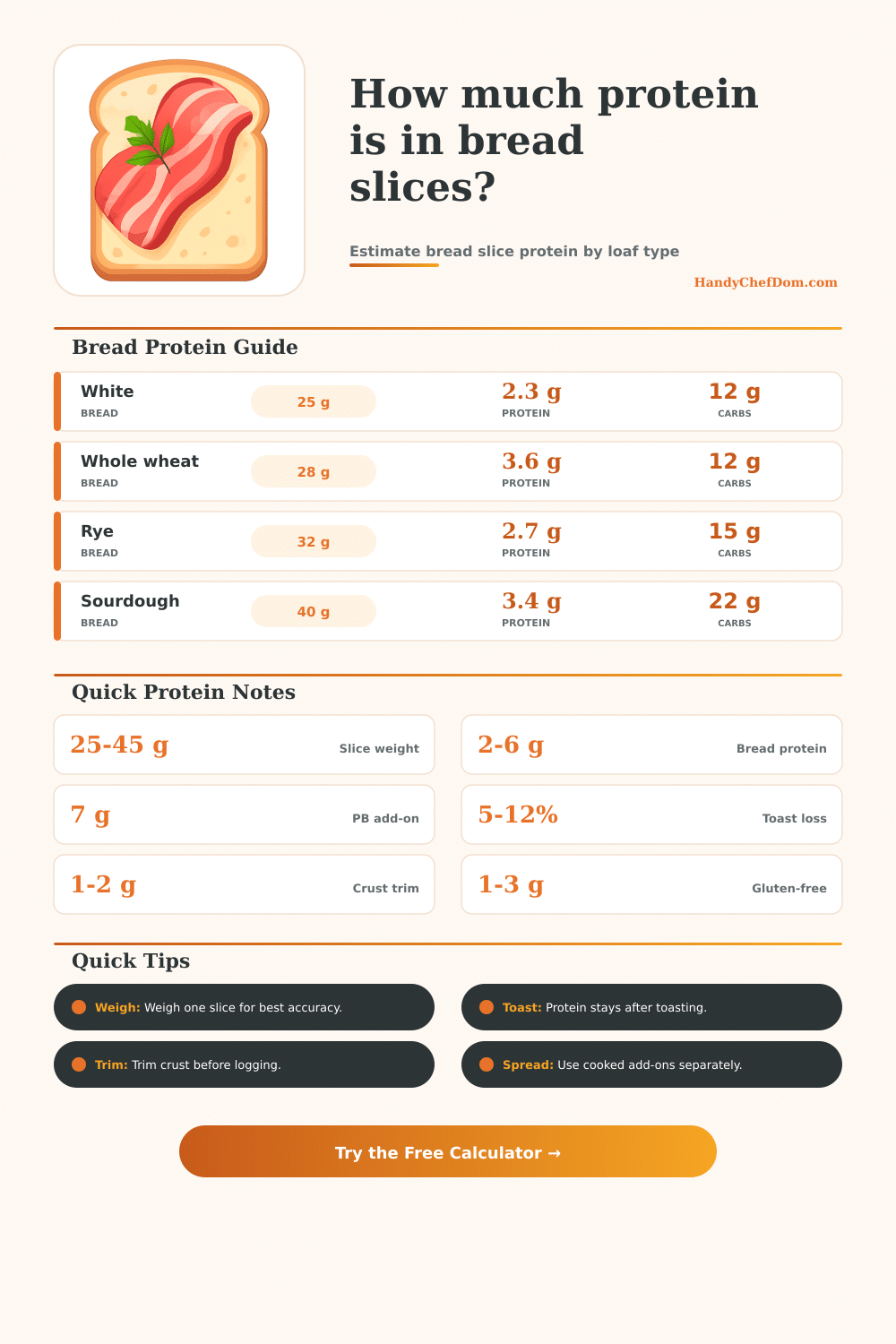
| White sandwich bread | 25 g | 9.0 g | 2.3 g | Toast, simple sandwiches |
| Whole wheat bread | 28 g | 13.0 g | 3.6 g | Everyday lunch slices |
| Multigrain bread | 35 g | 13.4 g | 4.7 g | Seeded breakfast toast |
| Sourdough loaf | 40 g | 8.4 g | 3.4 g | Large bakery slices |
| Rye bread | 32 g | 8.5 g | 2.7 g | Open sandwiches |
| Sprouted grain bread | 32 g | 13.0 g | 4.2 g | Meal-prep toast |
| High-protein bread | 35 g | 20.0 g | 7.0 g | Protein-focused meals |
| Gluten-free bread | 30 g | 4.5 g | 1.4 g | Lower-protein slices |
| Brioche slice | 38 g | 9.5 g | 3.6 g | Rich breakfast slices |
| Thickness style | Multiplier | Approx thickness | Weight change | Protein effect |
|---|---|---|---|---|
| Thin diet slice | 0.72x | About 0.35 in | Lighter slice | 28% less than standard |
| Standard sandwich slice | 1.00x | About 0.50 in | Label baseline | Use package average |
| Thick toast slice | 1.35x | About 0.75 in | Heavier slice | 35% more than standard |
| Artisan slab slice | 1.65x | About 1.00 in | Bakery-style cut | 65% more than standard |
| Add-on | Reference amount | Protein | Calories | Calculator note |
|---|---|---|---|---|
| No protein add-on | 0 g | 0.0 g | 0 kcal | Bread only |
| Peanut butter | 32 g | 7.0 g | 188 kcal | Two tablespoon serving |
| Almond butter | 32 g | 6.7 g | 196 kcal | Nut-butter toast |
| Hummus | 30 g | 2.4 g | 70 kcal | Savory toast layer |
| Cream cheese | 30 g | 1.8 g | 100 kcal | Small protein bump |
| Cottage cheese | 110 g | 12.0 g | 98 kcal | High-protein topping |
| Egg salad | 50 g | 6.0 g | 120 kcal | Sandwich filling |
| Turkey slices | 56 g | 12.0 g | 60 kcal | Lean sandwich protein |
| Serving pattern | Common slice count | Typical protein range | Weight check | Useful adjustment |
|---|---|---|---|---|
| Single toast snack | 1 slice | 1.4 to 7.0 g | 25 to 40 g bread | Add topping grams |
| Closed sandwich | 2 slices | 2.8 to 14.0 g | 50 to 80 g bread | Divide by servings |
| Open sandwich plate | 1 to 2 slices | 2.7 to 8.4 g | Rye varies widely | Trim before weighing |
| Breakfast stack | 3 slices | 6.8 to 21.0 g | Toast loss changes weight | Protein is retained |
| Meal prep tray | 8 slices | 11.2 to 56.0 g | Use loaf average | Average several slices |
Pick up a loaf of white bread and check out nutrition label. It says there’s two grams of protein per slice. You make yourself a sandwich with it and, an hour later, wonder what happened. The math adds up on paper, but your body sure doesn’t seem to agree.
The reason is that most people assume each slice of bread are equivalent when it comes to food units, when it really isn’t. A thin slice of diet bread from grocery store deli counter contains far less mass and nutrient density compared to a thick slab of artisan sourdough. To get the protein number correct, you need to measure the food in your mouth instead of just relying on package label.
How to Measure Bread Protein Correctly
This eliminates the guess work of daily meal planning, as the calculator above do the math for you after you choose the bread type and slice thickness. Most commercial loaves lists servings per package based off the assumption that you will use a standard sandwich cut. But what if you buy a rustic sourdough loaf and then you go home and slice it yourself?
Those slices might be forty grams rather then twenty-five, which isn’t all air and carbs; there’s actualy protein in that dense texture. Underestimating your intake by a wide margin, if you’re using a packaged slice vs. A bakery cut and ignoring the difference. The tool adjust for this variability so you don’t need to guess how much heavier your homemade toast actually is.
Bread nutrients change based on thickness. Weight matter to macro totals. Sure, light = fewer calories, but it’s also true that less bread = more needed to reach satiation. More bread = greater protein count and a denser chew, just because of the extra bulk. By allowing you to choose your slice style with the tool, you’re acknowledging the reality of physics.
This is made clear with the reference table on the page, which explains the multiplier effect on the overall protein estimate. As you’ll see, switching between a standard cut and an artisan slab can add over half as much protein again, without altering the ingredients whatsoever.
Some folks are concerned that when you toast, you’re killing all the nutrients by picturing the heat roasting them out of existence and leaving you with a pile of dried-out carbs. Nope. Water doesn’t work like that when you bake. Toasting dehydrates the food and concentrates what is left. This means that each gram of food has more grams of solids, including proteins, per gram of edible matter. Unless you burn your toast until it turns to charcoal, the molecules in the proteins aren’t getting toasted, either.
Trim off the crusts because nobody likes ’em? Because the crust is hard? OK, but since crust is usually dense compared to the softer insides, you’ve lost some protein there, too. To keep your records accurate, account for the trimmed bits.
If you neglect toppings, however, that changes everything. Peanut butter adds seven grams of protein on top of the rest, and turns a low-protein snack into an ingredient for a balanced meal. Turkey slices or egg salad turn what was primarily a snacking-on-bread type deal into something more of a composed dish.
You can even log those additions as separate items in the calculator, which will teach you where most of your nutrients is actually originating. For example: you may think you’re having some protein-rich lunch, but really you’re just having two slices of white bread with a thin layer of whatever. Separating out the add-on from the base ingredient keeps things clear.
Your protein intake will differ greatly from person to person. Someone who lifts weights at night requires more dietary protein than a sedentary office drone. Setting a goal helps you see the big picture. For example, two slices of multi-grain toast might barely count if you’re aiming for a lot of protein. It’s difficult to reach that goal without adding denser ingredients or picking a specific high-protein bread that’s been fortified with wheat gluten and/or other seeds.
Such “engineered” breads may contain two or three times as much protein per slice as regular loaves made from plain white flour. It isn’t magic. It’s just the power of formulation science working for you.
The best accuracy you can get is weighing a single representative slice of whatever loaf you’re interested in. Averages are smoothed-out labels; they even out the inconsistency of different bakes and slices. Physics happen in your home kitchen, which isn’t average. Once per loaf, weigh it and log its weight to create a record of what your food actually looks like. Take that knowledge with you, whether shopping for store-bought or working up some homemade dough.
Stop guessing what you eat: know, down to the last gram, exactly what fuels your day. It’s mainly a matter of understanding what gets really measured, and trusting the thing that measures it, the scale, each time instead of the label.
You should of used this sooner.