🍝 Cooked Pasta Protein Calculator
Estimate protein in cooked pasta from cooked weight, dry weight, cups, or planned servings, with pasta type, shape, yield, and protein add-ins included.
Use cooked weight when you have it. If you only know dry pasta or cups, the calculator estimates cooked weight with standard pasta yield and shape-density data.
| Pasta type | Protein per 100 g cooked | Calories per 100 g | Carbs per 100 g | Fat per 100 g |
|---|---|---|---|---|
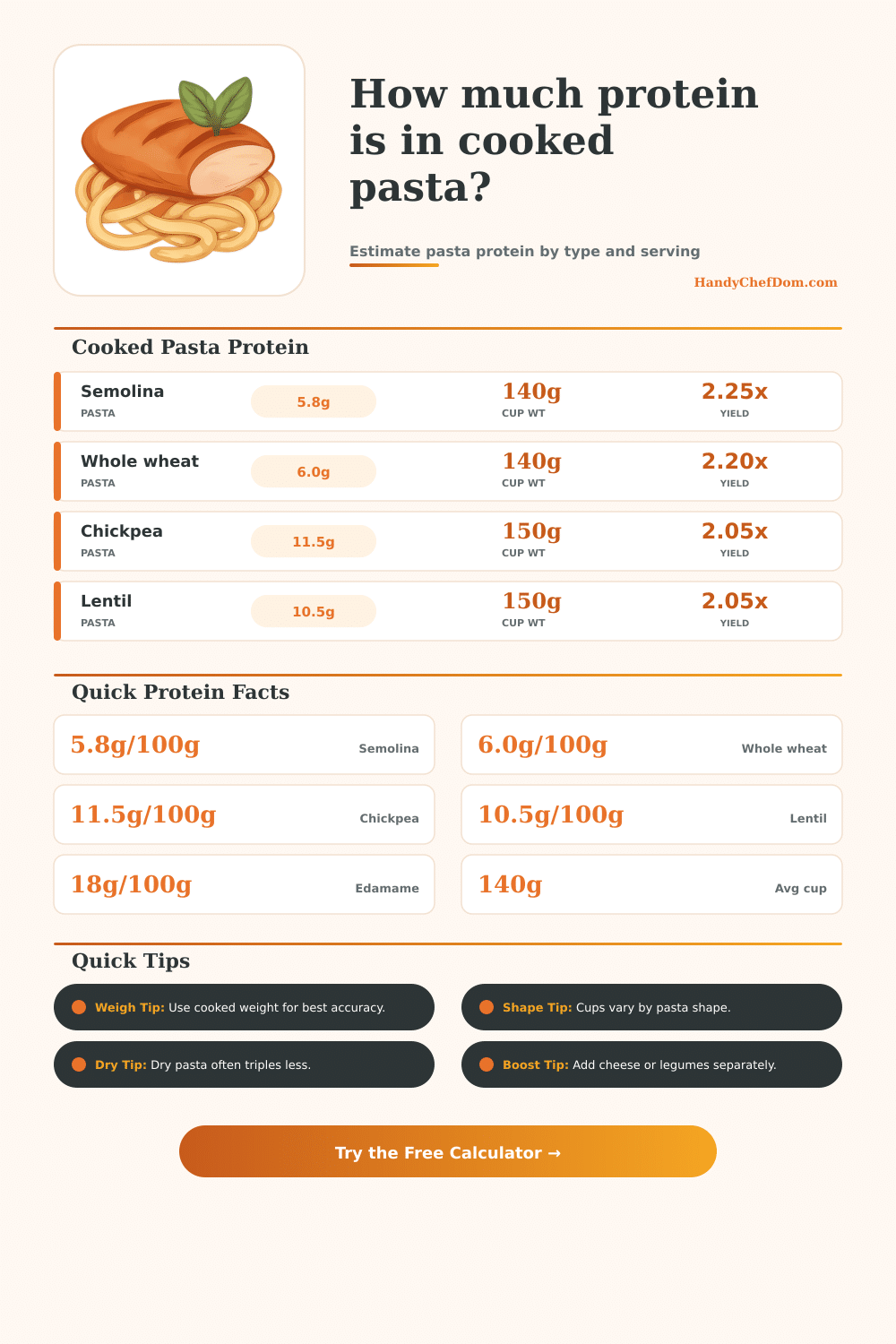
| Regular semolina pasta | 5.8 g | 158 kcal | 30.9 g | 0.9 g |
| Whole wheat pasta | 6.0 g | 149 kcal | 30.1 g | 1.5 g |
| Chickpea pasta | 11.5 g | 164 kcal | 27.0 g | 2.7 g |
| Red lentil pasta | 10.5 g | 165 kcal | 29.0 g | 1.0 g |
| Edamame pasta | 18.0 g | 188 kcal | 13.0 g | 6.0 g |
| Egg noodles | 5.4 g | 138 kcal | 25.2 g | 2.1 g |
| Rice-corn gluten-free pasta | 3.4 g | 150 kcal | 33.0 g | 0.8 g |
| Protein-enriched wheat pasta | 9.0 g | 170 kcal | 30.0 g | 1.8 g |
| Dry pasta type | Cooked yield multiplier | Dry grams for 1 cup cooked | Cooked grams from 100 g dry | Best use in calculator |
|---|---|---|---|---|
| Regular semolina pasta | 2.25x | 62 g | 225 g | Default family meals |
| Whole wheat pasta | 2.20x | 64 g | 220 g | Meal prep portions |
| Chickpea pasta | 2.05x | 73 g | 205 g | High-protein bowls |
| Red lentil pasta | 2.05x | 73 g | 205 g | Pulse pasta dinners |
| Edamame pasta | 2.00x | 75 g | 200 g | Athlete portions |
| Egg noodles | 2.35x | 60 g | 235 g | Skillets and soups |
| Rice-corn gluten-free pasta | 2.30x | 61 g | 230 g | Gluten-free sides |
| Protein-enriched wheat pasta | 2.15x | 67 g | 215 g | Balanced protein plates |
| Pasta shape | Estimated cooked grams per cup | Protein in 1 cup semolina | Protein in 1 cup chickpea | Measurement note |
|---|---|---|---|---|
| Spaghetti or linguine | 140 g | 8.1 g | 16.1 g | Loose twirls vary |
| Penne or rigatoni | 135 g | 7.8 g | 15.5 g | Air pockets reduce weight |
| Rotini or fusilli | 145 g | 8.4 g | 16.7 g | Dense scoop |
| Elbow macaroni | 150 g | 8.7 g | 17.3 g | Compact cup |
| Shells | 145 g | 8.4 g | 16.7 g | Size changes cup weight |
| Farfalle | 130 g | 7.5 g | 15.0 g | Bow ties pack lightly |
| Fettuccine | 155 g | 9.0 g | 17.8 g | Wide ribbons pack dense |
| Orzo | 160 g | 9.3 g | 18.4 g | Small pieces pack tight |
| Serving scenario | Cooked pasta per person | Semolina protein | Chickpea protein | Edamame protein |
|---|---|---|---|---|
| Small side | 85 g | 4.9 g | 9.8 g | 15.3 g |
| Standard dinner | 140 g | 8.1 g | 16.1 g | 25.2 g |
| Hearty plate | 180 g | 10.4 g | 20.7 g | 32.4 g |
| Meal prep box | 160 g | 9.3 g | 18.4 g | 28.8 g |
| Potluck portion | 110 g | 6.4 g | 12.7 g | 19.8 g |
| Athlete bowl | 220 g | 12.8 g | 25.3 g | 39.6 g |
Pasta manufacturers provides nutritional information for dry pasta, meaning the hard strands, but protein density change drastically during cooking. If you go solely based off of the box, you may be overestimating amount of nutrition you recieve. To better monitor your intake, learn what’s actualy being counted.
Cooked pasta weigh double because it can absorbs an equal amount of water. Different flours absorb water in different ways; legume-based pastas will increase to roughly two times their original dry weight, while semolina wheat expand to two and a quarter times. Depending on whether you’re measuring by weight or volume, this will impact your protein consumption.
Why Cooked Pasta Changes Its Nutrition Facts
Weighing pasta after cooking measures a sponge, one that has swollen up to twice its original size with water. Pasta shapes matter: Shapes that pack denser will give you fewer ounces per cup then those that don’t. Farfalle’s bow tie shape traps air, making it less dense than a cup of orzo, which settles closely together. Depending on the shape (shells or fusilli), you may be getting up to 19% more or less then you think.
So if you want to go by cups for something, cook the pasta and weigh it. That way, you have a true number and not just an assumption that one cup is the same as another.
You can also add protein without altering core ingredient. Adding a couple ounces of chicken, or even a quarter cup of ricotta will adds significant grams; stacking on top of what’s already in the pasta itself. That means if you’re a meal prepper who wants to reach certain targets, you can do that without having to count every single ingredient separately.
Rice or corn pasta (which is common in gluten-free diets) may also be lower-protein than wheat-based pastas due to low-amino-acid-density nature of their starch components. Chickpea or edamame pasta will almost double your protein from regular semolina, with a simple substitution. This change affects your macronutrients by adding more staying power and causing a smaller blood-sugar spike in the meal.
There’s a little math at play here in terms of draining technique, as well: A good shake-shake can leach a bit of protein bound to starch out into the sink water, but this isn’t a huge deal for most home cooks. If you’re trying to get really exact, just account for it; otherwise assume you’re retaining nearly all.
Knowing that what’s in your bowl contains this much protein doesn’t make pasta a nutrition afterthought. It means you can check the numbers and balance out your plate with intention. Maybe you discover that two cups of your go-to linguine won’t quite meet your post-workout needs; instead, you’ll toss on some beans, or swap to a high-protein flour blend. Or maybe you see it’s already right-sized, and leave off worrying.
When you’re thinking about what’s going into the pot, you start treating pasta as strategic fuel. Those strings is becoming something else: they’re altering its nutritional ratio in real time, and it’s making each subsequent meal smarter then the last.