🍅 Ketchup Sugar Calculator
Estimate sugar from ketchup packets, tablespoons, cups, or grams, then compare regular, reduced sugar, and no sugar added ketchup against daily added-sugar limits.
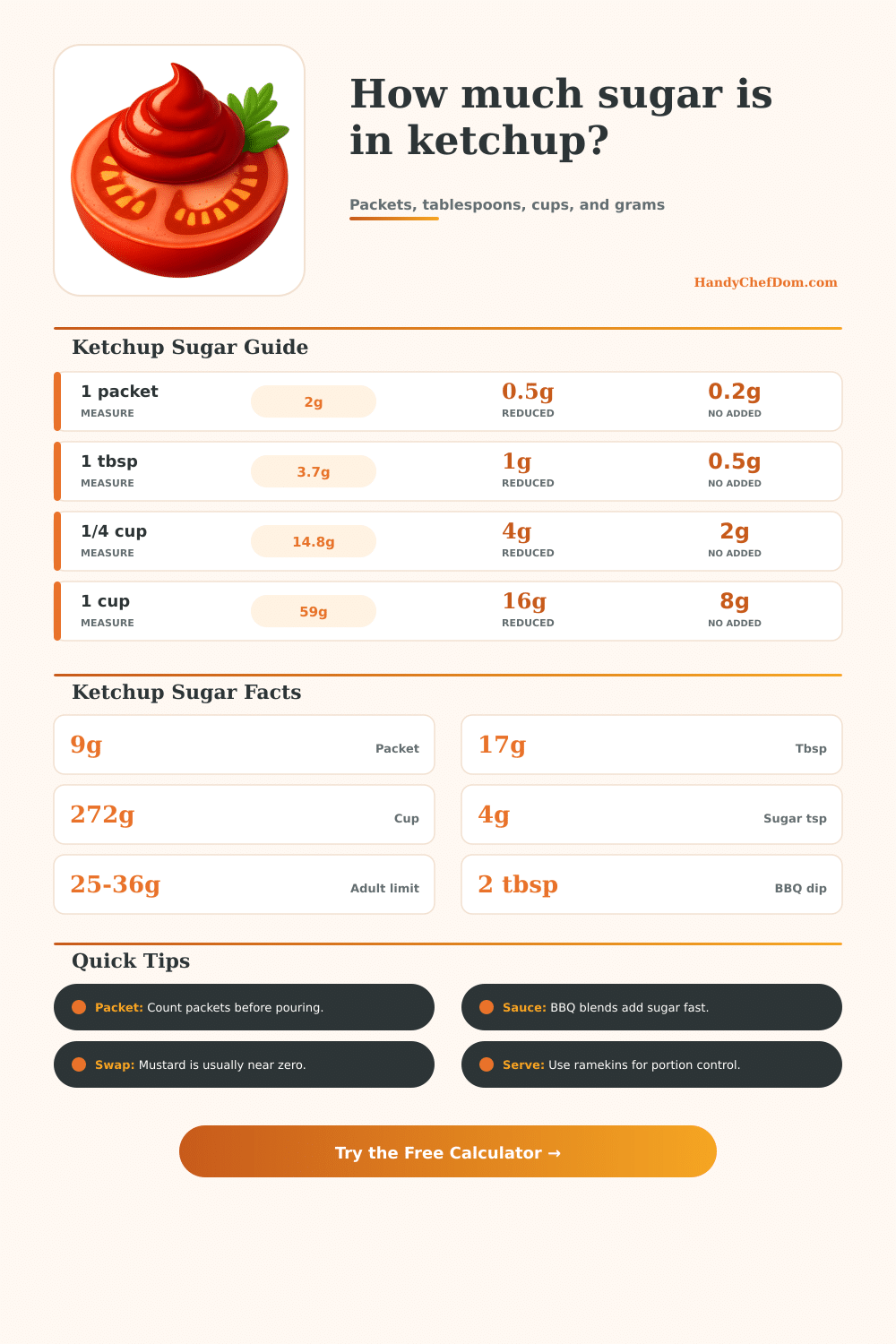
Choose the way you measured ketchup, pick the ketchup sugar profile, and set the number of servings. Packets are estimated at 9 grams each, tablespoons at 17 grams, and cups at 272 grams.
| Measure | Approx ketchup grams | Regular ketchup sugar | Reduced sugar ketchup | No sugar added ketchup |
|---|---|---|---|---|
| 1 packet | 9 g | 2.0 g sugar | 0.5 g sugar | 0.2 g sugar |
| 1 tablespoon | 17 g | 3.7 g sugar | 1.0 g sugar | 0.5 g sugar |
| 2 tablespoons | 34 g | 7.4 g sugar | 2.0 g sugar | 1.0 g sugar |
| 1/4 cup | 68 g | 14.8 g sugar | 4.0 g sugar | 2.0 g sugar |
| 1/2 cup | 136 g | 29.6 g sugar | 8.0 g sugar | 4.0 g sugar |
| 1 cup | 272 g | 59.2 g sugar | 16.0 g sugar | 8.0 g sugar |
| Use case | Typical ketchup amount | Regular sugar | Servings covered | Calculator note |
|---|---|---|---|---|
| Small fries dip | 1 to 2 packets | 2.0 to 4.0 g | 1 person | Packets help cap the portion. |
| Large fries tray | 3 to 5 packets | 6.0 to 10.0 g | 1 to 2 people | Use packet mode for fastest math. |
| Burger spread | 1 tablespoon | 3.7 g | 1 burger | Spread sugar is easy to overlook. |
| Nugget cup | 2 tablespoons | 7.4 g | 1 dip cup | Enter by tablespoons or grams. |
| BBQ condiment bowl | 1/2 cup | 29.6 g | 6 to 10 people | Set party buffer if refilling. |
| Meatloaf glaze base | 1/4 cup | 14.8 g | 6 slices | Divide by slice count. |
| Condiment | Sugar per tablespoon | Teaspoon equivalent | Compared with regular ketchup | Best calculator use |
|---|---|---|---|---|
| Regular ketchup | 3.7 g | 0.9 tsp | Baseline | Fries, burgers, meatloaf glaze |
| Reduced sugar ketchup | 1.0 g | 0.3 tsp | About 73% less | Frequent dipping or kids portions |
| No sugar added ketchup | 0.5 g | 0.1 tsp | About 86% less | Daily sugar limit tracking |
| Yellow mustard | 0.2 g | 0.1 tsp | Much lower | Burger swap comparison |
| Sweet BBQ sauce | 5.8 g | 1.5 tsp | Higher | BBQ batch sugar comparison |
| Tomato salsa | 0.8 g | 0.2 tsp | Lower | Dip cup alternative |
| Daily limit setting | Grams sugar | Teaspoons sugar | Regular ketchup tablespoons to reach it | Why it matters |
|---|---|---|---|---|
| 25 g limit | 25 g | 6.3 tsp | About 6.8 tbsp | Common lower daily target. |
| 36 g limit | 36 g | 9.0 tsp | About 9.7 tbsp | Common higher daily target. |
| 50 g daily value | 50 g | 12.5 tsp | About 13.5 tbsp | Useful for nutrition-label context. |
| Kids ketchup cup | 7.4 g | 1.9 tsp | 2 tbsp portion | Small cups can be sugar dense. |
| Cookout bowl | 29.6 g | 7.4 tsp | 1/2 cup portion | Divide by guests for real intake. |
Values are practical estimates based on common ketchup density and nutrition-label averages. Always use your product label when you need exact diet tracking.
When you eat a burger meal, what’s the first thing that comes to mind? Sodium? Saturated fat? Rarely do you think about the fact that the condiment you’re holding in your hand is basically a super-concentrated version of syrup dressed up as tomato sauce. This blind spot explains why tracking sugar in ketchup matter more then most people realize because it accumulates quietly. The sugar adds up, and it sneaks in on you, often without you having eaten any candy at all.
Once you know which kind of ketchup you ate and how much, simply plug those details into the calculator above. It will crunch the numbers for you, no conversion or factor guesswork required. For example, most packs of ketchup or other fast food condiments will contains approximately 2 grams of added sugar. Doesn’t sound like much… except a single large order of fries may come with three or four of these pack. Before you even sink your teeth into the fries themselves, you’ve already put almost a teaspoon of straight-up sugar in your mouth.
Why You Should Count Sugar in Ketchup
By choosing a scenario, like a backyard barbecue batch or drive thru tray, the tool allow you to see how it all adds up. It breaks down the total amount of sugar and splits it across however many serving you’re dealing with, allowing you to see just how much sugar each individual gets.
It’s important to understand what “no added sugar” and “reduced sugar” means when it comes to ketchup (compared with regular). Regular ketchups relies heavily on sweetness, from either cane sugar or high fructose corn syrup, to balance the acidic taste of tomatoes. Reduced have less (often way less) of this sweetening element, but there’s usually enough to catch your attention. No added sugar types just go all-in on natural sugars in the tomato base. This is explained well on the page, which has a reference table comparing different levels by type of ketchup. You can see the potential sugar savings of more than eighty percent per tablespoon if you change product types.
But then there are things like barbecue sauces and meatloaves, where the ketchup isn’t an ingredient but a binding agent (or a glaze). Half a cup in those recipes translate into almost thirty grams of sugar in your meal. That is more than most people should of had in one day, even before digging into dessert.
And if you’ve got leftover ketchup? Or maybe you squeezed just a little too much out of the bottle? It calculates for all that. Because we know: when there’s condiment close at hand, we’re likely to use a little more.
If you’re looking to maintain flavor but reduce sugar, then the best bet is to swap out ketchup for another condiment like mustard. It has that same tangy-heat factor, but no sweet load whatsoever. Ditto with salsa: it brings acid and moisture while avoiding added sweeteners. Use the calculator above to see a side-by-side comparison of these swaps. Want to know just how much less sugar you’ll be consuming? Just change what is in your condiment drawer.
Depending on which health guidelines you’re following, the recommended maximum sugar intake per day ranges from twenty five to thirty six grams (roughly). With two tablespoons of regular ketchup, you can go over halfway in one sitting. You can define your own daily maximum using the tool. Your percent spent will be based off what you consider healthy for yourself, not an arbitrary average. That’s the interesting part.
Because if you look closely enough, ketchup shows up on plates far more frequently than you’d expect from anything resembling a dessert. There is burger spread. It is checked. There is a nuggets dipping cup. Check. Some pasta sauces… Especially those marketed to kids, do too. Check.
When you realize how much ketchup you actualy put on your plate; and admit you aren’t using it in moderation; it becomes clear that it is more of a sweetener than a flavor enhancer. When you opt to count your portion size, suddenly the whole concept of “portion” shifts. What used to be an unlimited bucket of sauce become an ingredient with a price. And that’s why counting doesn’t just reduce your consumption of sugar. It makes you more aware of all the food around you. Those tiny red packets on the table aren’t condiments; they’re ingredients, too. They are ingredients that actively contribute to the nutritional makeup of everything you eat. Not accounting for them is like solving only half the problem.
Before you crack open the packet, make sure youve counted it. It’s the first move towards regaining control over this hidden sweetness.