🥣 Cumin in Hummus Calculator
Estimate ground cumin, toasted seed equivalent, serving yield, and salt-acid balance for hummus made from cans, cooked chickpeas, or measured cups.
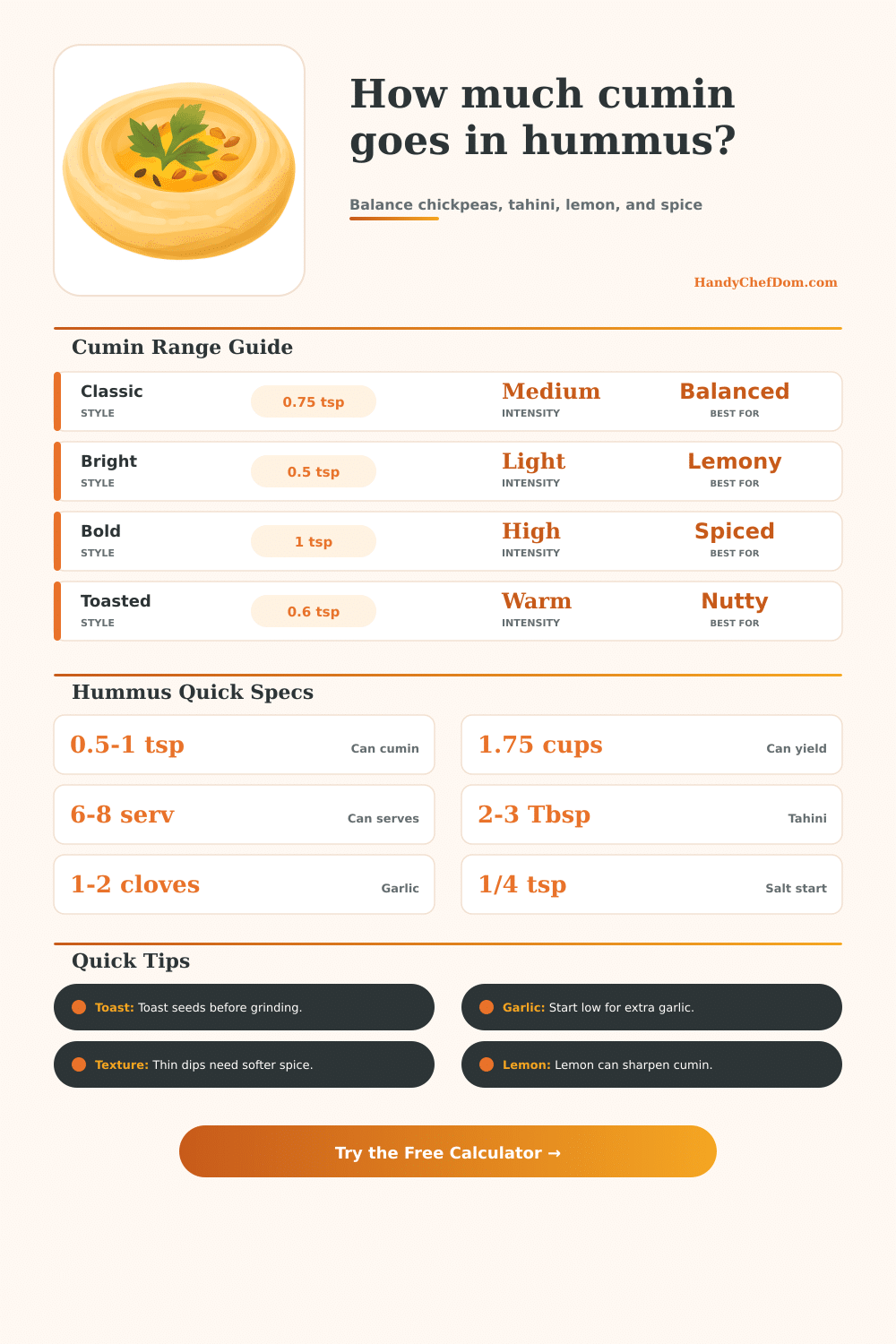
A common starting point is about 1/2 to 1 tsp ground cumin per 15 oz can of chickpeas. This calculator scales that range for batch size, cumin form, toast level, lemon, garlic, tahini, salt, garnish, and dip versus spread texture.
| Chickpea source | Unit yield | Hummus yield | Cumin start |
|---|---|---|---|
| 15 oz can, drained | 1.75 cups | 2.25 cups | 0.5-1 tsp |
| Low-sodium 15 oz can | 1.70 cups | 2.15 cups | 0.5-1 tsp |
| Home-cooked chickpeas | 1.00 cup | 1.25 cups | 0.3-0.6 tsp |
| Firm cooked chickpeas | 1.00 cup | 1.20 cups | 0.3-0.6 tsp |
| Aquafaba-heavy can | 1.60 cups | 2.15 cups | 0.45-0.9 tsp |
| 29 oz large can | 3.50 cups | 4.50 cups | 1-2 tsp |
| Cumin form | Strength | Gram guide | Use note |
|---|---|---|---|
| Ground cumin | Standard | 2.1 g/tsp | Easy to blend |
| Fresh-ground seeds | Bright | 2.0 g/tsp | Use slightly less |
| Whole seeds to toast | Warm | 2.0 g/tsp | Toast then grind |
| Toasted ground cumin | Deep | 2.1 g/tsp | Rounder finish |
| Smoky cumin blend | Strong | 2.2 g/tsp | Keep lemon bright |
| Older mild jar cumin | Soft | 2.1 g/tsp | May need more |
| Ingredient | Classic per can | Light profile | Bold profile |
|---|---|---|---|
| Cumin | 0.75 tsp | 0.5 tsp | 1 tsp |
| Tahini | 2-3 Tbsp | 2 Tbsp | 3-4 Tbsp |
| Lemon juice | 2 Tbsp | 2.5 Tbsp | 1.5-2 Tbsp |
| Garlic | 1 clove | 0.5 clove | 2 cloves |
| Fine salt | 0.5 tsp | 0.35 tsp | 0.6 tsp |
| Garnish cumin | Pinch | Skip | 1/8 tsp |
| Serving style | Portion | One can serves | Cumin feel |
|---|---|---|---|
| Snack dip | 1/4 cup | 8 servings | Classic |
| Mezze plate | 1/3 cup | 6 servings | Warm |
| Sandwich spread | 2 Tbsp | 14 servings | Noticeable |
| Party tray scoop | 3 Tbsp | 10 servings | Gentle |
| Meal prep bowl | 1/2 cup | 4 servings | Soft |
| Tasting flight | 1 Tbsp | 28 servings | Clear |
When it comes to hummus, there’s one ingredient that rarely makes the limelight: cumin. But it will determine if bowl of hummus is complete or not. By default most home cooks grab for the jar out of habit, but adding too little or too much cumin alter everything from how lemon lands to whether the garlic lean more toward sharp than round. Once that spice hits the scene, the other things on your countertop will adjust.
How much cumin? There isn’t just one answer. The main ingredient are chickpeas. One and three quarters cups of drained chickpeas from a fifteen-ounce can is about what it takes to transform them into finished hummus. Each ingredient pulls flavor in its own direction. Garlic provide heat that, if used sparingly, sits below the cumin or competes with it. Tahini adds body and slightly bitter notes that cumin can tempers. Lemon brightens everything, but too much all at once can make the cumin seem sharper. Salt pull all the flavors together, yet too much will make even a moderate amount of cumin feel loud. Once you enter these variables into the calculator above, it do the math for you (and saves you the guesswork about how these ratios play off one another).
How Much Cumin to Use in Hummus
More than other recipes acknowledge: texture counts. More cumin per cup make sense with a thick spread intended for sandwiches (it has more heft in every bite), but not with a loose party-tray dip that will spread thin (the same quantity will fall more softly onto the serving tray). People also miss garnish lever: Even if the blended quantity of cumin remains small, a light dusting on top will seem like additional cumin, whereas a heavier sprinkle will turn the uppermost layer into something closer to spiced oil.
Not just stronger, but different: Toasting changes the nature of seed flavors. A little toast adds warmth, without forcing flavor forward, a good thing if you’re already getting bold notes from your lemon and/or garlic. Deeper toasts deepens the flavor; because of this, you can use less cumin and still have it taste intentional. The strength diminishes over time, and older jars will also be less strong: That spoonful that was perfect six months ago might today be too quiet in the background.
Ultimately, it’s all about how you want the bowl to taste. Chickpeas and tahini is front-and-center; a milder flavor helps them shine as the star of the show. Grain bowls or roasted veggies need something with a rounder, warmer flavor. When hummus is going to be served next to heavily spiced veggies or grilled meat, it can handles something bolder. After you determine your hummus’ role, the rest is easy to assess.
Taste your way to greatness; don’t measure once, walk away. With most ingredients (including cumin), get it all into the food processor early, then judge how much more to add at the end, right before serving: in the food processor, or as a garnish on top? It’s that little moment that distinguishes good hummus and the kind you realy crave. You should of used extra cumin if you want it moddern.