Spinach Vitamin K Calculator
Estimate vitamin K from raw, cooked, frozen, cup, gram, ounce, serving, or package measurements with %DV logic
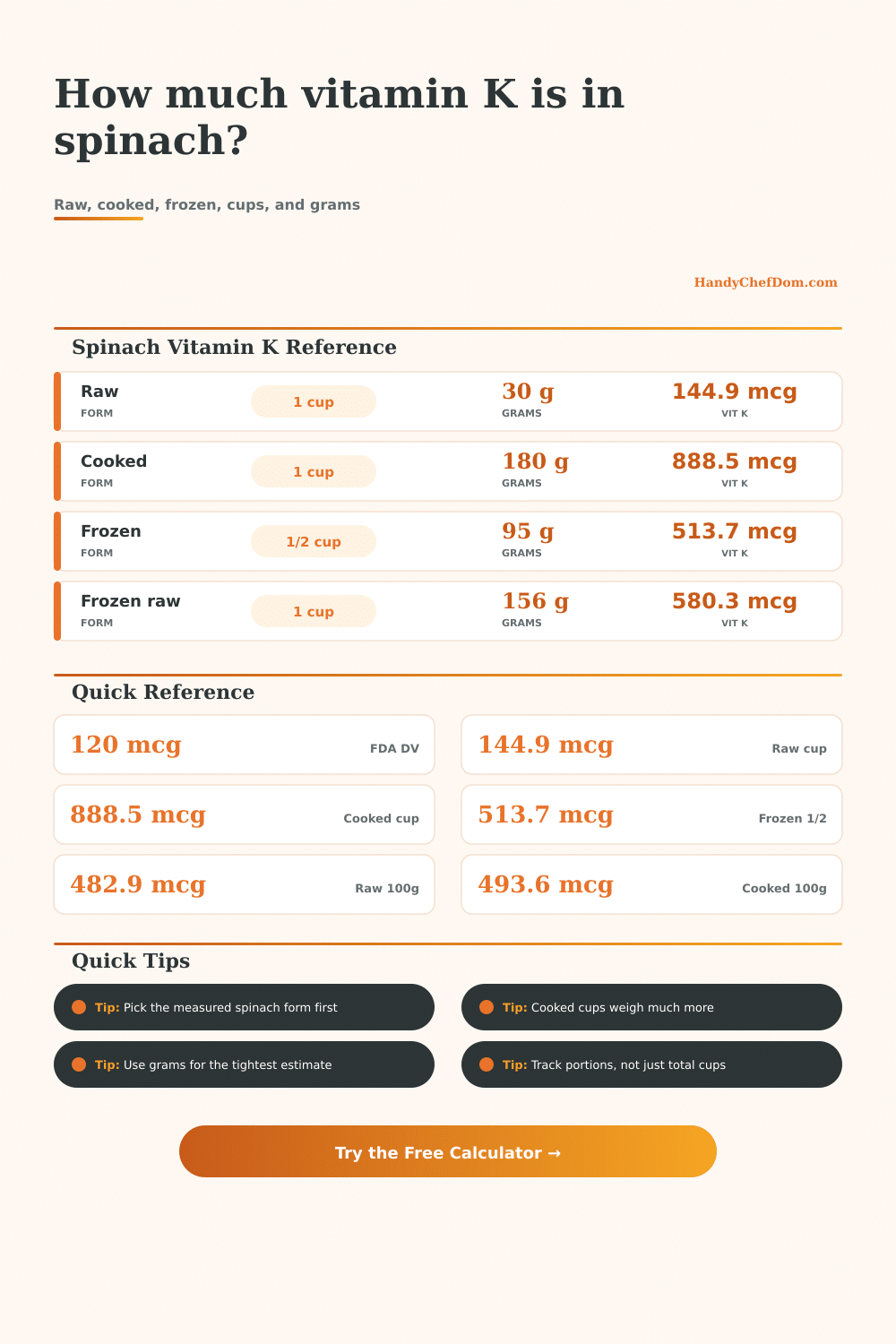
| Spinach Form | Household Measure | Weight | Vitamin K |
|---|---|---|---|
| Raw spinach | 1 cup | 30 g | 144.9 mcg |
| Cooked, boiled, drained | 1 cup | 180 g | 888.5 mcg |
| Cooked, drained, with salt | 1 cup | 180 g | 888.5 mcg |
| Frozen chopped, cooked drained | 1/2 cup | 95 g | 513.7 mcg |
| Frozen chopped, unprepared | 1 cup | 156 g | 580.3 mcg |
| FDA Daily Value | Adult and age 4+ | Target | 120 mcg |
| Measured Form | 1/2 Cup | 1 Cup | 2 Cups |
|---|---|---|---|
| Raw loose spinach | 15 g | 30 g | 60 g |
| Raw packed spinach | 30 g | 60 g | 120 g |
| Cooked drained spinach | 90 g | 180 g | 360 g |
| Frozen cooked drained | 95 g | 190 g | 380 g |
| Frozen unprepared | 78 g | 156 g | 312 g |
| Baby spinach loose | 15 g | 30 g | 60 g |
| Reference | Target | Calculator Use | Notes |
|---|---|---|---|
| FDA Daily Value | 120 mcg | %DV label logic | Default |
| Adult male AI | 120 mcg | Intake target | Same number |
| Adult female AI | 90 mcg | Intake target | Optional |
| Custom target | User input | Personal tracking | Manual |
| Amount | Raw Loose | Cooked Drained | Frozen Cooked |
|---|---|---|---|
| Small garnish | 15 g / 72 mcg | 30 g / 148 mcg | 30 g / 162 mcg |
| Light side | 30 g / 145 mcg | 90 g / 444 mcg | 95 g / 514 mcg |
| Full side | 60 g / 290 mcg | 180 g / 888 mcg | 190 g / 1027 mcg |
| Meal prep base | 100 g / 483 mcg | 100 g / 494 mcg | 100 g / 541 mcg |
A cup of spinach is not a precise measure; instead use your kitchen scale for accuracy. A cup of fresh leaf spinach might be just thirty grams, whereas a cup of cooked spinach will be around one hundred eighty grams, depending on how much liquid it holds when heated. When measuring nutrients, that’s important: Vitamin K isn’t going to dissapears in steam. As the spinach becomes denser, its concentration increases, meaning that even though there are fewer gram of something in a small bowl of wilted greens, they hold more vitamins than big bowl of raw spinach. You don’t need to learn which density coefficients corresponds with which vegetable (that’s what the tool on this page does after you plug in your numbers).
Vitamin K, for example, helps with bone health and with blood clotting. It’s also fat soluble (which makes tracking this vitamin fairly tricky if you’re following certain types of diets or medications). Spinach, for instance, is high in Vitamin K, but how much? Depends entirely on what stage it’s at: Is it fresh off the plant (raw)? Frozen? Boiled? The calculator lets you choose exactly what kind of spinach you’ll be eating, since each of these options changes the volume/gram ratio quite substantially.
Why You Should Weigh Your Spinach
Cups of raw spinach is very lightweight, there’s plenty of air between leafy greens! Packed cups are far more dense. When cooked, spinach becomes really compact, so a cooked cup is actualy 6x the weight of a raw cup. That’s why most people mess up when eyeballing their servings.
But there’s no guessing with grams, and that’s why the calculator has an option to use imperial (U.S.) measurements as well as metric ones. Weighing everything means that a hundred-gram serving of raw spinach provide almost five hundred micrograms of vitamin K. The same amount of cooked spinach contains just a little bit more because the loss of water concentrates it. These numbers come from USDA values in the reference tables inside the calculator. They explain how measuring by weight beats measuring by cup. In essence, you’re swapping density for volume. The calculator accounts for that fact in its end result, adjusting your total number of micrograms to match.
And if you’re meal prepping for yourself or your family, portion sizes also matter. You can input the quantity of spinach you want to eat, then break that down into servings. If you know you’re making several meals throughout the week, you don’t want to exceed a toxic amount. You also need to make sure you get enough nutrients. It’ll help you plan out your meals evenly without going overboard.
By default, the daily value goal is set at one hundred twenty micrograms of vitamin K, but you can change it according to any health guidelines you follow; whether they be general recommendations or doctor’s orders. Some will swap in the recommended intake for women over 19 years old, which is only ninety micrograms; others will create their own, more strict goal.
Spinach: Frozen can have a bad rap, but its packaging weight and inclusion of ice crystals make a difference in the calculator (it’s also super-convenient and nutritionally robust). Depending on whether you’re using cooked or uncooked frozen chopped spinach, the calculator will treat them differently. A half-cup of cooked frozen spinach offer more than 500 micrograms, which is over four times the daily value for most adults. This makes it a powerful ingredient for things like sauces, stews, or soups, where volume isn’t as important than taste. Just be aware that once you’ve cooked those leaves, they’ll become denser so adjust your portion size down to keep track accurately.
But it doesn’t require that you turn into a nutritionist either. All you have to do is enter honestly what’s in your cup: did you pack the spinach tightly, or did you lay it loose inside the cup? There’s an adjustment slider to adjust for how hard you squished the leaves, which then fine-tunes the estimated grams. That sounds like a little thing, but makes all the difference when you’re trying to get things precise. As you tweak the values, the UI updates instantly and you can play around with variations. Try cooking your ingredients rather than eating them raw to see how the microgram count will jump. While still maintaining same cup measurement.
At the end of the day, spinach is a nutritional leader that’s earned its place in the spotlight when it comes to your meal plan. It has a lot of Vitamin K (but not exactly the same amount depending on how you’re preparing it). Use the calculator to give your gut instincts some hard numbers instead of fuzzy guesses. One cup isn’t always one cup, and knowing that empowers you to make confident choices about your diet. Begin by selecting which form you want first, and allow the numbers to reveal the truth: What are you really consuming?
Accurate measurement starts with honesty.