Chili Powder in a Packet Calculator
Convert chili seasoning packets into tablespoons, grams, spice ratios, sodium targets, heat level, meat pounds, bean cups, tomato volume, and serving-size equivalents.
1Real Packet Presets
2Packet and Pot Inputs
3Seasoning Blend Inputs
Your Chili Packet Conversion
Adjust the packet and pot inputs, then calculate your blend.
4Scaled Homemade Packet Breakdown
| Ingredient | Scaled volume | Estimated grams | Why it matters |
|---|---|---|---|
| Chili powder | 0 tbsp | 0 g | Main packet equivalent and color base |
| Cumin | 0 tsp | 0 g | Classic chili warmth and packet aroma |
| Paprika | 0 tsp | 0 g | Sweet or smoky red pepper depth |
| Garlic + onion | 0 tsp | 0 g | Savory packet-style background |
| Oregano + cayenne | 0 tsp | 0 g | Herbal edge and selected heat level |
| Salt + thickener | 0 tsp | 0 g | Sodium target plus packet texture |
5Packet Reference Tables
| Packet style | Typical dry weight | Chili powder estimate | Best scaling cue |
|---|---|---|---|
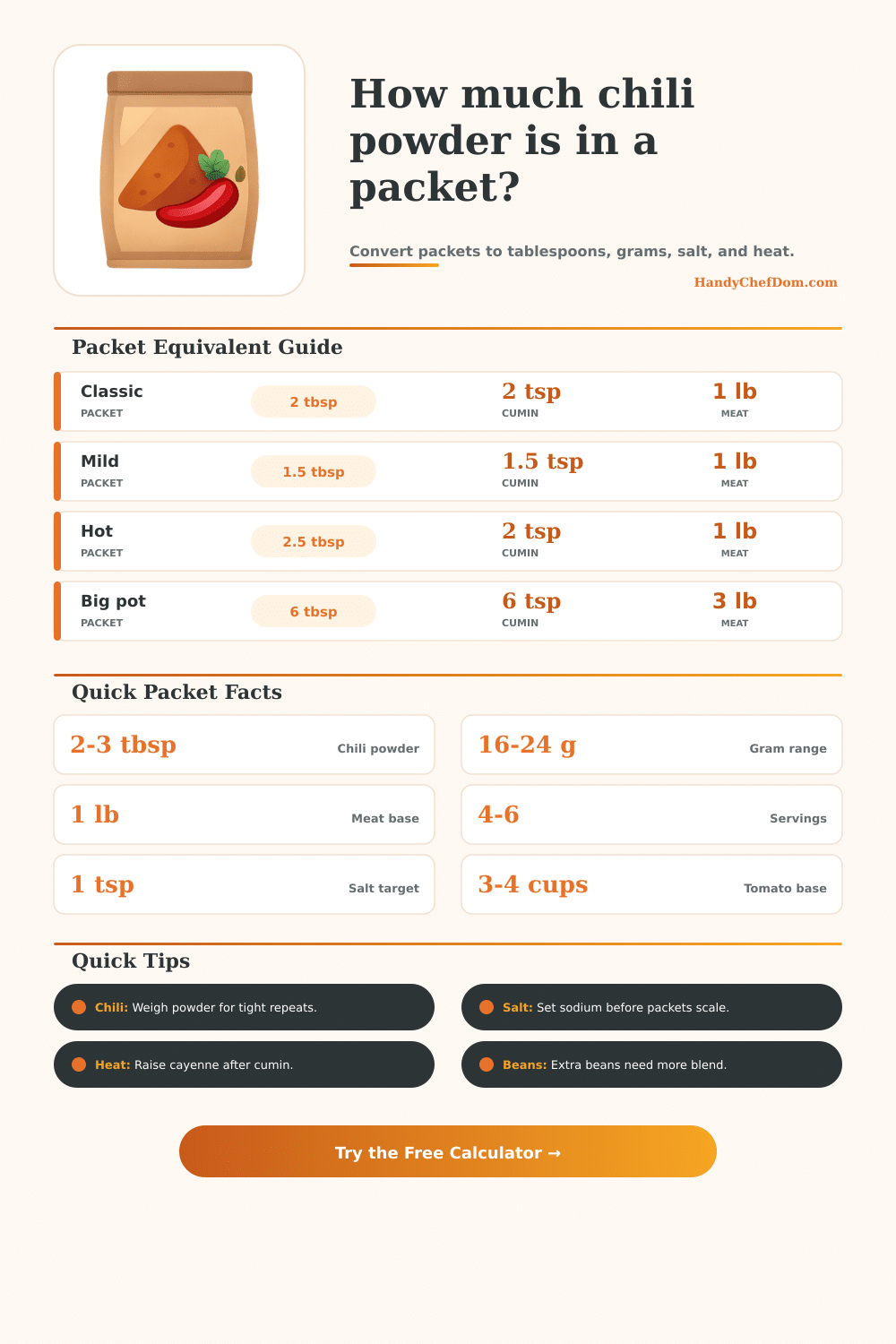
| Classic chili packet | 26 to 30 g | 2 to 2.4 tbsp | 1 lb meat plus 3 to 4 cups tomato/beans |
| Mild packet | 22 to 28 g | 1.5 to 2 tbsp | Lower cayenne and softer cumin |
| Hot packet | 28 to 34 g | 2.3 to 3 tbsp | More chili powder and cayenne |
| Taco-style packet | 25 to 32 g | 1.2 to 1.8 tbsp | More cumin, garlic, onion, and thickener |
| Lower-salt packet | 18 to 26 g | 2 to 2.5 tbsp | Build flavor first, then add salt target |
| Spice | Volume reference | Gram estimate | Calculator role |
|---|---|---|---|
| Chili powder | 1 tbsp | 7.8 g | Main packet replacement |
| Ground cumin | 1 tsp | 2.1 g | Warm, earthy packet note |
| Paprika | 1 tsp | 2.3 g | Red pepper body and color |
| Garlic powder | 1 tsp | 3.1 g | Savory intensity |
| Onion powder | 1 tsp | 2.4 g | Rounded packet flavor |
| Fine salt | 1 tsp | 6.0 g | Sodium target conversion |
| Pot size | Protein | Beans + tomato | Packet equivalent |
|---|---|---|---|
| Weeknight pot | 1 lb | 4 to 6 cups | 1 packet |
| Family pot | 2 lb | 8 to 11 cups | 2 packets |
| Gathering pot | 3 lb | 12 to 16 cups | 3 packets |
| Tailgate pot | 5 lb | 20 to 28 cups | 5 packets |
| Meal prep pot | 6 lb | 24 to 34 cups | 6 packets |
| Target | Mild | Medium | Hot |
|---|---|---|---|
| Cayenne per packet | 1/16 to 1/8 tsp | 1/4 tsp | 3/8 to 1/2 tsp |
| Sodium per serving | 250 to 350 mg | 350 to 550 mg | 550 to 750 mg |
| Chili powder per lb meat | 1.5 to 2 tbsp | 2 to 2.5 tbsp | 2.5 to 3 tbsp |
| Bean/tomato boost | 0 to 5% | 5 to 12% | 12 to 20% |
6Packet Comparison Grid
Starts from packet size, then estimates the chili powder, cumin, paprika, garlic, onion, salt, and thickener that make up the packet.
Uses 1 packet per pound as the baseline, then lets beans and tomatoes nudge the blend up when the pot gets larger.
Sets salt from sodium per serving instead of copying packet sodium blindly, which keeps large batches easier to tune.
Changes cayenne separately from chili powder so a hot batch does not accidentally become dusty or bitter.
7Two Practical Packet Tips
But here’s where it gets confusing: Chili seasonings comes in packets; each one include not just chili powder but also onion, garlic, paprika, some cumin, salt, and a thickener. All of these thing together are already proportioned to flavor roughly a pound of meat and several cups of tomatoes (or beans).
But if we’re going to go bigger then that one packet the proportions starts to get fuzzy. At this stage, a calculator help. Why? It will show us what goes into our pot, the true variables, and help us understand how much we need for a biger batch. One variable are how heavy the meat is and how much seasoning are necessary to complement its size based off of weight.
Using a Calculator for Big Batches