Dark Chocolate Caffeine Calculator
Estimate caffeine from cacao percent, chocolate form, grams, pieces, servings, and the time window you plan to eat it in.
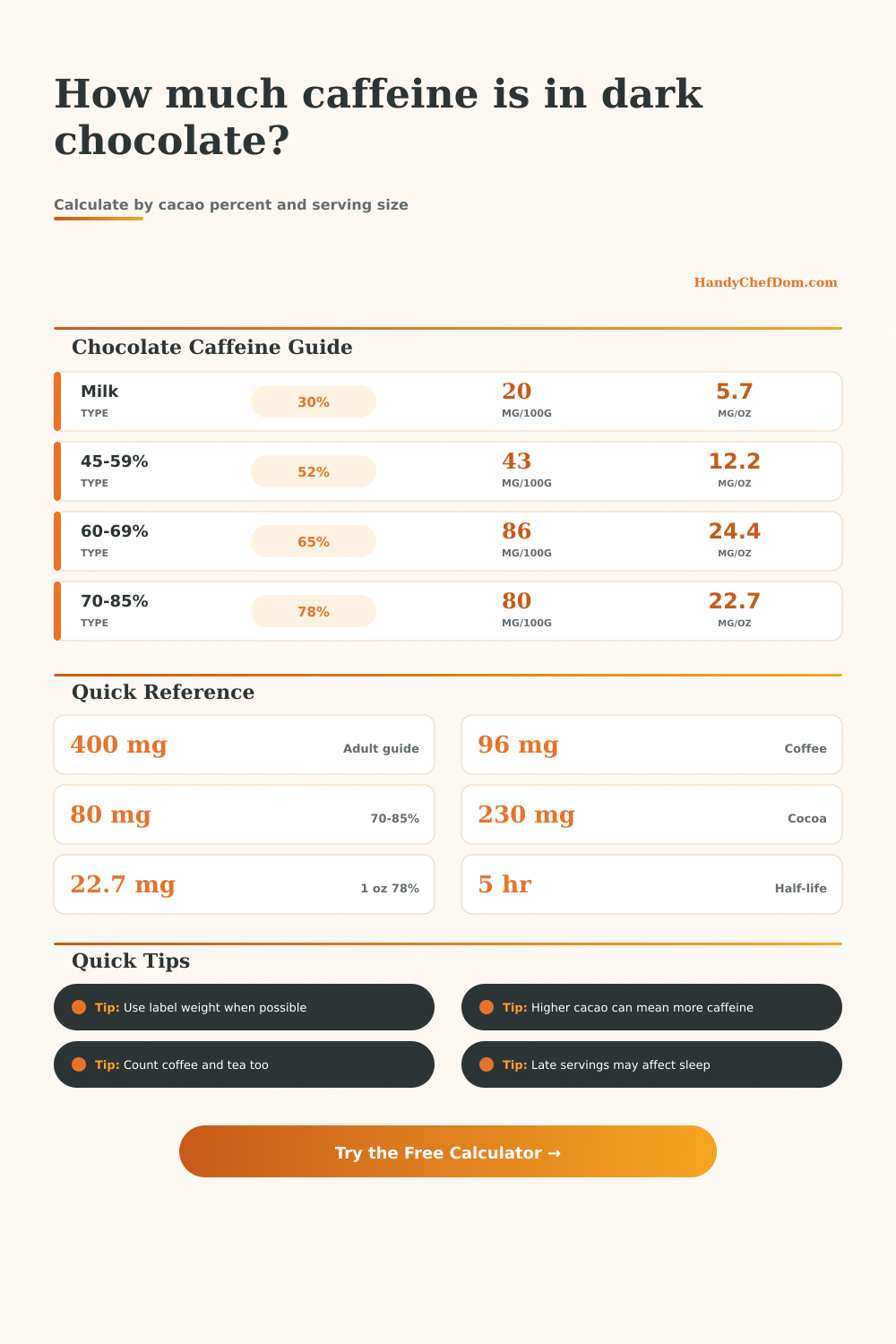
| Chocolate Type | Cacao Range | Caffeine | Per 1 oz |
|---|---|---|---|
| Milk Chocolate | About 30% | 20 mg per 100 g | 5.7 mg |
| Dark Chocolate | 45-59% | 43 mg per 100 g | 12.2 mg |
| Dark Chocolate | 60-69% | 86 mg per 100 g | 24.4 mg |
| Dark Chocolate | 70-85% | 80 mg per 100 g | 22.7 mg |
| Cocoa Powder | Unsweetened | 230 mg per 100 g | 65.2 mg |
| Amount | Typical Weight | 70-85% Caffeine | Notes |
|---|---|---|---|
| 1 thin square | 5 g | 4 mg | Small tasting piece |
| 2 bar squares | 20 g | 16 mg | Common small dessert |
| 1 ounce | 28.35 g | 22.7 mg | Standard nutrition ounce |
| Half 100 g bar | 50 g | 40 mg | Shareable portion |
| Full 100 g bar | 100 g | 80 mg | Whole large bar |
| Source | Serving | Caffeine | Calculator Use |
|---|---|---|---|
| Brewed Coffee | 8 fl oz | 96 mg | Coffee equivalent card |
| Espresso | 1 fl oz | 63 mg | Drink comparison |
| Brewed Black Tea | 8 fl oz | 48 mg | Drink comparison |
| Cola | 8 fl oz | 33 mg | Drink comparison |
| Adult Daily Guide | 1 day | 400 mg | Default limit input |
| Window | What It Means | Rate Example | Use Case |
|---|---|---|---|
| 0.5 hr | Quick snack | 20 mg = 40 mg/hr | Single dessert |
| 2 hr | Slow nibble | 20 mg = 10 mg/hr | Movie or tasting |
| 4 hr | Shared batch | 40 mg = 10 mg/hr | Recipe sampling |
| 8 hr | All-day bites | 80 mg = 10 mg/hr | Desk chocolate |
At least initially, it’s hard not to feel that what you’re consuming is just a simple square of dark chocolate. In comparison with pre-workout drinks or even good old espresso, this thing doesn’t seem like a stimulant; it seems more like a treat. But it contain caffeine and theobromine (among other compounds) from cocoa bean which remain in your body for hours after ingestion. If you want to know how much you consume, stay under safe limits during the day, or go to sleep peacefuly, you have to know how much theobromine and caffeine you are getting from it. This is where the calculator helps.
All you have to do is input weight of the dark chocolate and its cacao percentage, and tool does the math for you. This saves you guesswork on whether your late-night snack is going to lead to insomnia. Because cocoa solids account for most of chocolate’s caffeine, there isn’t a set amount contained in each square. Darker chocolates is denser in naturaly occurring bean compounds, whereas milk chocolate are diluted with sugar and milk powder, resulting in lower concentration of the stimulant.
How to Use the Calculator
You can roughly determine how much you’re getting based off your chosen type: the higher the percent cacao listed on label, the greater the concentration of caffeine in grams of chocolate. But since beans differ (as does their processing), that’s not an exact match: a “seventy percent” bar weigh far more active material than a thirty-percent bar of equal weight. So, rather than just eyeballing, consider the weight plus the cacao to get a better sense of what you’re ingesting. Piece sizes fluctuates from brand to brand, so visual guesswork is usually off by several square, often as many as half.
But then there’s timing. Another important factor for understanding the impact of caffeine throughout your day. If you enter when you last ate, app will let you know whether you’re taking in stimulant at a consistent pace over multiple hours or all at once. For example, snacking on a bar during a movie means your body absorbs it more slowly then scarfing down the whole thing in one go. Why does this matter? Well, how fast caffeine get into your system has a direct impact on how high it peaks in your bloodstream. By spreading out your consumption, you can level off the energy rollercoaster so you don’t get those jarring highs and lows as common with quick fixes. A tiny shift in behavior can lead to a noticeable change in how you feel an hour later.
Another thing: Before you eat another one, think about everything else you’ve had so far today. To help with that, there’s an “other caffeine” input on the calculator. If you had some chocolate and an iced coffee, put them both down. Energy drinks? Soda? Tea mid-afternoon? Throw those in as well. For most healthy adults, health authorities recommends keeping your consumption below four hundred milligrams per day, but they’re talking total amount, not individual limits for each caffeine form. Small amounts from hot chocolate or baking with unsweetened cocoa powder adds up. People tend to forget that all of this add to their daily intake.
In fact, if you compare unsweetened cocoa powder by weight, it contains almost three times more caffeine than some dark chocolate bars. It’s easy to accidentally exceed your own limit without even noticing until you’re awake at midnight. When you get there, the page gives you some comparison data (with anchors), allowing you to compare various forms relative to one another. As you’ll note from looking at the page, regular chips and even milk chocolate contains a far lower concentration of cacao nibs and baking squares. That’s because those items aren’t processed by removing cocoa butter; but companies’ processes vary and can affect the ultimate concentration of stimulants in the product. Knowing the general range allows you to spot an outlier. This helps you make more informed decisions about your purchases without having to learn all the details of every brand.
Labels must disclose allergens, but this isn’t true for caffeine. If you’re sensitive to caffeine, this doesn’t mean you can never enjoy dark chocolate. It simply means that you should of been thoughtful about how much you consume and at which times of day. Don’t respond after the fact; use the tool to help plan out how much to have and when based on your daily energy needs and sleep schedule. A bit of planning goes a long way toward preventing a late night craving from turning into a late-night wakefulness. The square of chocolate is still delicious, but now you know exactly what it costs you in the form of rest.