🥩 Beef Per Person Calculator
Plan raw beef to buy, cooked yield, per-person portions, shrink, bone-in adjustments, sides, appetite, and leftovers in one place.
Use planning mode to calculate how much raw beef to buy, or switch to raw/cooked on hand to estimate servings and shortages.
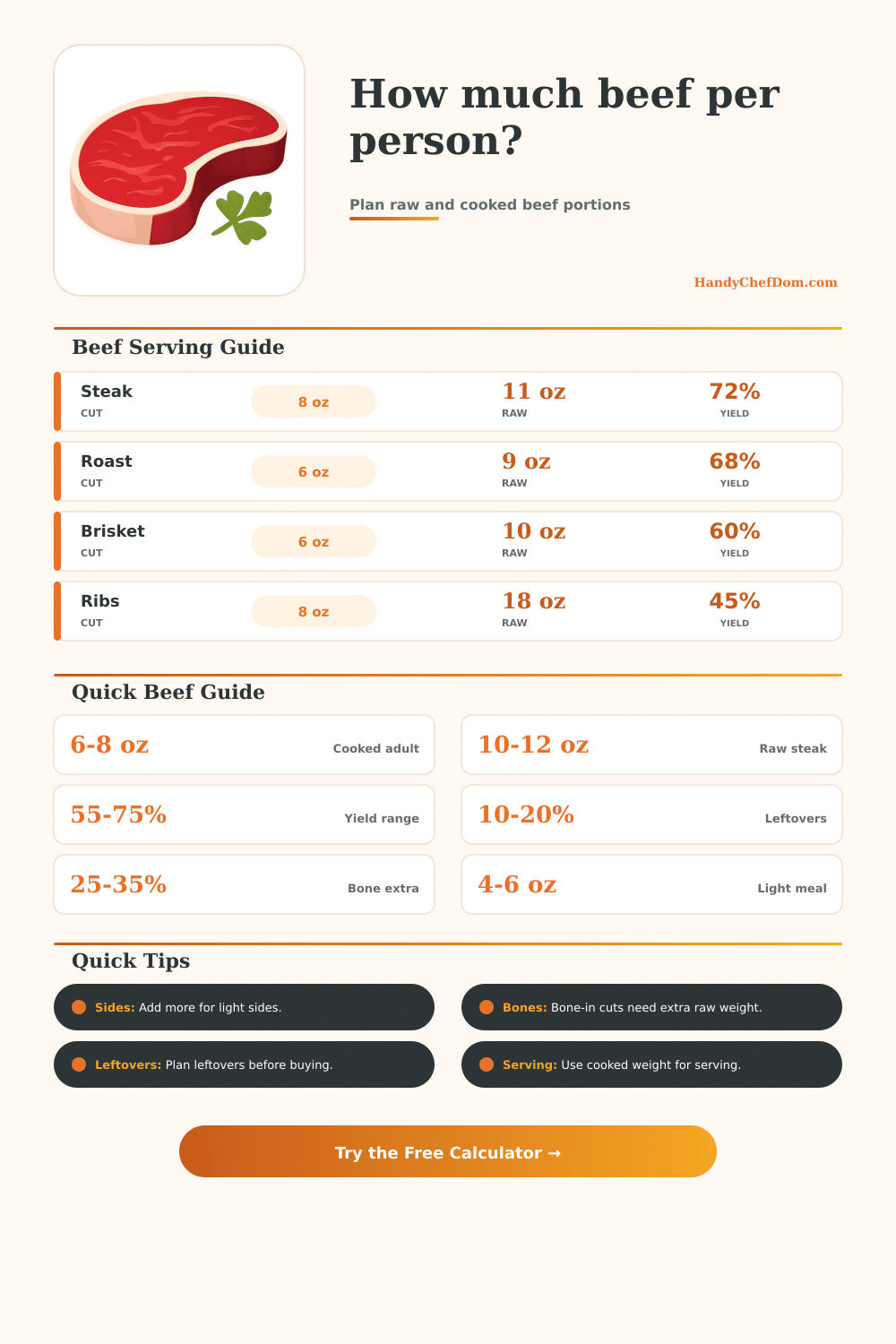
| Beef cut | Cooked serving | Raw boneless per person | Best planning use |
|---|---|---|---|
| Sirloin or strip steak | 8 oz cooked | 10.5 to 11 oz raw | Plated steak dinners |
| Ribeye steak | 8 oz cooked | 11 to 12 oz raw | Hearty steak portions |
| Tenderloin or filet | 6 to 7 oz cooked | 8 to 9 oz raw | Lean center-plate meals |
| Prime rib roast | 7 oz cooked | 11 to 14 oz raw | Holiday roast carving |
| Chuck roast | 6 oz cooked | 9 to 10 oz raw | Sliced or pulled beef |
| Brisket | 6 oz cooked | 10 to 12 oz raw | BBQ serving trays |
| Ground beef | 5 oz cooked | 6.5 to 7 oz raw | Tacos, bowls, pasta |
| Short ribs | 8 oz cooked | 17 to 20 oz raw | Bone-heavy portions |
| Cut style | Cook shrink | Bone or trim loss | Edible cooked yield |
|---|---|---|---|
| Lean steak, boneless | 22% to 26% | 0% | 74% to 78% |
| Marbled steak, boneless | 26% to 30% | 0% | 70% to 74% |
| Boneless roast | 28% to 35% | 0% to 5% | 62% to 72% |
| Brisket | 35% to 42% | 0% to 8% | 52% to 62% |
| Prime rib, bone-in | 25% to 30% | 16% to 22% | 55% to 63% |
| Short ribs | 32% to 38% | 38% to 48% | 35% to 45% |
| Guests | Steak raw | Roast raw | Brisket raw |
|---|---|---|---|
| 4 guests | 2.7 lb | 2.4 lb | 3.0 lb |
| 8 guests | 5.4 lb | 4.8 lb | 6.0 lb |
| 12 guests | 8.1 lb | 7.2 lb | 9.0 lb |
| 25 guests | 16.9 lb | 15.0 lb | 18.8 lb |
| 50 guests | 33.8 lb | 30.0 lb | 37.5 lb |
| 75 guests | 50.6 lb | 45.0 lb | 56.3 lb |
| Cooked beef needed | Boneless raw estimate | Bone-in raw estimate | Metric cooked |
|---|---|---|---|
| 2 lb cooked | 2.8 to 3.1 lb | 3.6 to 4.2 lb | 0.91 kg |
| 5 lb cooked | 7.0 to 7.8 lb | 9.0 to 10.5 lb | 2.27 kg |
| 10 lb cooked | 14 to 15.5 lb | 18 to 21 lb | 4.54 kg |
| 20 lb cooked | 28 to 31 lb | 36 to 42 lb | 9.07 kg |
| 35 lb cooked | 49 to 54 lb | 63 to 74 lb | 15.9 kg |
| 50 lb cooked | 70 to 78 lb | 90 to 105 lb | 22.7 kg |
When planning a meal that includes beef, there is several differently factors to consider. Beef will change its weight during the cooking process, so it is importently to consider several variable before buying beef for youre kitchen. Factors to consider include the type of cut of beef that you will be using, whether the beef contains bone, how hungry your guest will be, and whether you would like to have any leftovers.
The amount of raw beef that you will buy will not be the same as the amount of cooked beef that your guests will eat. The reason for this difference in weight is due to the fact that heat will remove moisture from the beef, fat will melt from the beef, and the connective tissue will tighten. Thus, the loss of weight from beef during the cooking process mean that you will have to purchase more raw beef than the total amount of cooked beef that you would like to serve to your guests.
How Much Beef to Buy for a Meal
The weight of the beef will change depending on the cut of beef. For instance, beef that is lean like tenderloin will lose lesser weight than beef that contains more moisture like brisket. Beef that is cooked for long periods of time, such as brisket, will lose more weight than beef that is cooked for shorter period of time.
Additionally, the bones that are contain within some roasts will reduce the weight of the edible beef. Thus, if the recipe for the meal include beef that contains bones, you must consider the weight of those bones in calculating the total amount of beef that will need to be purchased for the meal. If bones are an element of the beef that the cook will prepare, more raw beef will have to be purchased to ensure that there is enough edible meat to serve to all of the guests.
The amount of beef that will be needed for the meal may also change depending off the other food that will be served with the beef. For instance, if the meal will include a steak with only light vegetables, the guests will be more hungrily for beef than if the same steak was served with heavy sides like beans or cornbread. Thus, if the sides to a meal are heavy, less beef will be needed to be purchased for the meal.
If the sides are light, more beef will be needed to be purchased to ensure that all of the guests will be satisfied with there meals. The type and weight of the sides that will be served with the beef will impact the amount of beef that the chef will need to purchase. Finally, another factor to consider is whether there will be any leftover.
Some individuals may desire to have leftovers of the cooked beef to eat later that day, while other individuals may not desire any leftover of the meal. Thus, if there are to be any leftovers of the beef, the cook will have to account for an additional percentage of beef in the total amount of beef that is purchase. This additional portion of beef will ensure that there is some beef left over after the initial meal is completed.
Some of the most common mistake when purchasing beef include treating all beef the same. For instance, many individuals purchase the same amount of raw beef for every type of meal. However, the cut of beef have different percentage of weight that will remain after cooking.
Thus, purchasing the same amount of raw brisket as steak will result in less beef that can be served. Additionally, individuals may not account for the weight of the bones within the beef, and the different level of hunger that different guest may exhibit for the same meal. In order to account for these different variable, it is important for chef to use a calculation tool that allow for the chef to change the raw weight of the beef to the weight of the cooked beef.
Through understanding these different variables, chefs will have a better understanding of how to purchase beef for there kitchen and kitchen in general.