Bread Shelf Life Calculator
Estimate bread freshness windows by loaf type, storage place, packaging, slicing, room conditions, and freezer timing.
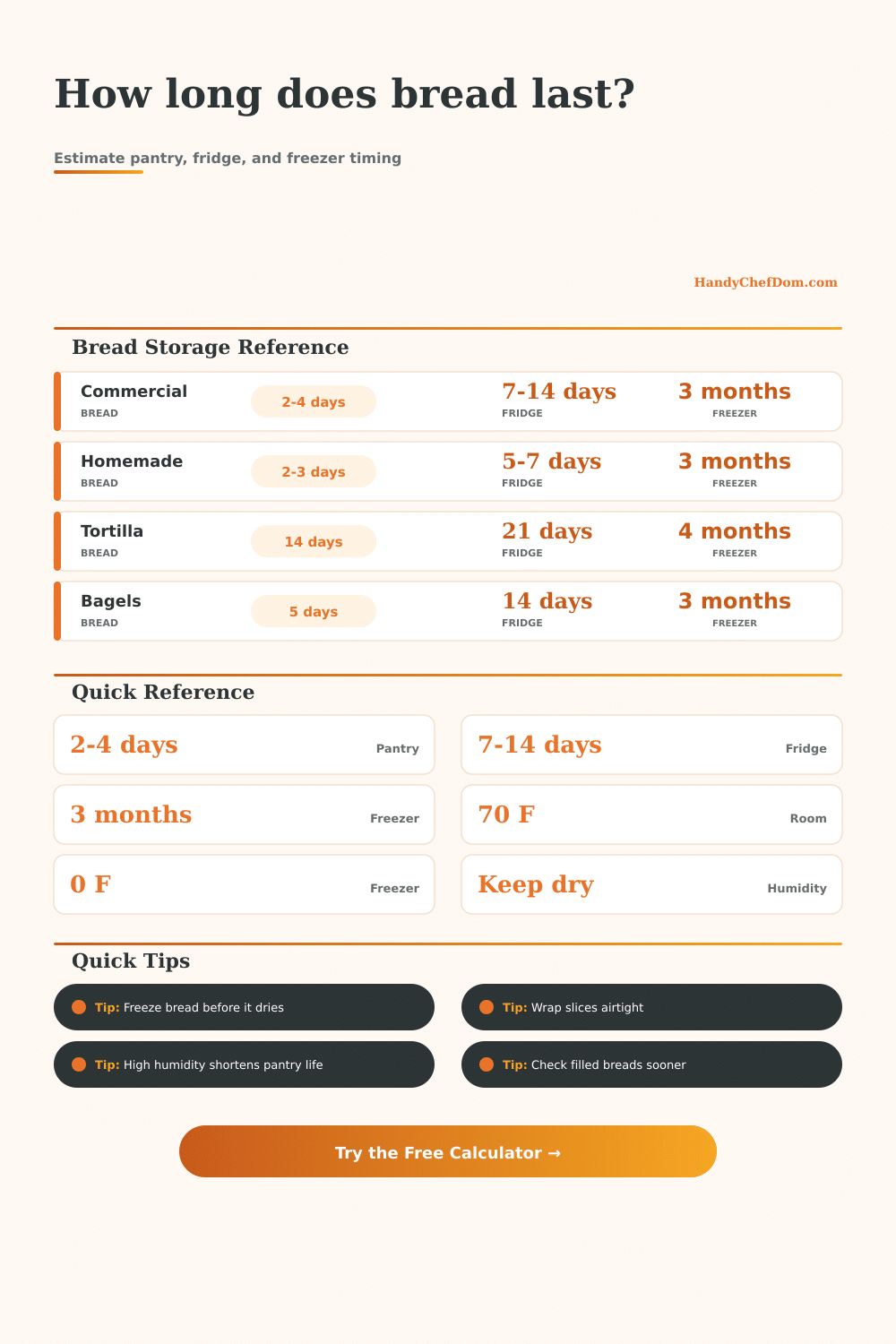
| Bread Type | Pantry | Refrigerator | Freezer Quality | Best Use |
|---|---|---|---|---|
| Commercial sandwich loaf | 2-4 days | 7-14 days | About 3 months | Daily toast and sandwiches |
| Homemade lean loaf | 2-3 days | 5-7 days | About 3 months | Freeze early if unsliced |
| Crusty sourdough or artisan loaf | 2-3 days | 3-5 days | About 3 months | Best at room temperature first |
| Gluten-free loaf | 2-3 days | 5-7 days | About 2 months | Often benefits from refrigeration |
| Flatbread, pita, or tortillas | 10-14 days | 2-3 weeks | 3-4 months | Keep sealed after opening |
| Bagels or rolls | 3-5 days | 7-14 days | About 3 months | Slice before freezing |
| Quick bread or muffins | 3-4 days | 5-7 days | 2-3 months | Cool fully before wrapping |
| Filled bread with dairy, meat, or egg | Not advised | 3-4 days | 1-2 months | Keep cold after cooling |
| Packaging | Pantry Effect | Fridge Effect | Freezer Effect | Notes |
|---|---|---|---|---|
| Original bag closed | Baseline | Baseline | Baseline | Best for store loaves when clipped tightly |
| Airtight box or double wrap | Slightly longer | Slightly longer | Longer quality | Helps reduce drying and freezer burn |
| Paper bag or bread box | Crust friendly | Shorter | Not ideal | Good for crust but poorer mold protection |
| Loose or poorly clipped | Shorter | Shorter | Shorter | Exposed slices dry and stale faster |
| Vacuum sealed for freezer | Not needed | Not needed | Longest quality | Works best once bread is fully cooled |
| Condition | Pantry Change | Fridge Change | Freezer Change | What It Means |
|---|---|---|---|---|
| Dry kitchen under 45% | Stales sooner | Minimal change | No change | Crusts dry quickly but mold pressure is lower |
| Normal kitchen 45-60% | Baseline | Baseline | Baseline | Use the standard estimate |
| Humid kitchen 60-75% | Shorter | Minimal change | No change | Mold risk rises on counter bread |
| Very humid over 75% | Much shorter | Minimal change | No change | Choose refrigeration or freezing sooner |
| Warm counter above 78 F | Shorter | No change | No change | Heat speeds quality loss and moisture migration |
| Freezer Plan | Best Bread | Quality Window | Packaging | Reminder |
|---|---|---|---|---|
| Whole loaf | Sandwich or homemade | About 3 months | Double wrap | Freeze while fresh, not at the end |
| Pre-sliced packs | Bagels, rolls, toast bread | 2-3 months | Airtight portions | Pull only what you need |
| Flatbread stack | Tortillas or pita | 3-4 months | Separate layers | Add paper between pieces if sticking |
| Filled bread | Cheese, meat, or custard | 1-2 months | Tight freezer wrap | Refrigerate promptly before freezing |
Before you get around to eating that sandwich, will its bread have gone stale? Whether it’ll go stale depends on how you store it and what kind of loaf it is. But it’s not always simply a question of time passing. Mold spores are waiting. Starches change there structure. Moisture spreads throughout the loaf.
And what about refrigeration? Surely it’ll save bread? No: for most grains, cold air actualy hastens staling. That is another misconception. But that’s where this handy-dandy tool comes in.
How to Keep Bread Fresh
Enter your type of bread, such as a delicate homemade sourdough or a more durable commercial variety containing preservatives. Also, enter some humidity information. Humidity can be a factor: In humid climates, the risk of leaving bread out on the counter are higher. Moisture promotes spoilage, but dry air steals moisture from the crumb, making it stale long before it get moldy.
Equally important to this equation is packaging. A paper bag will keep the crust crunchy for a day or two, but won’t protect against airborne contaminants or moisture in the air. If bread is sealed properly, it will slow down oxidation and keeps the bread from drying out, dramatically increasing the window of use. These decisions tell the system what kind of freshness I should of expect. How long ago did I bake that bread? Or rather, how well did I seal it off from environment?
Finally, there is refrigeration. Refrigerators gets a bad rap. Sure, cold temperatures inhibit mold growth very well. But they also speed up the starch molecule crystallization process in your bread’s structure. This results in refrigerated bread quickly turning into something that feel hard and dry to eat long before it would of been eaten due to mold. The calculator will help you understand this trade-off in terms of both safety days and quality days affected by where the bread is stored.
Filled breads (containing any sort of meat or dairy) are a whole different story; those ingredient can go south on their own time, regardless of the grain. In such circumstances, there is no debate: cold storage is required. Freezing is arguably the best strategy for extending life when done correctly, as it stops mold from growing and staling nearly entirely. The catch? Freeze the bread when it’s still fresh. Once it starts to stale in the freezer, there’s no turning back. That means locking in its freshest state are key. By entering a freeze date into the tool, you’ll be able to gauge remaining quality. Depending on what kind of package you use, this will also factor in risk of freezer burn. Double-wrapped or vacuum sealed keeps the bread tasting almost like-new for months by protecting against moisture loss and odor absorption.
This understanding changes the way you manage your food; instead of wondering if it’s still OK, or not, you check the environment: was it in a cool place? How much moisture is present? What kind of preservatives were used? Do you know what the expectations are for a three day old commercial sandwich bread kept in a sealed bag versus a seven day old homemade rustic loaf stored in a paper sack? The calculator (above) will do this math for you when you input your particular scenario, no need to guess coefficients and environmental impacts.
All of this said, there’s not really any hard-and-fast rules; if you want to keep bread fresh, it’s simply a matter of managing temperature and moisture. And here’s the thing: The best way to do so is based off your kitchen’s climate; too much humidity, and your bread will get gooey and grow moldy; too little humidity, and it’ll get dry and stale. It’s a delicate dance, and the correct container at the correct moment can be the difference between breakfast-ready toast and landfill waste. It is a small daily decision that prevents that midday dissapointement from ever happening again.