Potato Baking Time Calculator
Estimate baked potato time from potato type, size, count or weight, oven temperature, foil, convection, starting temperature, altitude, and target doneness.
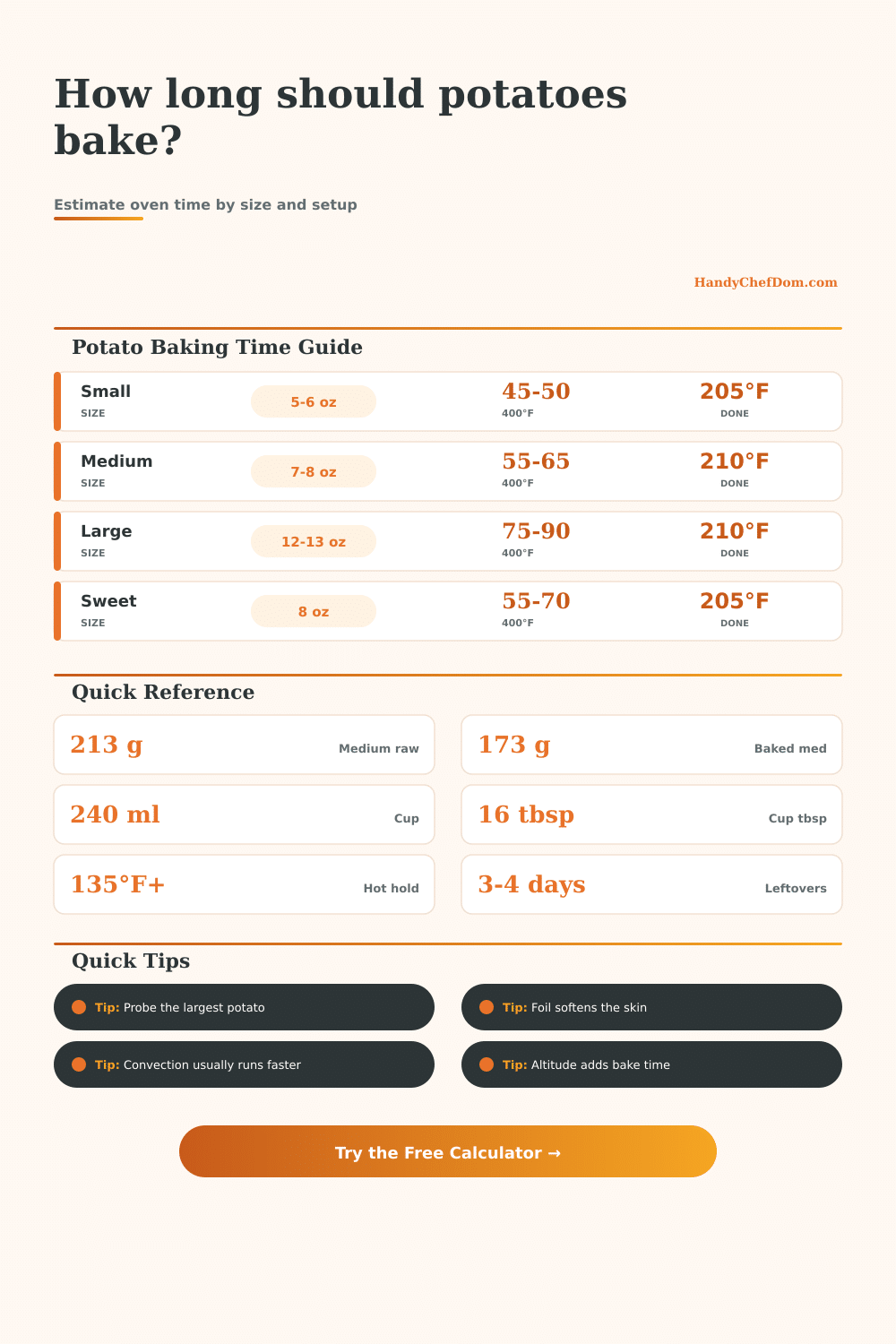
| Potato / Setup | Avg Weight | 325°F | 350°F | 375°F | 400°F | 425°F | Target Center | Best Check |
|---|
| Type | Typical Size | Texture Goal | Time Tendency | Good Doneness Cue |
|---|---|---|---|---|
| Russet baking potato | 7-13 oz / 213-369 g | Fluffy center, crisp skin | Baseline for classic baked potatoes | Skin crisp, center probes 207-210°F |
| White potato | 5-10 oz / 170-284 g | Creamy all-purpose texture | Slightly faster than russet | Fork enters center with little resistance |
| Yukon gold | 5-9 oz / 150-255 g | Buttery, dense flesh | Often 5-10 minutes faster | Center reaches 205-208°F |
| Red potato | 3-8 oz / 85-227 g | Moist, waxy flesh | Small ones bake quickly | Skin tightens and center is tender |
| Sweet potato | 6-12 oz / 170-340 g | Soft, sweet, moist flesh | Similar to russet by weight | Sugars seep and center hits 205°F+ |
| Petite / creamer | 1-3 oz / 28-85 g | Bite-size tenderness | Much faster due to small mass | Usually done before large potatoes |
| Setup | Skin Result | Time Effect | Moisture Effect | Use When |
|---|---|---|---|---|
| Unwrapped, oiled | Crisp and seasoned | Baseline | Dry heat, fluffy interior | Classic baked potato texture |
| Unwrapped, dry | Dry, papery skin | Slightly faster | Less surface insulation | Plain skins or low-oil prep |
| Foil wrapped | Soft skin | Adds about 5-15% | Traps steam around potato | Soft skins, wrapped service only |
| Covered pan | Soft to lightly firm | Adds about 10% | Shared steam in pan | Keeping a batch moist |
| Sheet tray batch | Moderate crispness | Adds about 5% | Pan slows bottom heat slightly | Large family batches |
| Direct oven rack | Crispest all around | Slightly faster | Air reaches all sides | Even browning and dry heat |
| Reference Point | Value | Metric | Why It Matters | Calculator Use |
|---|---|---|---|---|
| Firm baked potato | 200°F | 93°C | Sliceable but cooked through | Firm doneness setting |
| Fluffy baked potato | 205-210°F | 96-99°C | Common probe range for tender centers | Tender and very soft settings |
| Boiling point at sea level | 212°F | 100°C | Potato moisture limits center temperature | Ceiling for doneness estimates |
| Hot holding | 135°F+ | 57°C+ | Food Code hot-holding reference | Useful after baking |
| Danger zone | 40-140°F | 4-60°C | USDA range for rapid bacterial growth | Do not hold cooked potatoes warm too long |
| Leftovers | 3-4 days | fridge | USDA leftover storage window | Storage planning after baking |
| Measure | Tablespoons | Teaspoons | Fluid Ounces | Milliliters |
|---|---|---|---|---|
| 1 tablespoon | 1 tbsp | 3 tsp | 0.5 fl oz | 15 ml |
| 1/4 cup | 4 tbsp | 12 tsp | 2 fl oz | 60 ml |
| 1/3 cup | 5 1/3 tbsp | 16 tsp | 2.7 fl oz | 80 ml |
| 1/2 cup | 8 tbsp | 24 tsp | 4 fl oz | 120 ml |
| 3/4 cup | 12 tbsp | 36 tsp | 6 fl oz | 180 ml |
| 1 cup | 16 tbsp | 48 tsp | 8 fl oz | 240 ml |
Baking potatoes takes longer, but it mostly depends on their size; it is less about baking temperature and more about distance between the potato surface and the inside where steam wants to escape. If you’re cooking for guests, or even just timing side dishes, this thing makes sense: You can’t guess. Memory fails. After plugging in your variables, the tool do all the math.
It asks what kind of potato you’re baking, since that’s not only about appearance but also density. High-starch, low-moisture russets turn dry and fluffy when baked; waxy ones (like reds) is higher in moisture and tend to hold their shape. The tool takes that into account and adjusts to match.
How to Use the Potato Cooking Calculator
Does it matter if you wrap the potatoes in foil? The tool includes an adjustment for that. Metal traps steam, so you are steaming the potato instead of baking it. This results in a denser center and softer skin. Lots of people do this in an effort to speed baking, but usually end up with a potato with boiled texture instead of a crisp exterior. Unwrapped, the potato is able to shed moisture through its skin, intensifying flavor while providing a rough texture.
The most important variable are size. Heat travels slowly inside dense, organic material, so a small potato will cook faster then a large one. A jumbo will take much longer proportionally than a medium-sized tater. The way this relationship changes is built into the calculator.
Altitude: Air density plays a role here, as does its effect on boiling point. If you’re operating at high elevation, your oven might be running hotter than indicated; lower atmospheric pressure makes steam escape more readily from the potato. Bring your potatoes to room temperature first for best results. Removing them directly from the fridge means that your oven has to start by raising their interior temp before beginning to cook. If you have time, simply place your spuds on the counter for an hour or two beforehand, you’ll save yourself about 20 minutes of cook time overall. This is handy if you find yourself with a sudden craving on a hectic weekday night.
Instead of a specific minute, you get a time window. Which factors in both natural potato-to-potato variability and oven calibration. Heat radiates from all sides at once, so a rounder potato will cook through more quickly than an oblong one that’s the same weight. The calculator presumes whole potato. Numbers don’t matter when they’re being baked as halves or wedges (the amount of surface compared to size changes dramatically).
And remember: always check the biggest potato in whatever batch you’re cooking. It’s not about time, but about interior temperature. When the number on the dial hits somewhere around 210 degrees Fahrenheit, the potato’s cell walls has softened sufficiently to allow them to collapse, becoming fluffy, and its starches have fully gelatinized.
In the rush to serve, safety is often forgotten. If potatoes aren’t handled properly, such as foil-wrapped ones left out at room temperature, they can become a breeding ground for bacteria such as *Clostridium botulinum*. That’s why it’s advisable to cool quickly, or unwrap right away.
The reference tables inside the tool are helpful for understanding weight conversions and storage times. Leftover cooked potatoes will last a few days in the fridge, but be careful when reheating them so they get their original texture back. Best bet: Just pop them back into the oven or zap briefly in the microwave.
You should of checked earlier. It’s all physics and patience; getting the heat through the potato’s resistant flesh to its core. These three factors, the potato’s mass, the surrounding temperature, and what’s wrapped around it, will take you past guesswork. You will reach a place where you trust the process, no longer worrying about whether 15 minutes will be enough.
Eventually, your ideal cooking time will coincide with this: When you press on the skin, it gives ever so slightly, exposing the soft center inside. Let the tool do its thing, but don’t lose the feel for instinct. When you enter the room, smelling the warm, starchy scent in the air is often the surest signal. At that point, there’s nothing left to do but wait for the bell. You’ll recieve a perfect potato if you wait.