🫒 Olives Calorie Calculator
Estimate olive calories by count or drained grams, then adjust for size, brine or oil packing, stuffing, servings, and antipasto mix share.
Use count mode for whole olives or gram mode when you have a drained weight from a jar, deli tub, salad bowl, or antipasto mix.
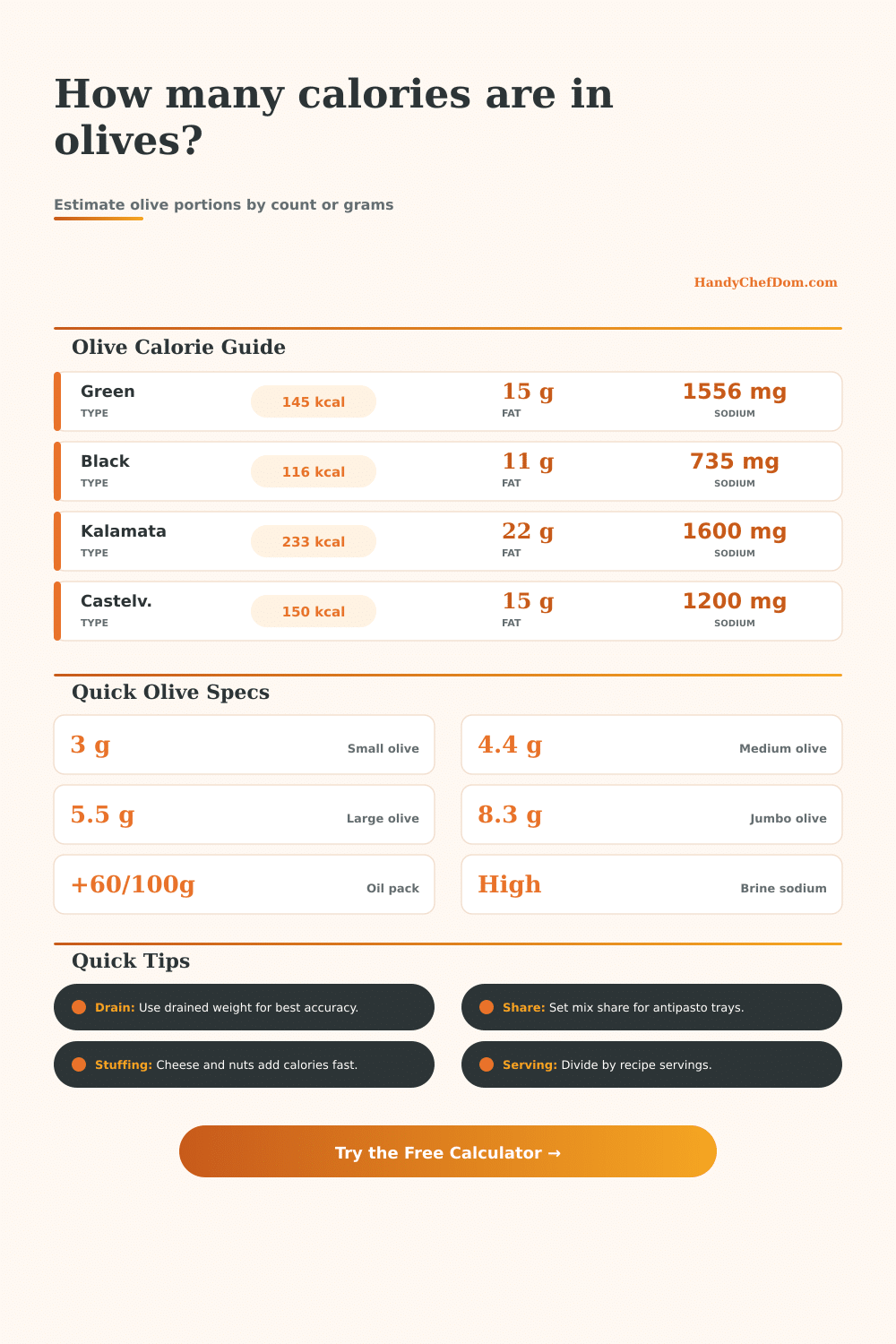
| Olive Type | Calories Per 100 g | Fat Per 100 g | Sodium Per 100 g |
|---|---|---|---|
| Green olives | 145 kcal | 15.3 g | 1556 mg |
| Black olives | 116 kcal | 10.7 g | 735 mg |
| Kalamata olives | 233 kcal | 22.0 g | 1600 mg |
| Castelvetrano olives | 150 kcal | 15.0 g | 1200 mg |
| Stuffed green olives | 160 kcal | 16.0 g | 1650 mg |
| Olive Size | Average Drained Weight | Approx Count Per 100 g | Best Use |
|---|---|---|---|
| Small cocktail olives | 3.0 g each | 33 olives | Martini garnish pair |
| Medium table olives | 4.4 g each | 23 olives | Snacks and salads |
| Large salad olives | 5.5 g each | 18 olives | Greek salad bowl |
| Jumbo stuffed olives | 8.3 g each | 12 olives | Stuffed olive snack |
| Packing Or Stuffing | Calorie Adjustment | Fat Adjustment | Sodium Note |
|---|---|---|---|
| Brine packed, drained | 0 kcal per 100 g | 0 g per 100 g | Full brine sodium estimate |
| Oil packed, drained | +60 kcal per 100 g | +6.7 g per 100 g | Lower sodium, higher fat |
| Brine packed, rinsed | 0 kcal per 100 g | 0 g per 100 g | About 25% less sodium |
| Pimento or jalapeno | +1 kcal per olive | Trace fat | Small sodium add-on |
| Almond or cheese | +5 to +7 kcal each | More fat per olive | Cheese adds more sodium |
| Serving Scenario | Typical Olive Amount | Serving Split | Calculator Setting |
|---|---|---|---|
| Martini Garnish Pair | 2 small olives | 1 drink | Count mode, 100% share |
| Greek Salad Bowl | 80 g large olives | 4 servings | Gram mode, salad context |
| Tapas Plate | 120 g mixed olives | 3 servings | Gram mode, tapas context |
| Antipasto Tray | 900 g tray at 35% | 12 servings | Gram mode, mix share |
| Pizza Topping | 45 g sliced olives | 8 slices | Gram mode, topping context |
Count modeGram modeStuffing add-onsSodium estimateValues are practical estimates for planning portions, labels, and recipe nutrition math.
The calories in olives may be misleading. The olive itself isn’t the variable; its the packing medium. Depending on whether you use olives packed in brine or in oil, you get a very different nutritional profiles.
Brine-pickled olives has a moderate calorie count and sodium level (as listed) while oil-pickled olives have higher calories (because now you’re eating the fat that coats fruit). To account for this extra calorie-heavy coating, the calculator subtract any oil drained from a serving. That little detail make all the difference in the total energy of that serving.
How to Count Olive Calories Correctly
You can brine your olives. You’ll cut down on the sodium, but won’t add any fat, so the calculator will let you adjust accordingly (since you’re swapping salt for fresh it will update numbers to match). It also depends on what’s in the stuffing. You can count up a simple green olive without issue. One pimento isn’t going to throw off too many calories. But one with a slice of blue cheese or an almond is bringing different types of macronutrients into equation. Because a cheese stuffing is chock full of protein and fat, while a jalapeno stuffing is primarily fiber and water, it breaks it down by food type.
People tend to overestimate how much a single olive contain and under-estimate the impact of its contents. That is another mistake that matters.
Portion control is also influenced by size. How easily do you pop small cocktail olives into your mouth? Without even noticing it, you could be down a dozen. Six big olives on a salad feels more like one whole serving. With this tool, you get to choose the size and then guess at how much that weighs. If you’re counting 10 tiny garnish olives, thats one thing; but 10 jumbo stuffed olives is another. That makes numbers more concrete by converting grams into an actual count of items.
That gets more complicated if you’re building a mixed plate (e.g., antipasto tray). That’s why there’s a share percentage input on the calculator. So if it’s 30 percent olives in a tray, don’t count the nutrition for the whole thing. Isolate just the olives and that will give you an accurate sense of what that particular ingredient are doing. This keeps your nutrient tracking honest and doesn’t lead to double counting.
The trick to meal prep is consistency. If you know that one cup of something is X calories, then you’re able to scale up any recipe correctly. Toss some olives into a Greek salad? Top a pizza with them? Either way, it’s about getting all of the flavor while avoiding the hidden caloric excess.
There are plenty of different kinds of olives. Here are the reference tables for the most common types (from Kalamatas to green olives). With those numbers as a starting point, you’ll be able to calculate if switching things up will make much of a difference to your day.
An olive is a condiment that, if you eat too many, becomes an entire meal. It is full of rich flavor and healthful fats, but easily overdone. Let the calculator do the math. Set your variables. Eliminate the guesswork in recording them. Replace vague estimates with concrete information. Enjoy the flavor. There will be no surprises. Measure it out. Read the label. Measure the drain. The jar will give you the details, as long as you’re looking for them.