🦃 Poultry Seasoning per Stuffing Calculator
Estimate dried poultry seasoning or fresh herb equivalent for stuffing from bread cube cups or weight, stuffing style, herb form, servings, moisture, add-ins, saltiness, herb intensity, method, and batch multiplier.
Measure the bread cubes by cups or weight, then choose the stuffing style and herb format. The calculator sizes a dried poultry seasoning equivalent and converts it to fresh sage, thyme, rosemary, parsley, and marjoram style herbs.
| Bread Cube Amount | Dried Poultry Seasoning | Fresh Herb Equivalent | Typical Servings |
|---|---|---|---|
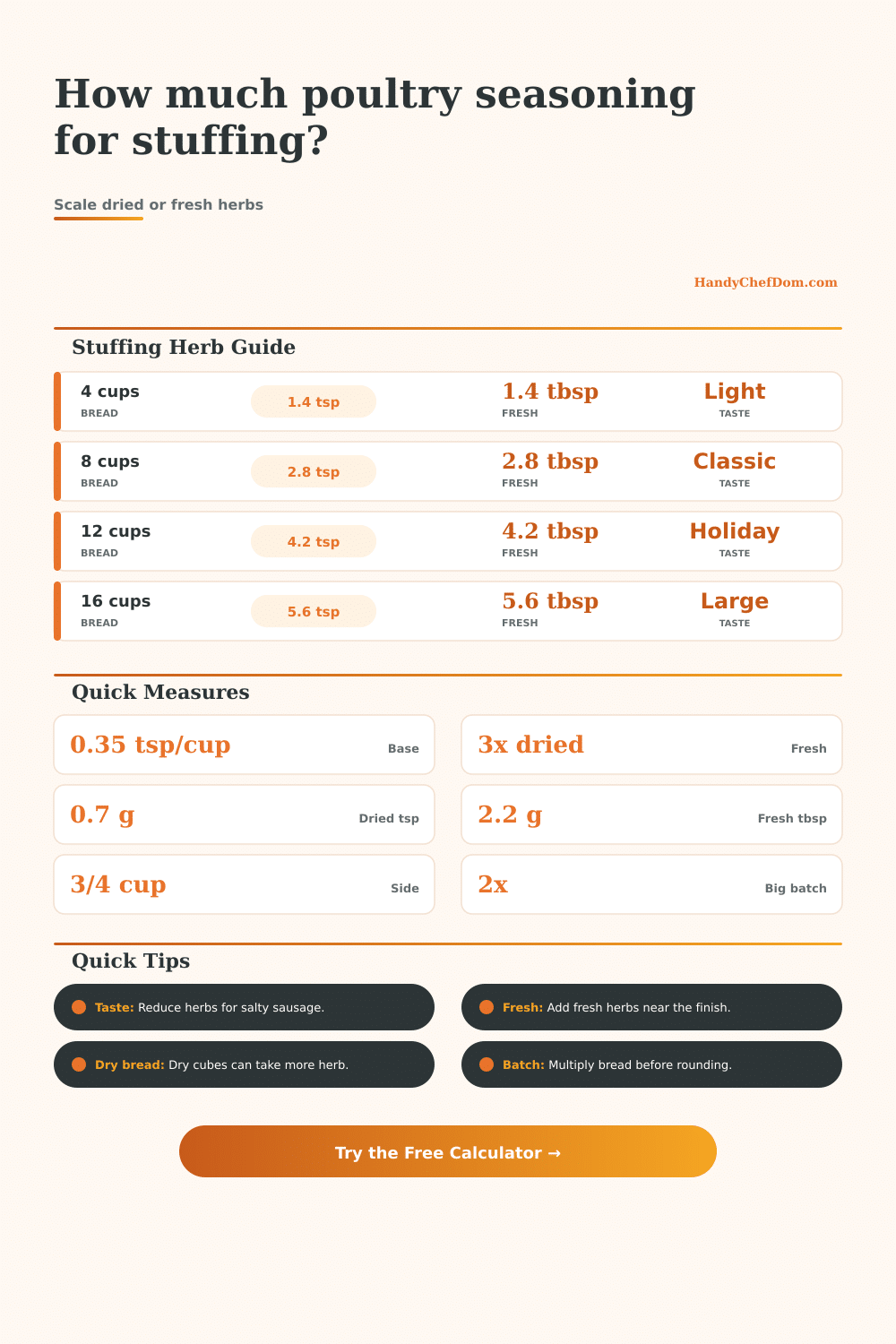
| 4 cups bread cubes | About 1.4 tsp | About 1.4 tbsp | 4 to 5 side servings |
| 8 cups bread cubes | About 2.8 tsp | About 2.8 tbsp | 8 to 10 side servings |
| 10 cups bread cubes | About 3.5 tsp | About 3.5 tbsp | 10 to 12 side servings |
| 12 cups bread cubes | About 4.2 tsp | About 4.2 tbsp | 12 to 16 side servings |
| 16 cups bread cubes | About 5.6 tsp | About 5.6 tbsp | 16 to 22 side servings |
| 24 cups bread cubes | About 8.4 tsp | About 8.4 tbsp | 24 to 32 side servings |
| Stuffing Style | Herb Factor | Approx Bread Weight | Calculator Note |
|---|---|---|---|
| Classic white bread stuffing | 1.00x | About 1.2 oz per cup | Default for balanced sage, thyme, rosemary, and marjoram flavor. |
| Cornbread dressing | 1.12x | About 1.35 oz per cup | Sweeter bread usually carries a slightly stronger herb level. |
| Sourdough stuffing | 1.05x | About 1.25 oz per cup | Tangy bread supports a clear poultry seasoning profile. |
| Sausage bread stuffing | 0.92x | About 1.2 oz per cup | Use a lighter hand when the sausage is already seasoned. |
| Vegetable-heavy stuffing | 1.10x | About 1.15 oz per cup | Extra onion, celery, and mushrooms spread the herb flavor wider. |
| Bread and rice blend | 0.88x | Varies by blend | Rice softens the bread-cube basis, so the calculator lowers the rate. |
| Herb Form | Kitchen Conversion | Approx Weight | Best Use |
|---|---|---|---|
| Dried poultry seasoning blend | 1 tsp dried blend | About 0.7 g | Fastest way to season the whole bread batch evenly. |
| Fresh chopped sage and thyme blend | 1 tbsp fresh per 1 tsp dried | About 2.2 g per tbsp | Bright aroma and visible herbs in the finished stuffing. |
| Half dried, half fresh | Half tsp dried plus half tbsp fresh | Mixed weights | Good base flavor with a fresher finish. |
| Custom dried herb blend | Use the dried equivalent | About 0.6 to 0.9 g per tsp | Works when blending sage, thyme, marjoram, rosemary, and pepper. |
| Fresh parsley-heavy blend | Use 3.5x fresh volume | Milder per spoon | Needs more volume because parsley is gentler than sage. |
| Batch Scenario | Bread Basis | Herb Intensity | Seasoning Planning Cue |
|---|---|---|---|
| Small weeknight pan | 6 cups bread cubes | Gentle to balanced | Round to the nearest quarter teaspoon. |
| Family holiday dish | 10 to 12 cups bread cubes | Balanced | Use dried blend for the base and optional fresh finish herbs. |
| Potluck tray | 18 to 24 cups bread cubes | Balanced to bold | Calculate the full batch, then split herbs evenly across mixing bowls. |
| Sausage stuffing | 8 to 16 cups bread cubes | Gentle to balanced | Reduce the herb level when sausage and broth are strongly seasoned. |
| Make-ahead batch | 12 to 24 cups bread cubes | Bold | Use a small boost because storage can mute herb aroma. |
Herbs make all the difference, as does the bread.
There you are, about to feed your guests and roast the turkey, and what happens? Your stuffing ingredients seems unsure of themselves; those bread cube are looking pretty stale. Yes, yes, I know: you’ll add some egg and some broth and everything will be fine. Wrong.
How Much Herb to Use in Stuffing
The problem isn’t with the eggs, and it’s certainly not the broth. The problem is the herbs. That strong mix of rosemary, thyme, sage, marjoram, and pepper called poultry seasoning make the world go round.
Just a little goes a long way. Too much turns the side dish medicinal, and diners will push it across the plate before picking at it. Get this part wrong and you’re going to go home feeling punished for having cooked at all.
So we’re most likely left to our own devices, sprinkling the herbs in that way that just sort of seems like enough. When pressed, however, this approach usually do not work. How much is “about a third” anyway?
Here’s the system: About a third of a teaspoon of any dried herb blend (that’s the base) per cup of bread. Sounds small, but again, it’s set to suit dry, porous day-old bread cubes.
For fresh soft bread, moisture will alter the spread of the herbs. If it is too wet, the cubes do not cling as well and the herbs tend to pool in spots, which creates an uneven or even messy effect. To account for this moisture change, tool does some behind-the-scenes tweaking, often finding that soggy middles mask otherwise under-seasoned bread, while the crusts are overdosed.
The herb requirement is affected by add-ins, too. And as usual, intuition goes out window. For example, a sausage-laden batch may tempt you to double up on herbs to balance the meaty flavor. Wrong again.
First off, quality sausage has been heavily seasoned with pepper, fennel, or sage. Adding another full load of poultry seasoning makes for one-note, muddy results that overpower the bread. The calculator decrease the herb load for sausage-heavy batches so the meat can be the main focus.
On the flipside, when there’s lots of vegetables like mushroom, onions, and celery in your mix, their mild savory profile benefit from a little herb boost to fill-in-the-gaps between veggies and the bread.
Adding fresh herbs complicates things: Unlike dried blends, which are concentrated and will blend easily once tossed with bread crumbs and then moistened, fresh ones is volatile; their oils dissipate as the bake progresses.
And there’s the issue of proportions: A typical three-to-one mix, that is, a tablespoon of chopped fresh herbs for every teaspoon of dry (was the default setting on the tool). But it depends on timing. Adding all your fresh sage early will have only half its flavor left by the time your dish emerge from the oven.
Splitting the total amount of fresh herbs between the two stages makes sense here: Combine half with the rest of the ingredients right off the bat (tossing the chopped herbs with the bread cubes and broth), and reserve the remainder to fold into the mix just before serving. That way you’ll have retained the fresh, bright aroma that gives the stuffing that festive feeling (not merely warm and savory).
The last trap is scale. You’re not just doubling up when you double a recipe for a potluck; you are also being sure that whatever you put in the pot will be evenly distributed. Herbs spread out nicely in a small casserole dish. They can clump together in a huge roasting pan.
There’s a reference table on the page to explain how much herb you need for each amount of bread. Practically speaking, don’t plop everything on top of the pile if you’re doubling or tripling a batch. As you construct your mixture, sprinkle in layers so the person who eats off the end gets an equally intense hit as the person who eats off the middle.
The bottom line: Stuffing is a vehicle for flavor, not the flavor. The point is to complement the bird, not overpower it. Whether your fillings hail from your garden harvest, or come in a convenient packet of dried ingredients, the idea is a harmonious counterpoint of something that complements the bready, brothy richness.
Use the measured quantity as a starting place; sample the mix (without cooking) first and tinker around after that. As always, your mouth is your best guide. Math will get you out of troubles way.
Then, when you carve up the bird and put out the other dishes, all eyes can be on the feast and not the spice.
Actually I should of mentioned it sooner. The spices might dissapear if you use too much moddern equipment. You should of checked the freshness.