🍫 Caffeine in Cocoa Powder Calculator
Estimate cocoa powder caffeine and theobromine by grams, tablespoons, servings, cocoa type, recipe strength, and serving flag.
This calculator gives an estimate, not medical advice. Cocoa caffeine and theobromine vary by bean, fat level, alkalizing, brand, and recipe dilution. If your cocoa amount already represents the full recipe, leave chocolate strength at Standard.
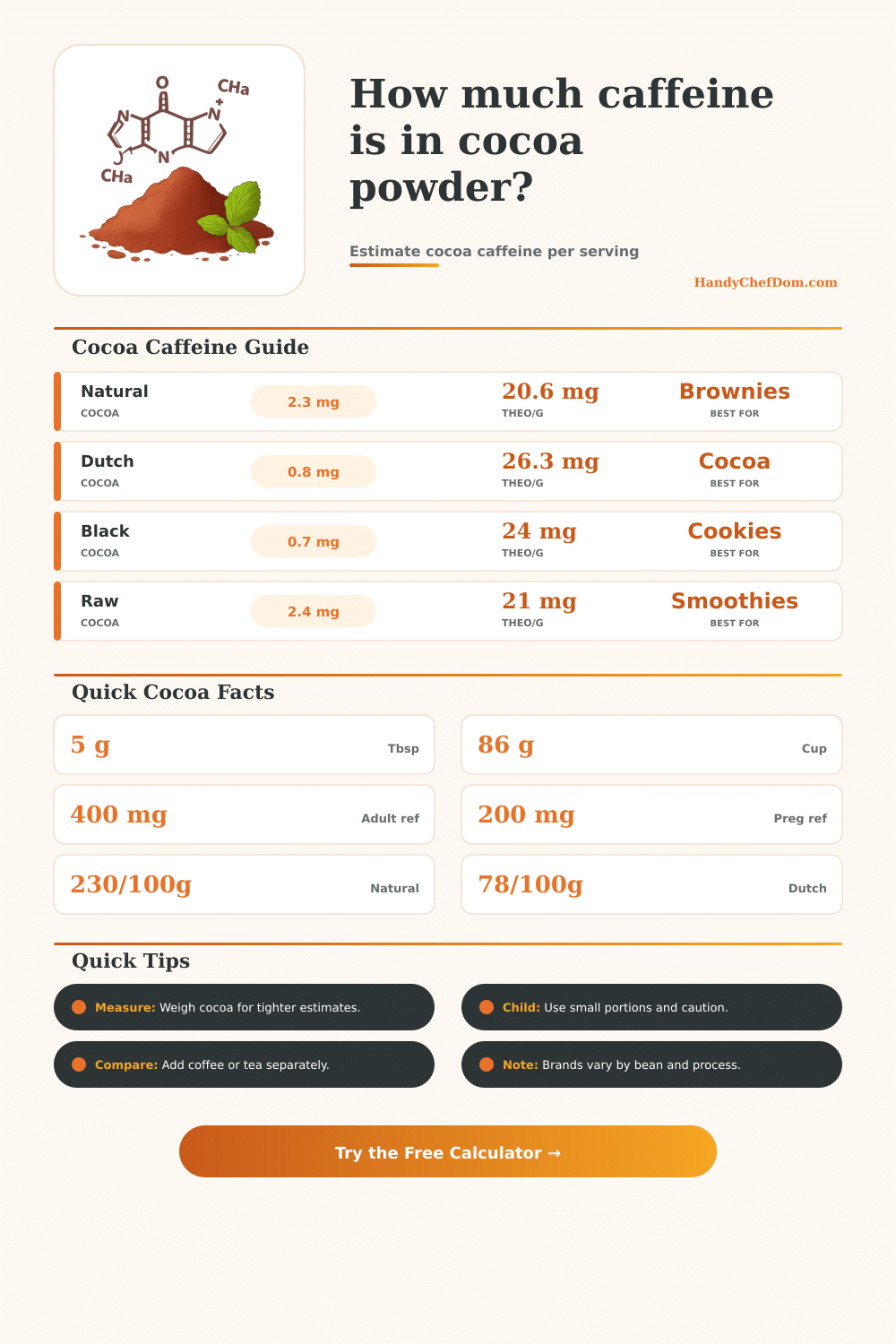
| Cocoa powder type | Caffeine per 100 g | Theobromine per 100 g | Calculator use |
|---|---|---|---|
| Natural unsweetened cocoa | 230 mg | 2060 mg | Classic brownies, cakes, sauces |
| Dutch-process unsweetened cocoa | 78 mg | 2630 mg | Hot cocoa, dark batters, smoother flavor |
| High-fat Dutch breakfast cocoa | 72 mg | 2440 mg | Rich cocoa drinks and desserts |
| Black cocoa style estimate | 65 mg | 2400 mg | Very dark cookies and crumb coatings |
| Raw cacao powder style estimate | 240 mg | 2100 mg | Smoothies, oats, no-bake mixtures |
| Dark baking blend estimate | 180 mg | 2200 mg | Blended cocoa powders or robust cocoa labels |
| Kitchen measure | Estimated cocoa weight | Natural cocoa caffeine | Dutch cocoa caffeine |
|---|---|---|---|
| 1 teaspoon | 1.7 g | 4 mg | 1 mg |
| 1 tablespoon | 5 g | 12 mg | 4 mg |
| 2 tablespoons | 10 g | 23 mg | 8 mg |
| 1/4 cup | 21.5 g | 49 mg | 17 mg |
| 1/2 cup | 43 g | 99 mg | 34 mg |
| 1 cup | 86 g | 198 mg | 67 mg |
| Daily comparison | Reference used | What it means here | Cautious wording |
|---|---|---|---|
| Healthy adult | 400 mg/day | FDA-cited comparison for most adults | Sensitivity varies widely |
| Pregnancy or nursing | 200 mg/day | Conservative comparison option | Ask a clinician for personal guidance |
| Caffeine-sensitive adult | 100 mg/day | Helpful planning screen | Use your own tolerance first |
| Teen serving | No universal FDA level | Use a cautious custom reference | Keep total caffeine modest |
| Child serving | No universal FDA level | Calculator flags caution instead of safety | Discuss regular caffeine with a pediatrician |
| Recipe example | Cocoa powder | Servings | Natural cocoa caffeine per serving |
|---|---|---|---|
| Single hot cocoa cup | 10 g | 1 | 23 mg |
| Light cake dusting | 5 g | 12 | 1 mg |
| Brownie pan | 40 g | 12 | 8 mg |
| Dark cookie batch | 30 g | 18 | 4 mg |
| Mocha oat bake | 18 g | 6 | 7 mg |
| Ganache cocoa boost | 15 g | 8 | 4 mg |
Reference basis: USDA FoodData Central SR Legacy values for cocoa powder and chocolate, plus the FDA-cited 400 mg/day caffeine comparison for most adults. Values are rounded for kitchen use.
Cocoa powder contain caffeine and the stimulant theobromine. While many may believes that cocoa powder does not contain a great deal of caffeine, the amount of caffeine that is actualy contained in cocoa powder may change depending upon the type of cocoa beans that is used in the cocoa powders production. Therefore, to determine the exact amount of caffeine that you’ll consume with the cocoa powder, these possible change in caffeine levels must be accounted for.
The caffeine calculator allow for the estimation of the amount of caffeine that will be consumed with cocoa powder by utilizing the details about the cocoa powder that will be consumed. The type of cocoa powder that will be used can contain varying amounts of caffeine. For example, natural cocoa powder tend to contain more caffeine than Dutch process cocoa powder because natural cocoa powder is not treated with alkali prior to processing.
How to Calculate Caffeine in Cocoa Powder
Dutch-process cocoa powder contain the alkalization process that remove some of the caffeine from the cocoa powder. Despite the reduction in caffeine levels, however, theobromine levels in Dutch-process cocoa powder can remain the same or may even be increased as a result of the alkalization process. Therefore, consumers must select the type of cocoa powder that they will use in the cocoa powder product in the caffeine calculator to ensure that the measurement are accurate.
The portion size of the product that is consumed can change the amount of caffeine that is consumed. For example, an individual may prepare a recipe that contains a large amount of cocoa powder, but only consume a small portion of the prepared recipe. Therefore, the size of the recipe and the number of serving that will be prepared can be selected in the caffeine calculator to help to determine the amount of caffeine that will be contained within each serving of the recipe.
The recipes for products that use cocoa powder may vary in the amount of cocoa powder that is used in the recipe. For instance, brownie recipe may contain more cocoa powder than cake recipes. To account for this variation in cocoa powder within recipes, the caffeine calculator allows for the adjustment of the strength of the recipe that is being prepared.
Additionally, different age group and individuals have different daily limit for the amount of caffeine that should be consumed. Therefore, the calculator also allows for the selection of an individual reference category to help to indicate the amount of caffeine that that individual should consume daily. Because cocoa powder is a variable ingredient in recipes, the amount of caffeine that is contained within cocoa powder can fluctuate.
For instance, the origin of the cocoa bean that is to be used as an ingredient in a recipe, and the fat content of the cocoa powder product, may lead to changes in the caffeine content of the cocoa powder by as much as ten or fifteen percent. Furthermore, the brand of cocoa powder that is used can be stronger or weaker in relation to other brands of cocoa powder. The caffeine calculator incorporate a field for the “brand variation factor” that allows the individual to adjust the estimated caffeine content of the cocoa powder up or down to reflect the strength of the brand of cocoa powder that is to be used.
The caffeine calculator displays a range of possible amounts of caffeine rather than a single number for the amount of caffeine that will be consumed due to the variable nature of the ingredient cocoa powder. Another stimulant that is present in cocoa powder is theobromine, which is often found in higher amounts than caffeine. Individuals may feel the effect of theobromine even with low amount of caffeine that are contained in cocoa powder products.
Therefore, the caffeine calculator also displays the amount of theobromine in the cocoa powder as well as the amount of caffeine to allow individuals to become familiar with the amount of each of these ingredient of cocoa powder. Cocoa powder can be prepared in a variety of recipe, such as cakes or cocoa beverages. Furthermore, teaspoons of cocoa powder may contain a different amount of caffeine then a tablespoon of cocoa powder.
Therefore, by using the caffeine calculator prior to consuming cocoa powder or products that contain cocoa powder, individuals can remove the uncertainty of the exact amount of caffeine that that individual will consume. Furthermore, if the type of cocoa powder that is used change, the caffeine calculator will reflect the change in caffeine to help those individuals understand the caffeine content of their products. Finally, the caffeine calculator can help individuals understand the total amount of caffeine that they consume from all source in their body during a given day.