🍚 Rice in Water Soaking Time Calculator
Estimate rice soaking time, water volume, container size, absorbed weight, cooked yield, and readiness from variety, amount, water temperature, grain age, rinse level, target texture, altitude, and cooking method.
This calculator estimates a practical soak window before cooking. Rinse, soak, drain, then use the listed water ratio as your measured cooking water target.
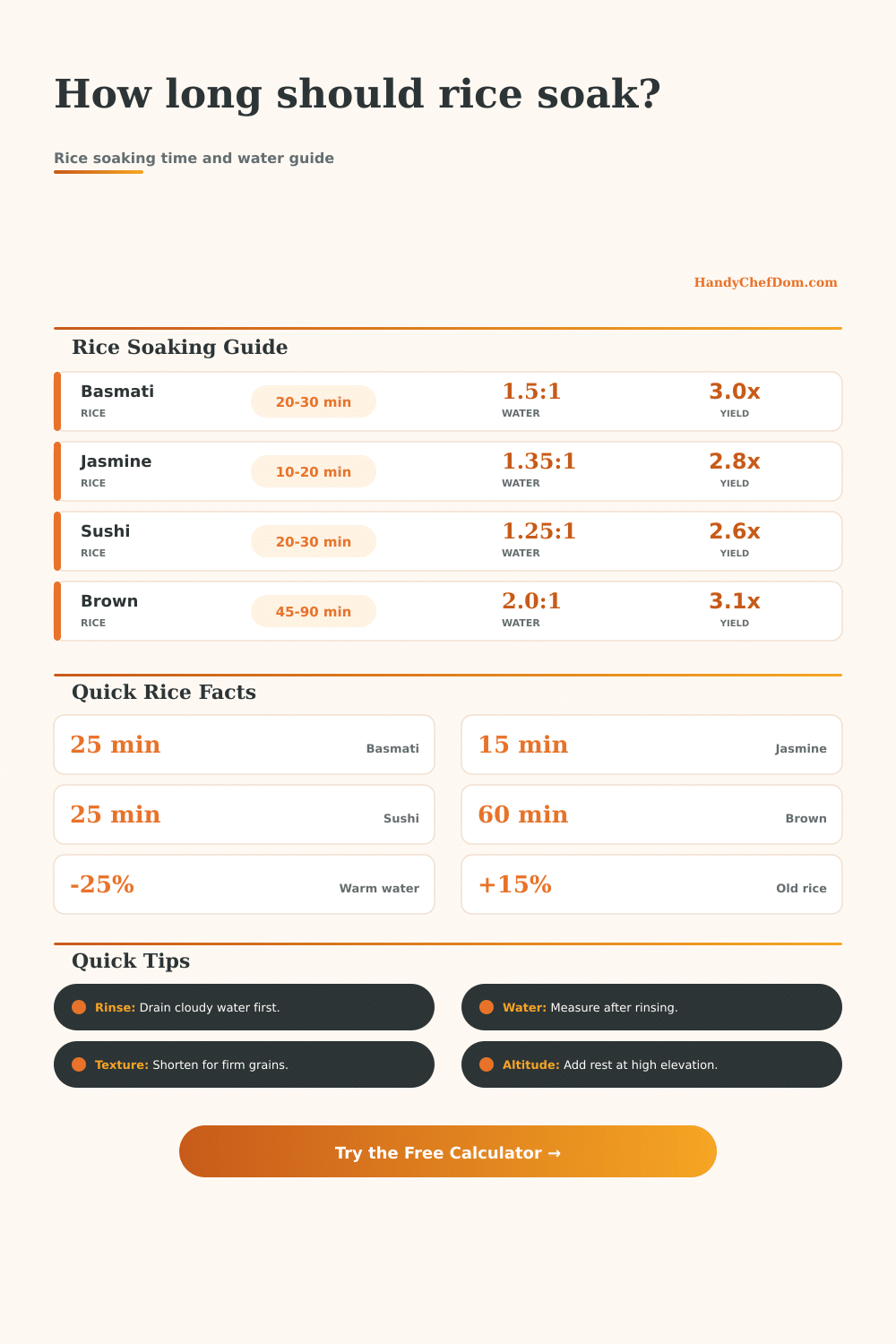
| Rice variety | Typical soak | Default water ratio | Best texture target |
|---|---|---|---|
| Basmati | 20 to 30 minutes | 1.5:1 | Fluffy, long, separate grains |
| Jasmine | 10 to 20 minutes | 1.35:1 | Tender with light clinging |
| Sushi or short grain | 20 to 30 minutes | 1.25:1 | Moist, cohesive grains |
| Brown rice | 45 to 90 minutes | 2.0:1 | Tender bran with chewy center |
| Wild rice blend | 60 to 120 minutes | 2.5:1 | Firm grains with split wild rice |
| Sticky rice | 4 to 8 hours | Drain and steam | Sticky, chewy, clinging grains |
| Setup | Ratio cue | Rinse effect | Use when |
|---|---|---|---|
| Firm separate grains | Lower ratio | Thorough rinse | Pilaf, bowls, fried rice prep |
| Fluffy table rice | Default ratio | Mostly clear rinse | Everyday covered pot or cooker |
| Soft moist rice | Higher ratio | Light rinse | Soft sides and saucier plates |
| Sticky texture | Lower water after soak | Thorough rinse | Sushi rice or glutinous rice |
| Method | Soak tendency | Water note | Container note |
|---|---|---|---|
| Covered stovetop pot | Standard timing | Use measured ratio after draining | Pot should leave expansion room |
| Rice cooker | Slightly forgiving | Use cup marks only if rice is level | Inner pot works as soak bowl |
| Pressure cooker | Shorter soak | Reduce water for soaked white rice | Drain thoroughly before sealing |
| Steamer basket | Longer soak | Rice is drained before steaming | Use bowl and strainer insert |
| Covered oven absorption | Standard timing | Use hot water for even start | Shallow dish spreads grains evenly |
| Condition | Soak change | Water change | Why it matters |
|---|---|---|---|
| Fresh crop rice | Reduce 10% | Use slightly less | Newer grains hydrate faster |
| Aged long grain | Add 15% | Use default or more | Drier grains need extra hydration |
| 3,000 to 6,000 ft | Add 8% | Add a small splash | Water boils lower at altitude |
| Above 6,000 ft | Add 14% | Add rest time | Firm centers take longer to tenderize |
When cooking rice, it’s easy to default to thinking about ratio of water to grain.
What goes on before you turn on the heat make all the difference in how cooked each grain will be. That forgotten moment of soaking? That’s when chemistry kicks in. By soaking it, your breaking down the outer layer of starch, making it easier for the grain to cook uniformly from within. No more gummy mush! Instead of having some grains undercooked and others just right, they all ends up with the same texture.
The Secret to Perfect Rice
Once you know your type of rice, and the condition of your pantry (that’s where the conversion and coefficient magic happen), let calculator do the math for you. Enter one value and get a timeline. Take the guessing out of converting and coefficients, and turn vague intuition into exact timing.
The starting plan depends on type of rice. Long-grain varieties, like basmati or jasmine, is aromatic, and they respond well to moderate soaking (which helps to loosen up their strands). Sticky rice (the kind used in sushi) require hydrating so it has that sticky thing going on.
And then there’s brown rice. Why? Because its bran layer form a protective barrier. The shell impedes water penetration, big-time. To get through the grain take a lot longer. Forget about that and your brown rice will have a tough exterior and an undercooked center, regardless of simmering duration.
The device includes these structures in the mix. It widens, or narrows, the window, eliminating need to remember specific times for each package.
How quickly does it hydrate? Surprisingly, temperature is key. The warmer the water, the quicker the moisture will pass through surface tension and into the grain. If you’re running late for a dinner party, warm water speeds up the process. But you can’t rush things.
Rice that’s been stored in your pantry for months or even years has lost most of its naturaly occurring moisture. Because those dried-out kernels is more brittle and harder, they’ll take longer to fully soak before cooking. On the other hand, fresh crop rice are softer and pliable. Less preparation time is needed because it’s ready to go.
Knowing this will help avoid the frequent mistake of thinking all white rice is created equaler than others.
Altitude makes a difference, especially at any elevation above three thousand feet. At high altitude water boil at a lower temperature. Simmering becomes less aggressive. The grain has to rely on the soak to do all that much more work to get tender enough to complete its cooking quickly. The calculator takes into account change in atmospheric pressure and adds minutes accordingly.
It factors in the cooking technique as well. A steamer basket or even a traditional covered pot trap moisture efficiently. A pressure cooker seals in steam efficiently, requiring less residual moisture in grain than a traditional covered pot or a steamer basket. Each one of these techniques calls for a little different place to start with the hydration.
The last variable connecting everything is rinsing. Rinsing your rice, until water runs clear (removes excess surface starch). Without that, you’d have a glue-like mass of rice instead of whatever dish you intended to make.
Except when you do that rinse, that rinse water goes somewhere. It drains off, or it evaporates. So what’s left? The rice in the pot is lighter because it is now drier. Measure your cooking water after you’ve drained and soaked. Not before. That little sequence mistake is why so many recipe go wrong.
The grain texture tables on page spell it out in no uncertain terms. Use less water and a shorter soak time for firm grains used for pilaf. Use more water and a longer soak for soft, sticky dessert rice.
Rice isn’t a lucky meal; it’s a controlled one. It requires heat, moisture, and time. Baseline comes from the calculator. Final inspection? That comes from your senses. Is there a tiny sheen to the grains? Are they firm to the touch with no chalkiness in the center? Soak the rice until it feels plump and firm, not soft and broken. It is a little thing but it is important.
How it soaks is how it will cook. So start soaking correctly and all else flows fairly smoothly after. What result is rice that holds its shape yet is tender and distinct. Have patience in the beginning to get a reward at the table.