Baked Potato Potassium Calculator
Estimate potassium in baked potatoes by potato type, size, count, weight, skin eaten percent, baked yield, serving count, toppings, daily value percent, and meal scaling.
1Baked Potato Potassium Presets
2Potato Size, Skin, Yield, Topping, and Serving Inputs
Use count mode for whole potatoes, raw-weight mode before baking, or baked-weight mode for leftovers. Skin percent matters because a fully eaten baked skin can raise the potassium estimate noticeably.
Baked potato potassium estimate
Choose a preset or enter your own baked potato details.
3Live Baked Potato Potassium Snapshot
4Baked Potato Size, Skin, and Potassium Grid
| Baked potato size | Cooked weight | With skin eaten | Flesh only estimate | Use case |
|---|---|---|---|---|
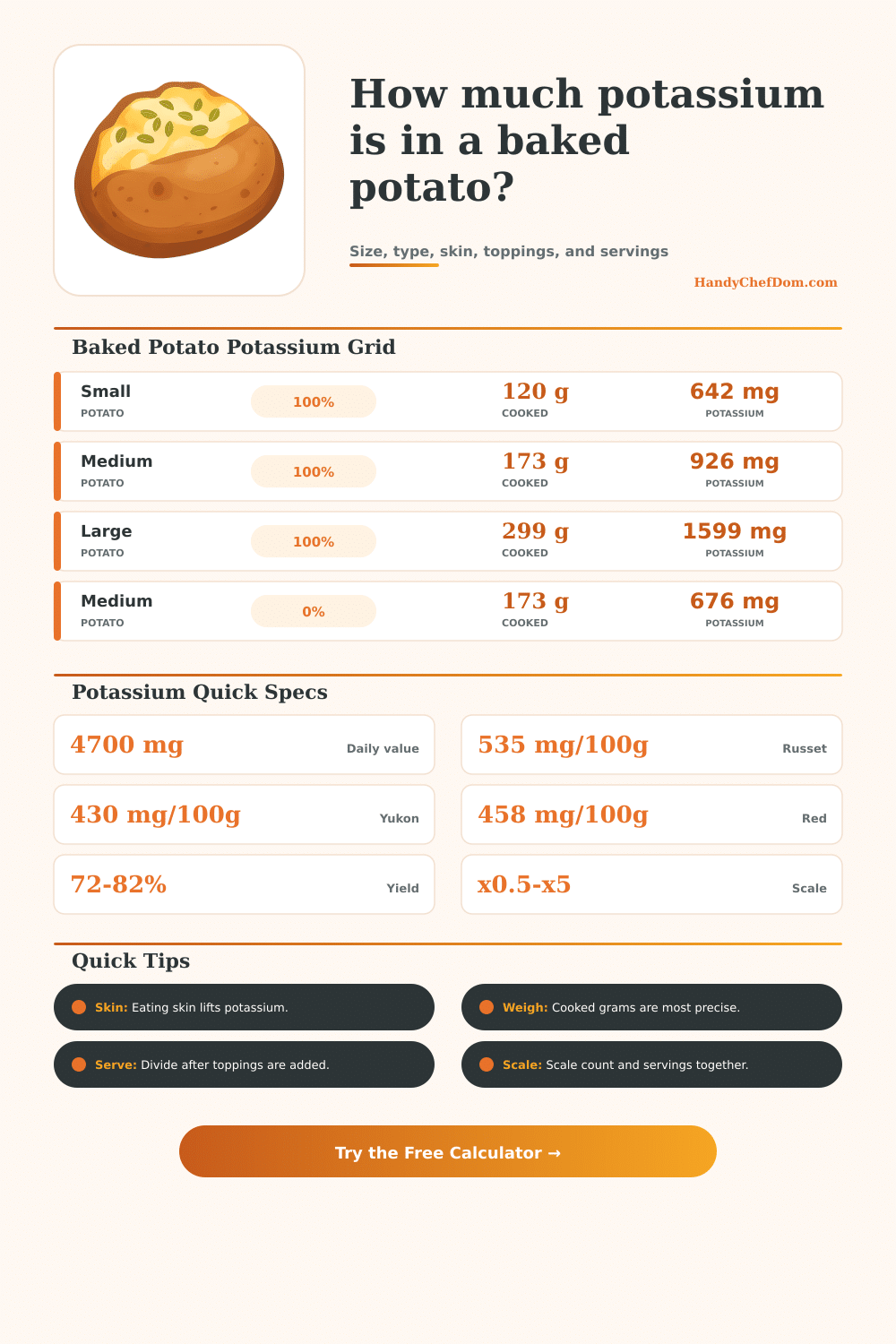
| Small russet baked potato | 120 g cooked | About 642 mg potassium | About 469 mg potassium | Light side plate or split potato. |
| Medium russet baked potato | 173 g cooked | About 926 mg potassium | About 676 mg potassium | Standard dinner potato. |
| Large home-baked russet | 220 g cooked | About 1177 mg potassium | About 860 mg potassium | Hearty single-serving meal base. |
| Extra-large steakhouse russet | 299 g cooked | About 1599 mg potassium | About 1169 mg potassium | Often shared or topped as a meal. |
| Baby baked potato | 35 g cooked | About 187 mg potassium | About 137 mg potassium | Party trays and small sides. |
5Russet, Red, Yukon, and Mixed Potato Reference
| Baked potato type | With skin per 100 g | Flesh only per 100 g | Typical baked yield | Calculator note |
|---|---|---|---|---|
| Russet baked potato | 535 mg | 391 mg | 76% to 80% | Classic baked potato and highest default result. |
| Red baked potato | 458 mg | 379 mg | 78% to 82% | Good for smaller whole potatoes and trays. |
| Yukon gold baked potato | 430 mg | 360 mg | 77% to 82% | Creamy texture with a slightly lower estimate. |
| White baked potato | 470 mg | 380 mg | 76% to 81% | Balanced option for general baked potatoes. |
| Purple baked potato | 407 mg | 340 mg | 76% to 82% | Use when purple potatoes are baked whole. |
| Fingerling baked potatoes | 445 mg | 365 mg | 78% to 84% | Best entered by baked weight or count of small pieces. |
6Baked Potato Topping Potassium Table
| Topping pattern | Calculator portion | Potassium per portion | How it affects the result |
|---|---|---|---|
| No topping potassium | One empty topping slot | 0 mg | Shows potato-only potassium. |
| Butter pat | One tablespoon | 3 mg | Minimal potassium change. |
| Sour cream | Two tablespoons | 31 mg | Small addition to a baked potato. |
| Greek yogurt | Quarter cup | 120 mg | Moderate boost for a lighter topping. |
| Cheddar cheese | One ounce shredded | 28 mg | Small mineral boost, mostly from dairy. |
| Steamed broccoli | Half cup | 230 mg | Noticeable potassium increase. |
| Black beans | Half cup | 305 mg | Turns a potato into a higher-potassium meal. |
| Chili topping | Half cup | 360 mg | Can dominate toppings in a loaded potato. |
7Serving, Daily Value, and Meal Scaling Table
| Scenario | Meal scale | Servings | Per serving potassium | Percent of 4700 mg DV |
|---|---|---|---|---|
| One medium russet with skin | x1 | 1 serving | About 926 mg | About 20% |
| One medium russet, half skin eaten | x1 | 1 serving | About 801 mg | About 17% |
| Large potato split for two | x1 | 2 servings | About 589 mg | About 13% |
| Yukon family tray | x1 | 4 servings | About 430 mg | About 9% |
| Broccoli topped russet | x1 | 1 serving | About 1156 mg | About 25% |
| Potato bar with ten medium russets | x2 | 20 servings | About 926 mg | About 20% |
8Calculator Mode Comparison
Best for planning dinner potatoes before or after baking when each potato size is known.
Best before the potatoes go into the oven because baked yield converts raw grams to cooked grams.
Best for weighed leftovers, half potatoes, scooped potatoes, or meal prep containers.
Best when some skin is left behind because the calculator blends flesh-only and skin-on values.
9Two Practical Baked Potato Potassium Tips
There’s also the chance that you’ll be faced with a giant plate of baked potatoes at your favorite restaurant, and perhaps you’re worried about all of that potassium. Potassium is definitely an electrolyte, so it should of being limited by some people (i.e., those who have heart or kidney problems). A medium sized russet potato actualy has more than nine hundred milligrams of potassium. That’s approximately twenty percent of most adults’ daily recommendation for potassium. And this is without even considering any toppings, or how you decide to prepare the potato at home.
Restaurant guides don’t consider these variables, yet they is important in home-cooked meals. The calculator does math for you once you enter your information. No guesswork required. You don’t have to wonder if your extra cheese counts.
Why Baked Potatoes Are Hard to Track
People also think there’s only one type of potato and they’re all the same, but that is not true. Starchy and dense, russet potatoes has more potassium per ounce different than red potatoes or Yukon Golds. Choosing the right kind are the first step to getting things right.
One variable that trips folks up is the skin, which also adds nutrition. Going skin-on increases the minerals by as much as a third, or even more. Move the skin percentage slider down if you tend to throw away edges. Otherwise you’ll get an estimate above what you really consume.
When we roast those potatoes, we lose some water. Specifically, water evaporates out of the potato’s cells, causing them to shrink. This cause an increase in the amount of potassium (and other nutrients) for every bit of space they take up. Because the total amount of potassium doesn’t change, but rather its concentration does, this decrease in volume is taken into account by the tool when it estimates how many ounce will remain after roasting. You’ll get about seventy-eight percent of your original weight back, it says.
Use raw weight mode if you’re weighing your potatoes prior to cooking. Switch to baked weight mode if you’re eating leftovers. A lot of people mix-and-match here and gets skewed results. Watch out for pre vs. Post cooking masses.
But we tend to forget about toppings in all this. And the toppings can really drive up the number at the end. Adding chili or even just black beans can turn something into hundreds of milligrams of potassium on its own. If you’re keeping track for health reasons (and why else would you?), it’s like forgetting meat on your sandwich: Don’t do that. Compare numbers in the reference table with toppings ranging from plain butter through fully loaded options. The reference table shows how quickly those numbers climb when you move from simple butter to loaded options.
On the other hand, if you’re making more than one serving and you’re measuring for meal prep, doubling the amount mean doubling the servings and thus the overall load. Knowing how to adjust the scale factor will help you make sure that every plate has the exact same amount so there’s no need to guess using a single-serving guide.
Baked potatoes aren’t about being perfect; they are about tracking potassium to understand your habits. If you always add veggies on top or if you’re actually eating the skin, do that. Figure out what you actualy do, align it with the tool, and the numbers no longer feel abstract. You have control over what’s going into your body. It could be a target or something way under it. Next time you bite into a piping-hot potato, you’ll know exactly what’s inside. And it has data waiting to be measured.