Banana Fiber Calculator
Estimate total fiber, soluble and insoluble split, daily goal percent, smoothie or baking portions, and optional peel-yield fiber from banana size, grams, form, and ripeness.
🍌Banana Fiber Presets
⚖Banana Inputs
📊Fiber Snapshot Grid
🧪Estimated Nutrition Per Serving
📘Banana Size, Ripeness, and Fiber Comparison
| Banana reference | Typical edible weight | Fresh fiber estimate | Goal share at 25 g/day |
|---|---|---|---|
| Mini banana | 81 g peeled | 2.1 g fiber | 8% of goal |
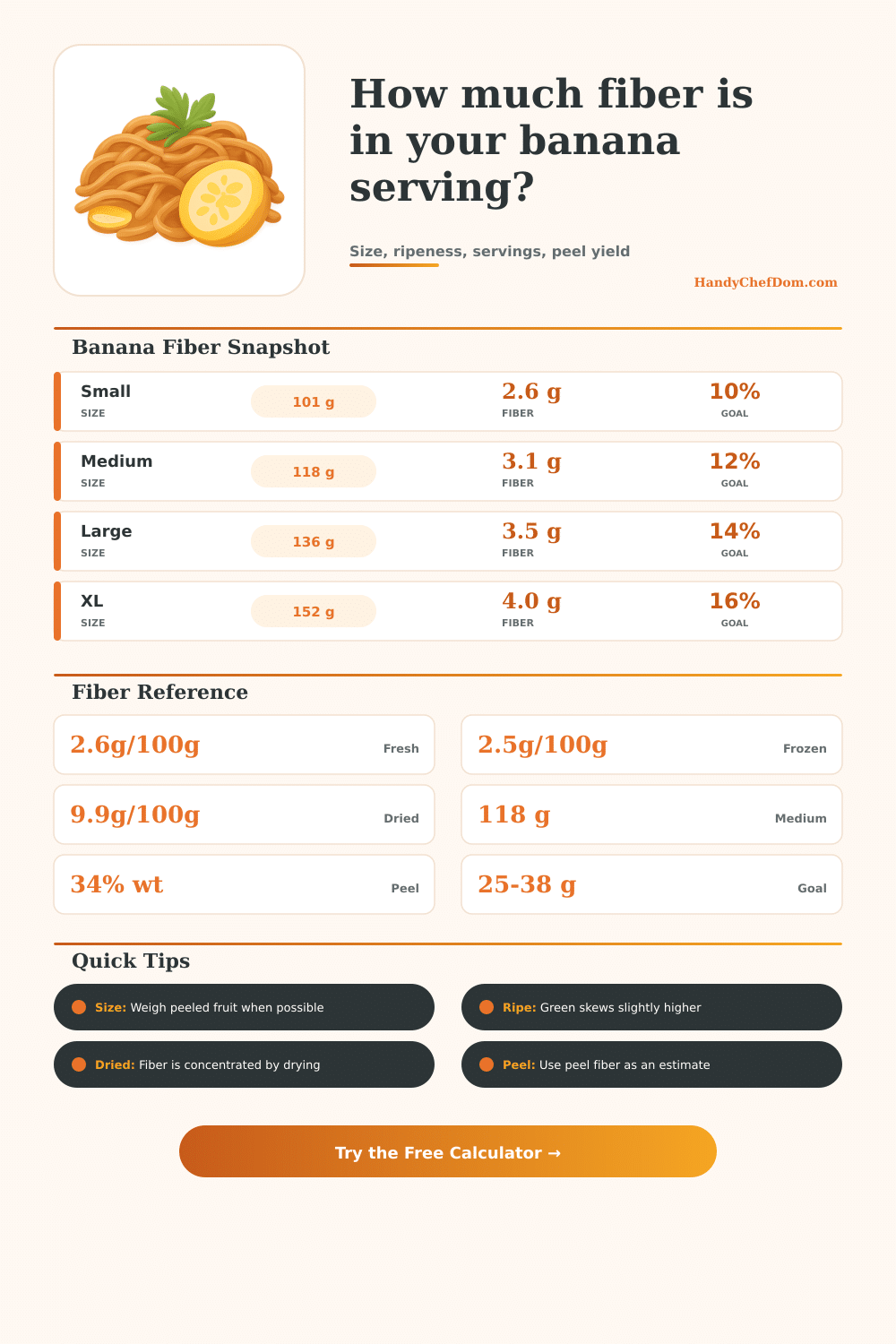
| Small banana | 101 g peeled | 2.6 g fiber | 11% of goal |
| Medium banana | 118 g peeled | 3.1 g fiber | 12% of goal |
| Large banana | 136 g peeled | 3.5 g fiber | 14% of goal |
| Extra large banana | 152 g peeled | 4.0 g fiber | 16% of goal |
| Green and firm | Same weight input | About 12% higher | More resistant starch |
| Spotted ripe | Same weight input | About 4% lower | Softer soluble share |
🧊Fresh, Frozen, Dried, and Mashed Fiber Basis
| Banana form | Calculator fiber basis | Best measurement | Why it changes |
|---|---|---|---|
| Fresh banana | 2.6 g per 100 g | Peeled grams or size | Standard edible-fruit estimate |
| Frozen banana pieces | 2.5 g per 100 g | Frozen grams after trimming | Small handling loss and ice glaze variation |
| Mashed banana | 2.6 g per 100 g | Mashed cup weight or grams | Mashing changes volume, not fiber much |
| Dried banana slices | 9.9 g per 100 g | Dried grams | Water removal concentrates fiber |
| Crisp banana chips | 7.7 g per 100 g | Chip grams | Density and processing vary widely |
| Banana puree pouch | 2.1 g per 100 g | Pouch label grams | Puree can be thinned or strained |
🥣Smoothie, Baking, and Serving Use Table
| Use case | Typical banana amount | Serving split | Calculator note |
|---|---|---|---|
| Smoothie or blender drink | 1 medium banana | 1 to 2 servings | Blender scrape loss is usually small |
| Banana bread batter | 3 medium bananas | 8 to 12 slices | Fiber divides across slices after bowl loss |
| Yogurt bowl topping | 1/2 to 1 banana | 1 bowl | Use edible grams for accurate topping fiber |
| Kids lunch portions | 1/2 banana each | 2 small servings | Goal percent should use a child-specific target |
| Dried snack blend | 30 to 50 g dried | 1 to 2 servings | Dried weight is fiber-dense because water is removed |
| Meal prep containers | 4 to 6 bananas | 4 to 6 servings | Prepare extra only when leftovers are expected |
🌱Peel Yield and Fiber Estimate Table
| Peel reference | Estimated yield | Fiber estimate | How calculator uses it |
|---|---|---|---|
| Fresh peel weight | About 34% of whole banana | Not added by default | Shown as peel yield when discard is selected |
| Dried peel powder | 16% to 22% of fresh peel | About 42% fiber | Added only when powder inclusion is selected |
| Peel estimate only | Same yield math | Shown separately | Does not change edible banana fiber total |
| Whole unpeeled input | 66% edible fruit, 34% peel | Fruit and peel split | Converts whole grams into peeled edible grams |
💡Fiber Calculation Tips
If you’ve ever tracked how much fiber you consume in a day, you probably reach for a banana one time. And then realized, “Oh yeah! That’s a good source of fiber.” But when we reach for a banana, it feels like such an uncomplicated food that we don’t think twice. It’s peel-and-eat, right?
But no. An extra large banana with brown sugar dots on it has a different nutrient makeup than a tiny baby banana. If you’re aiming to reach certain health goals, or even just want to know what you’re putting into your body, knowing the difference make a difference. This is why there needs to be a way to clarify, most of us assume all bananas are created equal.
Why Not All Bananas Are the Same
This tool help solve that confusion. That’s where the calculator comes in: Plug in your favorite variables, and it’ll do all that math for you, sparing you having to guess if that smoothie you made this morning really provide the digestive boost you’re looking for. It’ll break it down into grams of each kind of fiber, based off both the type (i.e. It’s based on how ripe it is, its size, and even its form (fresh/frozen/mashed/dried).
Processing makes all the difference. If water is removed through dehydration, then the resulting solids will be denser. Compare banana chips to a fresh slice of banana, because the water has been removed, the same weight of dried banana chips contains a lot more fiber than a single fresh slice. The calculator accounts for this concentration effect without requiring user input.
What you take in matters, too, and it just so happens that ripeness is surprisingly key to what your body absorbs. Resistant starch (soluble fiber) are fed to your good gut bugs instead of being digested by your body as sugar, and green bananas are high in it. When they start to get yellow and eventually turn brown, that resistant starch starts to turn into simple sugars. The fibers also change somewhat, becoming easier to dissolve and softening up. So whether you like your bananas extra-ripe for baking into bread or still on the firmer side before you slice them up, the calculator takes all of that change into account, and allows you to understand how your textural preference affects your nutrient yield.
Then there’s another variable: how much of the peel is used. We usually just toss the peel, but a decent portion of its weight (and potential fiber); comes from the skin. There are even some peel fanatics who dry their banana skins and crush them for use as a powder in baked goods and smoothies. With this tool, you can see an estimate of how much more fiber you’d get (based on common rates of drying) if you were to consume dried peel powder yourself. It converts something you’re throwing away into something with a measurable nutritional value.
The right fruit isn’t everything, it’s also about how you serve it. One banana by itself have more fiber than three bananas mashed into a loaf of bread shared by eight people. Using the calculator, you can specify how many servings you want (and how many per day) so you’ll know down to the exact percentage how well that particular piece of fruit covers your bases. That eliminates overestimating, where users tend to think eating one fruit equals half their daily need. Instead, it puts your expectations on solid ground: How does this compare to typical nutritional guidelines?
Measurement accuracy is also affected by form. Skins vary wildly in thickness and moisture content, so it makes sense to peel them before weighing; measuring just the edible part provides the cleanest data. Even when you know what size a piece of fruit is (“large” or “medium,” for example), those labels are imprecise. To eliminate the guesswork, weigh the fruit as-is (after peeling). You can use either method, counting by size categories or entering precise gram weights… And this flexibility lets you work with what’s available at any given time while still achieving reasonably accurate results.
These details allow for smarter decisions without worrying about exact measurements. There’s no need to precisely measure each serving… But understanding the interplay between form, ripeness, and portion helps you plan more intelligently. If you’re on-the-go with a fast morning bite or meal-prepping for the week, knowing exactly what kind (and amount) of fiber you eat takes the guessing out of it. It turns that everyday snack into a useful part of your healthy lifestyle.
Next time you grab a banana, think: What’s its stage? How will I use it? Is it still green, firm, and destined for slicing? Or is it ripe with spots, ready for snack-time now? You might already know how your body reacts to each type. But beyond tasting different, they also affects your body in different ways.
And there are no rules here; you don’t need to get elaborate or spend extra time. Just ask yourself this before reaching for any food. That little increase of awareness can make everyday actions into informed decisions… Good news for your digestive health. There’s fiber there just waiting to be counted and understood.