🌿 Sunlight for Basil Calculator
Balance direct sun, window exposure, grow light strength, pot size, season, plant age, and target leaf harvest for culinary basil.
Use direct sun hours plus any grow light time to estimate basil light sufficiency, daily light integral, and a realistic culinary leaf harvest.
| Basil stage | Best DLI range | Sun target | Leaf cue |
|---|---|---|---|
| Seedling under 4 weeks | 10-14 mol/m²/day | Bright indirect plus LED | Short, sturdy stems |
| Young plant 4-7 weeks | 12-16 mol/m²/day | 5-6 hours direct sun | Wide green leaves |
| Established leafy plant | 14-18 mol/m²/day | 6-8 hours direct sun | Frequent side shoots |
| Pre-flower heavy harvest | 16-20 mol/m²/day | 7-8 hours with heat watch | Dense, aromatic tips |
| Regrowing after cutback | 12-17 mol/m²/day | 5-7 hours direct sun | New nodes awaken |
| Window or exposure | Basil usefulness | Typical support | Watch point |
|---|---|---|---|
| South-facing bright glass | Strong indoor choice | 0-3 LED hours | Rotate pot weekly |
| Southwest afternoon sun | Very strong but warm | Shade in heat waves | Leaf edge curl |
| West-facing hot sun | Good with heat control | Morning LED if needed | Drying pot mix |
| East-facing morning sun | Gentle reliable light | 3-5 LED hours | Long internodes |
| North-facing low light | Weak alone for basil | 10-14 LED hours | Pale thin growth |
| Open-sky outdoor exposure | Best natural light | Usually no LED | Midday heat stress |
| Grow light setup | Distance | Daily hours | Basil result |
|---|---|---|---|
| 15-25 watt countertop LED | 6-9 inches | 10-14 hours | Small pot support |
| 30-45 watt shelf bar | 8-12 inches | 8-12 hours | Strong leaf growth |
| 60-100 watt panel | 12-18 inches | 6-10 hours | Multi-plant basil |
| Window plus LED boost | 8-14 inches | 2-6 hours | Fills cloudy gaps |
| Weak decorative lamp | Under 6 inches | 14-16 hours | Only seedlings |
| Target harvest | Light need | Pot size | Practical use |
|---|---|---|---|
| 10-20 g/week | 12-14 DLI | 6 inch pot | Garnish and salads |
| 25-45 g/week | 14-17 DLI | 8-10 inch pot | Weekly cooking |
| 50-90 g/week | 16-20 DLI | 12 inch pot | Pesto and sauces |
| 100-180 g/week | 18-22 DLI | Bed or tub | Batch harvesting |
| 200 g+/week | 20-24 DLI | Multiple plants | Shared kitchen use |
Basil plants requires specific amount of light to effectively grow basil. The amount of light that basil plants receives has a direct effect on the quality of the basil leaves that grows from those plants. If basil plants is provided with enough light, the basil plant will grow thick leaf that can be harvested regularly from the plant.
However, if basil is grown in conditions where the plants are not provided with enough light, the basil stems will stretch out from the plants center, the basil leaves will be thin, and the flavor of the basil will decrease. By understanding how much light basil plants require at each growth stage and during each season, basil growers can ensure that there basil plants produce a good harvest of basil leaves. One of the easiest ways of growing basil at home is to start the plants indoors in a windowsill.
How Much Light Does Basil Need to Grow
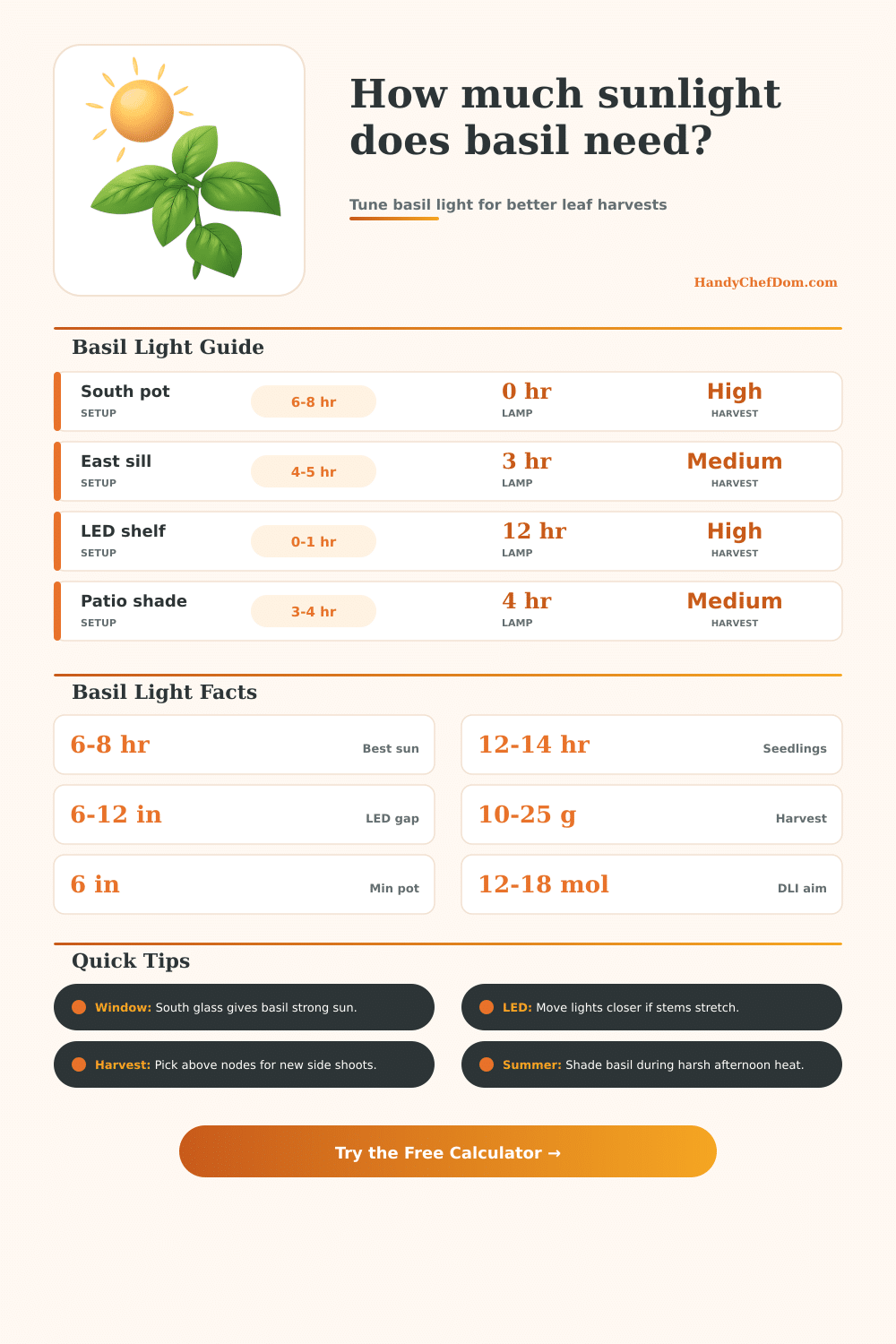
The direction of the window in which basil is growing will impact the amount of light the basil receives. South-facing windows provides the most light for basil plants, followed by east-facing windows, which receive morning light. Basil plants that are established will do best in south-facing windows.
However, young basil seedling may do better in east-facing windows. North-facing windows provide the least amount of light for basil plants to grow well indoors. In these cases, growers may have to purchase a light lamp for their basil plants.
The calculator tool will calculate the amount of light that the basil plant requires once the grower inputs the direction of their windows and the number of hour of sunlight that their location receives during the day. The calculator tool will remove the guesswork regarding the amount of light that their basil plants are missing. For basil plants that are grown outdoors, the variables is different than those that are grown indoors.
Outdoor basil plants may grow more leaf if they are exposed to full sun. However, if the outdoor temperatures rises to ninety-five degrees or higher during the summer, the basil plants may experience heat stress, which will slow the production of basil leaves. In these cases, a grower can use shade cloth or move their basil plants to an area where the basil plants will not be exposed to direct sunlight.
The calculator tool allows the grower to choose the amount of heat stress that their basil plants may experience outdoors. These setting affect the amount of basil leaves that the grower can harvest each week. Basil plants that are grown indoors using lamps have different considerations.
The wattage of the lamp is less important than the distance that the lamp is from the basil leaves. If the lamp is too close to the basil plants, the basil plants may be exposed to too much light, which will scorch the basil leaves. If the lamp is too high above the basil plants, the basil plants will stretch out.
Therefore, a bar light can be placed eight to twelve inches above the basil plants. An additional consideration for basil that is grown using lamps is the total number of hour that the lamp runs each day. The age setting in the calculator tool will allow the grower to adjust for the fact that seedling basil plants require longer periods of light than established basil plants.
The size of the growing container and the number of basil plants that are placed in the container will affect the basil harvest rhythm. If using a six-inch container, one basil plant should be planted in that container. For those who wish to harvest basil for pesto, a container that is larger than ten inches in diameter will hold more leaves and allow for better harvest frequency.
In pots that contain multiple basil plants, the top leaves will shade the bottom leaves. This lead to the bottom leaves of the basil plants turning yellow. The calculator tool will determine if there is enough room for the basil plants leaves to grow without crowding the basil plants together.
The four season have an impact on the amount of light that reaches basil plants that are grown outdoors. As the seasons change, the light requirement of basil plants change. Basil plants grow well in the spring and summer, which receive longer hours of sunlight each day.
However, during the fall and winter months, basil plants receive much less light. The basil plant that grew well in June might require twelve hours of light from a standing lamp during December. The season selector on the calculator tool will show the basil growers how the seasons impact the basil plants’ light score and basil yield each week.
Tables of the amount of light that basil plants require at each growth stage can be found in the reference tables provided as part of the calculator tool. Basil seedlings requires less light than established basil plants because the leaves on a young basil plant cannot process much light intensity. Basil plants that are about to flower can stand up to more light.
Additionally, if basil plants are to be harvested prior to flowering, exposing the plants to more light will encourage basil to grow to maturity prior to harvesting. The numbers in these tables can be correlated with the specific window in which basil plants are grown, the standing lamp that is used to provide light for basil, and the goals that the grower has for their harvested basil plants. Common mistakes in growing basil plants at home can be avoided using the information provided in the calculator tool.
One common mistake is growing basil in north-facing windows in the winter months. During this time, the basil leaves are often small in size. Another common mistake is providing young basil plants with fourteen hours of light during the summer.
In this case, the basil plant may reach its maximum capacity for light absorption and begin to flower. The calculator tool can help the grower to avoid making these mistake so that the grower can produce strong basil and basil leaves that are not bitter. In most cases, small adjustments can be made in the grower’s home with basil plants.
If the grower determines that their basil plants are not receiving enough light, they can purchase additional hours of light for the plants using lamps or rotate the pots to expose the basil plants to more sunlight. If the basil plants is receiving plenty of light, more frequent pinching of the basil plants will encourage the plants to grow in a bushy manner. Thus, the goal of the grower is to provide basil plants with the amount of light that they require in order to enable them to produce basil leaves.